Quick Guide
- The Big Picture: National Averages and Why They're Misleading
- City Spotlight: Where You Live Changes Everything
- Beyond the City Center: The District Discount
- Breaking Down the Accommodation Types
- The Classic: Renting Your Own Apartment
- The Hidden Factors That Twist the Price
- Practical Tips: How to Navigate the Hunt and Save Money
- Common Questions (The Stuff You're Actually Wondering)
- The Bottom Line: There Is No Single "Average"
Let's be honest, that's the million-dollar question (or rather, the thousand-euro question) for anyone planning a move to Germany, whether you're a student, an expat, or a remote worker. You type "What is the average cost of accommodation in Germany?" into Google and you get a number. Maybe it's €850 per month. Sounds simple, right?
Wrong.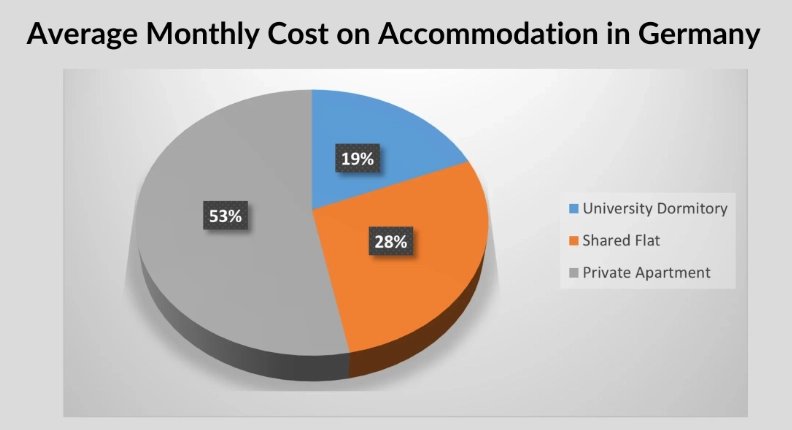
That single figure is about as useful as saying the average temperature in Europe is "mild." It tells you almost nothing about what you'll actually face. The real answer is a messy, complicated, and wildly variable story that depends entirely on where you want to live, what you want to live in, and a bit of luck. I learned this the hard way when a friend moved to Munich expecting Berlin prices and got a reality check that still stings.
So, let's ditch the oversimplified averages and dig into what you really need to know. We'll break down the numbers city by city, explain the hidden costs everyone forgets, and I'll even share some strategies that go beyond just scouring Immobilienscout24.
The Big Picture: National Averages and Why They're Misleading
Okay, fine. Let's start with the official stats, just to get our bearings. According to the latest data from Germany's Federal Statistical Office (Destatis), the average net cold rent (Kaltmiete) for a newly rented apartment in Germany was around €9.80 per square meter per month in 2023. For a typical 70 sqm apartment, that puts you at roughly €686 just for the base rent.
Key Term: Kaltmiete (cold rent) is just the rent for the bare apartment. Warmmiete (warm rent) includes additional costs for utilities, heating, garbage collection, etc. (Nebenkosten). When budgeting, you must think in Warmmiete.
But here's the kicker—and why asking for the national average cost of accommodation in Germany is a bit of a fool's errand. The spread is enormous. You have bustling metropolises where that 70 sqm apartment costs €1,500+ warm, and you have rural towns in former East Germany where you might find the same for €500. The national average is a statistical midpoint between these extremes, a place where almost no one actually lives.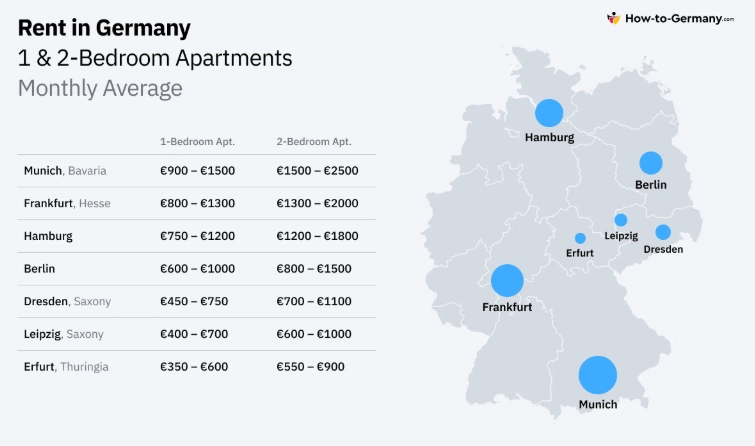
The housing market here is intensely local. A 15-minute U-Bahn ride can slash hundreds off your monthly rent. So, while the broad average gives us a starting point, the real value comes from zooming in.
City Spotlight: Where You Live Changes Everything
This is where the rubber meets the road. To truly understand the average cost of accommodation in Germany, you have to look at the cities. I've put together a table based on a blend of data from major rental portals like Immobilienscout24 and market reports. These figures are for the Warmmiete of a standard 70-80 sqm apartment in a decent, central-ish area. Think of it as a realistic "what you'll likely pay" guide, not the absolute cheapest possible find.
| City | Approx. Warm Rent (70-80 sqm) | Vibe & Notes |
|---|---|---|
| Munich | €1,700 - €2,200+ | The undisputed champion of expensive. High salaries, low supply, high demand. Expect fierce competition. |
| Stuttgart | €1,400 - €1,800 | Automotive industry powerhouse. Prices are steep, and the city is in a valley, so space is limited. |
| Frankfurt | €1,300 - €1,700 | Banking hub. The city center is pricey, but you can find better value across the river or in outlying districts. |
| Hamburg | €1,300 - €1,700 | Beautiful, maritime, and popular. Districts like Eimsbüttel or Altona are highly sought after. |
| Berlin | €1,200 - €1,600 | Yes, it's gotten expensive. The "poor but sexy" days are long gone for the rental market. Mitte, Prenzlauer Berg, Friedrichshain command top euro. |
| Cologne (Köln) | €1,100 - €1,500 | Lively, cultural, and also quite tight on housing. The city is a favorite, which keeps prices high. |
| Düsseldorf | €1,100 - €1,500 | Elegant and wealthy. Prices reflect its status as a fashion and business capital. |
| Leipzig | €700 - €1,000 | The poster child for the "up-and-coming" German city. Still relatively affordable compared to the west, but rising fast. |
| Dresden | €650 - €950 | Stunning architecture and a lower cost of living. A great option if you're not tied to western German job markets. |
| Essen/Dortmund (Ruhr Area) | €600 - €900 | The former industrial heartland. Offers some of the best affordability in western Germany, with big-city amenities. |
See what I mean? The range is staggering. A place in Munich could cost you three times what a similar-sized apartment does in Essen. This is the single most important factor in answering "What is the average cost of accommodation in Germany?" It's not one number; it's a spectrum.
A friend of mine landed a job in Munich with a "great" salary. He budgeted based on his old Berlin expenses. The shock of realizing a small, dated one-bedroom apartment 40 minutes from the center was going to eat nearly 40% of his net income was… profound. He took the job, but the housing hunt was a brutal introduction to Bavarian economics.
Beyond the City Center: The District Discount
Don't just look at the city name. Berlin isn't just Berlin. Renting in Charlottenburg is a world apart from renting in Marzahn. Most German cities have a clear rental gradient.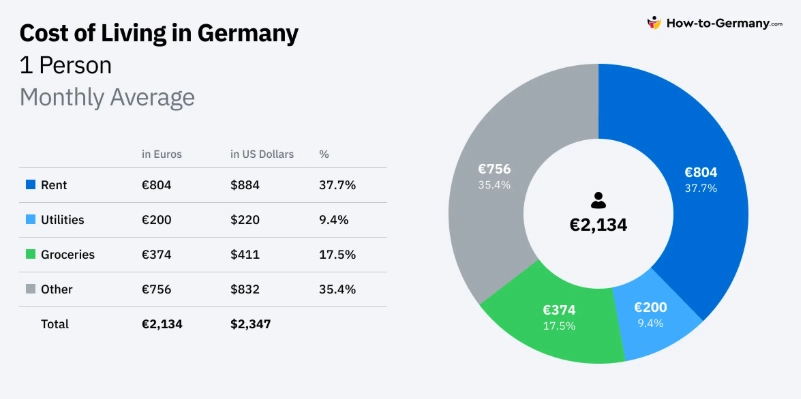
- Innenstadt (City Center)/Trendy Districts: Maximum price. You're paying for the shortest commute and the perceived cool factor.
- Established Outer Districts: The sweet spot for many. Often better value, more green space, family-friendly, but with longer commutes (20-40 mins by public transport).
- Suburbs (Vororte): Can be cheaper, especially for houses. Ideal if you have a family and a car, but you might feel disconnected from city life.
My advice? Use the public transport maps (BVG for Berlin, MVG for Munich, etc.) as your rent-finding guide. Look at the U-Bahn and S-Bahn lines that feed into your work/school hub. Often, going just a few stops further out can unlock significantly better deals.
Breaking Down the Accommodation Types
"Accommodation" isn't just a standard apartment. The type you choose massively impacts the final cost. Let's run through the options.
The Classic: Renting Your Own Apartment (Eigene Wohnung)
This is what most people picture. You get the keys to an empty apartment (almost always unfurnished) and you're responsible for everything. The costs here are layered:
- Base Rent (Kaltmiete): The price per square meter.
- Utilities (Nebenkosten): This is the add-on. It typically includes water, building maintenance, garbage, sometimes basic cable TV, and the all-important heating cost advance (Heizkostenvorauszahlung). This can easily add €200-€400+ to your monthly bill.
- Electricity & Internet: These are almost never included. You must contract these yourself. Budget another €80-€120/month.
- Security Deposit (Kaution): Usually three months' cold rent. This is a huge upfront chunk of cash you need to have ready.
Heating Warning: With the energy situation in Europe, heating costs (Heizkosten) have become a major variable. Old buildings with poor insulation can lead to nasty surprise bills (Nebenkostenabrechnung) at the end of the year. Always ask about the building's energy efficiency certificate (Energieausweis). A place with a rating of "A" will be cheaper to run than one with a "G".
So, that "€1,200" apartment in Berlin? Your real monthly outlay is more like €1,200 (rent) + €300 (utilities) + €100 (electricity/internet) = €1,600. And you need €3,600 for the deposit. This is the real math behind the average cost of accommodation in Germany.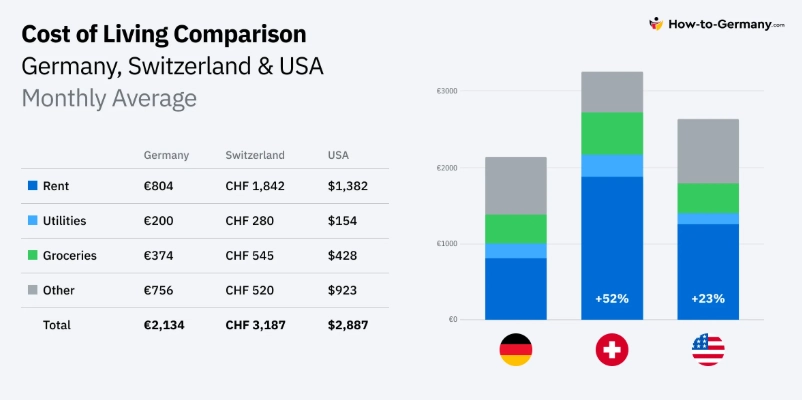
The Social (and Budget) Lifeline: Shared Flats (WG - Wohngemeinschaft)
For students, young professionals, or anyone looking to save money and meet people, a WG is the way to go. You rent a room in a shared apartment. Websites like WG-Gesucht are the go-to.
Costs vary wildly by city and room size, but here's a rough guide:
- Munich: €700 - €1,000+ for a decent room. Yes, just for a room.
- Berlin/Hamburg: €500 - €800.
- Leipzig/Dresden: €350 - €550.
The big advantage? Utilities and internet are usually included in the flat rate, and the deposit is just for your room share. The downside? You need to be selected by your potential flatmates, which can feel like a job interview. Be prepared to introduce yourself (the "WG-Cast") to many places.
Short-Term & Furnished: The Price of Convenience
Serviced apartments, temporary housing, or furnished flats (möblierte Wohnung) are exponentially more expensive on a monthly basis. They are useful for the first 1-3 months while you search for something permanent, but they are not a long-term financial solution. Expect to pay 50-100% more than the local unfurnished rate.
The Hidden Factors That Twist the Price
It's not just location and size. A bunch of other things can push the average cost of accommodation in Germany up or down for a specific place.
The State of the Kitchen (Die Küche): In Germany, it's common to rent an apartment with either no kitchen or a very basic one. If you find a place with a beautiful, installed (einbau) kitchen, the rent will be higher. If it has no kitchen (ohne Küche), you must factor in the cost of buying and installing one yourself—a multi-thousand euro project.
Floor, View, Balcony: Top floor apartments with views and a balcony (Balkon) or terrace (Terrasse) command a premium. A ground-floor apartment facing a courtyard might be cheaper.
New vs. Old: A freshly renovated (saniert) apartment in an Altbau (old building) with high ceilings and herringbone floors will cost far more than an unrenovated one in the same building. That "charm" has a price tag.
The Competition Factor: In hot markets like Munich, Berlin, or Hamburg, you're not just paying a price; you're competing for it. It's not uncommon for 50+ people to apply for one apartment. This can sometimes lead to people offering to pay more than the listed rent just to secure it—a practice that's legally grey but happens. This invisible "competition tax" isn't in any official average.
Practical Tips: How to Navigate the Hunt and Save Money
Alright, enough with the scary numbers. Let's talk strategy. How do you actually find a place without going broke?
Tip #1: Paperwork is Your Weapon. Have a complete, ready-to-email dossier: copy of your passport/ID, proof of income (employment contract, last 3 payslips), Schufa credit report (you can get a basic one online), Mietschuldenfreiheitsbescheinigung (proof of no prior rental debt from your last landlord), and a self-introduction letter. Landlords love order.
Start Early, Like, Really Early. Looking for a September move-in? Start in June or July. The good, affordable places go incredibly fast.
Consider the "Uncool" Cities. Everyone wants Berlin, Hamburg, Munich. Look at the Ruhr Area cities (Dortmund, Bochum, Essen), cities in Saxony (Leipzig, Dresden, Chemnitz), or Nuremberg. You'll get more space for your money and a lower stress hunt. I've lived in both a "cool" and an "uncool" city, and the quality of life difference, purely from housing stress, was immense.
Use All Channels. Don't just rely on Immobilienscout24. Check eBay Kleinanzeigen (be careful of scams!), local Facebook housing groups, and ask everyone in your network. Sometimes the best flats are never publicly advertised.
Be Ready to Move Fast. If you see a good listing, contact them within the hour. Be flexible for viewing appointments. Have your dossier ready to send immediately.
Common Questions (The Stuff You're Actually Wondering)
Is it cheaper to live in East Germany or West Germany?
Generally, yes, East Germany (the former GDR states) has significantly lower accommodation costs than West Germany. Cities like Leipzig, Dresden, and Jena are popular, affordable hubs with growing economies. However, salaries there can also be lower on average. It's about balance.
What about student cities like Heidelberg or Tübingen?
Beware of beautiful, small university towns. Their housing markets are often brutally expensive and scarce because demand from students far outstrips supply. A student dormitory (Studentenwohnheim) is often the only affordable option, and they have long waiting lists. Apply for housing through your university's (Studentenwerk) service the moment you get your admission letter.
How much should I budget for accommodation in Germany as a percentage of my income?
The old rule of thumb is not to spend more than 30% of your net income on warm rent. In expensive cities, this rule is often broken, with people spending 40% or more. Try to get as close to that 30% mark as possible. If your net income is €3,000/month, aim for a warm rent of €900 or less. This is often the hardest part of the equation in major cities.
Are there any government controls on rent?
Yes, but they're complex and vary by state. Many cities have a Mietspiegel (rent index) that suggests a local reference rent. In areas with a tight housing market (angespannter Wohnungsmarkt), stricter rent control laws (Mietpreisbremse) may apply, capping how much rent can be increased for existing tenants or for new rentals relative to the local reference. However, enforcement is patchy, and new buildings are often exempt. Don't rely on this to find a cheap place; see it as a potential tool if you suspect you're being overcharged.
The Bottom Line: There Is No Single "Average"
So, after all this, what is the average cost of accommodation in Germany?
It's the wrong question to ask by itself.
The right question is: "What is the average cost of the type of accommodation I need, in the specific city or district I'm targeting, including all utilities and upfront costs?"
That's the question this guide has tried to equip you to answer. From Munich's sky-high premiums to the surprising value in the Ruhr Valley, the German housing landscape is a patchwork. Your personal average will depend on your priorities—city life vs. space, short commute vs. lower rent, modern finishes vs. historic charm.
Do your research, get your paperwork in order, and be prepared for a hunt that can test your patience. But with the right strategy and realistic expectations, you can find a place to call home. Just don't expect it to be easy, or average.