Quick Navigation
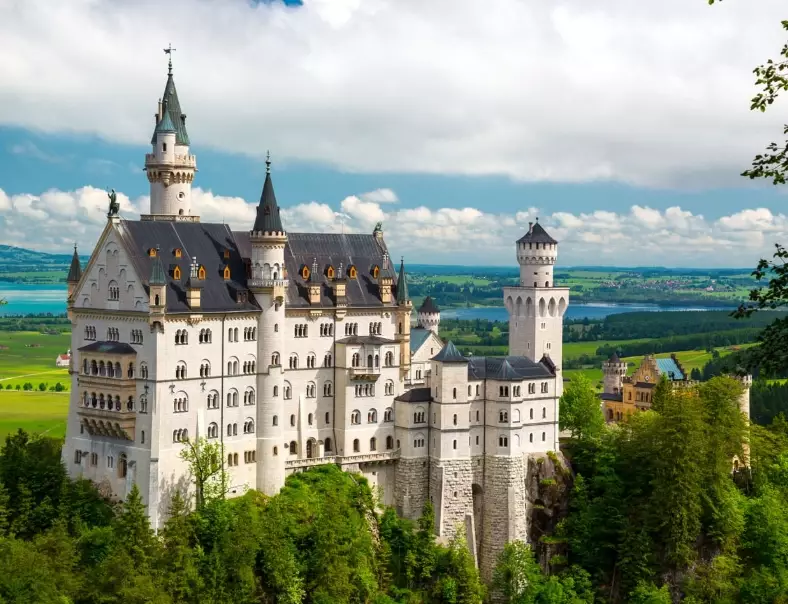
Let's be honest, that's the question that brought you here. You've seen the pictures of Neuschwanstein, you've maybe heard about the Rhine Valley, and you're planning a trip or just fell down a rabbit hole of medieval architecture. And you want a number. A clean, simple, definitive answer to "How many total castles are there in Germany?"
I get it. I was exactly the same. I remember planning my first big road trip through Bavaria, map spread out, and thinking, "Okay, let's see how many we can hit." I started Googling, and that's when the confusion began. One site said "over 20,000." A travel brochure mentioned "around 25,000." A history blog cautiously suggested "perhaps 10,000." Wait, what? That's a huge difference. It's like asking how many cars are in a city and getting answers ranging from a thousand to a million.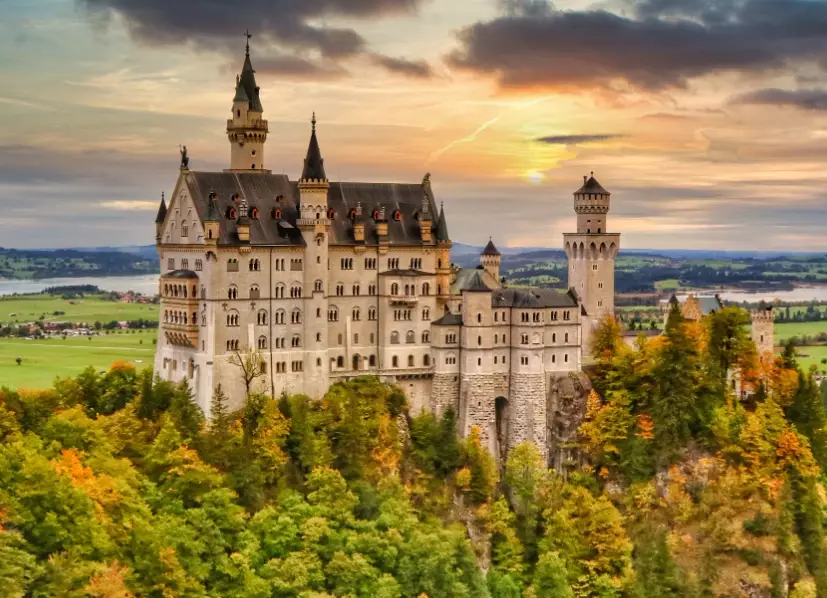
The short, frustrating, but honest truth? There is no single, official, universally agreed-upon number. Annoying, right? But stick with me, because the why behind that ambiguity is actually far more interesting than any fake precise figure. Understanding it will make you a smarter traveler and a more informed history buff. We're going to dig into the best estimates from reputable sources, unpack the reasons for the wild variations, and I'll even give you a framework to think about the count yourself. By the end, you'll know more about the state of German castles than most people who throw random numbers around.
Core Takeaway First: If you absolutely need a number to quote, the most commonly cited and reasonably authoritative range is 20,000 to 25,000 castle sites, ruins, and palaces. This estimate is frequently used by major tourism boards and cultural organizations. But please, read on to understand what that number actually includes—it's not what you might think.
Why Is It So Hard to Pin Down the Number of German Castles?
Think about it. What even counts as a "castle"? This is problem number one. Is a grand 19th-century palace built by a king who just liked the aesthetic (looking at you, Neuschwanstein) a "castle" in the same way a grim, 12th-century fortified hilltop keep is? Is a pile of moss-covered stones in a forest that was once a small knight's residence still a castle? What about a Wasserburg (a moated castle) that's been transformed into a cozy hotel?
The definition is slippery. In German, you have several words: Burg (fortified castle), Schloss (palace, often less fortified), Festung (fortress). In English, we often lump them all together as "castles." So when someone tries to count, they have to decide what's in and what's out. A strict military historian might only count Burgen with clear defensive purposes. A tourism counter might include every Schloss that looks pretty in a photo.
Then there's the issue of state. Germany is a federal republic, and cultural heritage is managed at the state (Bundesland) level. There's no single federal department that has cataloged every single stone from Schleswig-Holstein to Bavaria. Records are scattered across regional archives, historical societies, and private ownership documents.
And don't forget destruction. Time, war (especially the Thirty Years' War and WWII), and the simple need for building materials have turned countless castles into mere mentions in old texts or faint outlines in a field. Do you count those? If you do, how do you verify them? It's a historian's nightmare, but for us, it explains the spread in numbers.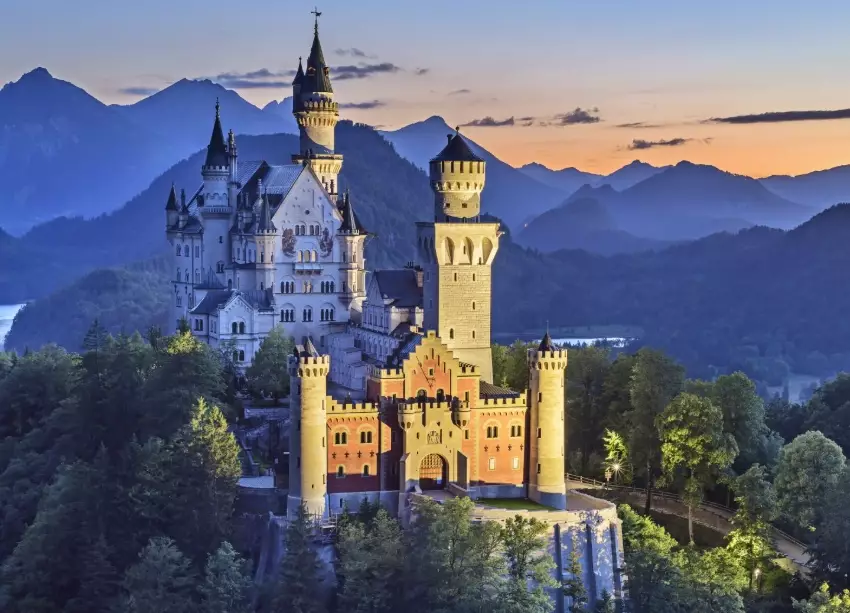
The Big Three Categories That Mess Up the Count
To make sense of any number you hear, you need to know what's likely included. Most large estimates (like the 20,000-25,000 range) are bundling these three categories together:
- Intact Castles and Palaces (Erhaltene Burgen und Schlösser): These are the poster children. They have roofs, walls, and are often museums, hotels, or government buildings. Think Marksburg on the Rhine (never destroyed!), Heidelberg Castle (famous ruin but largely intact structures), or Sanssouci in Potsdam (a palace). This group numbers in the low thousands, maybe 2,000 to 4,000 that are publicly significant.
- Castle Ruins (Burgruinen): This is the largest group by far. A crumbling tower on a hill, a fragment of a wall in a vineyard, an overgrown foundation in a forest. Germany is littered with them. Some are well-signposted and maintained as hiking destinations. Others are known only to locals and hardcore castle enthusiasts. This category dramatically inflates the total count and is the main source of the "20,000+" figure.
- Medieval Fortified Structures / Motte-and-Bailey Sites (Turmhügelburgen or Motten): These are the earliest, often simple wooden structures on raised earth mounds. The wood is long gone, leaving only a grassy hill, sometimes with a ditch. Archaeologists know about them, but to the untrained eye, it's just a weird hill in a field. They are historically important but visually underwhelming, and they're almost always included in academic counts.
See the problem? If a travel website says "Germany has 25,000 castles," a reader imagines 25,000 Neuschwansteins. In reality, it might be 2,000 stunning sites and 23,000 piles of stones and grassy mounds. Not as sexy, but historically way more comprehensive.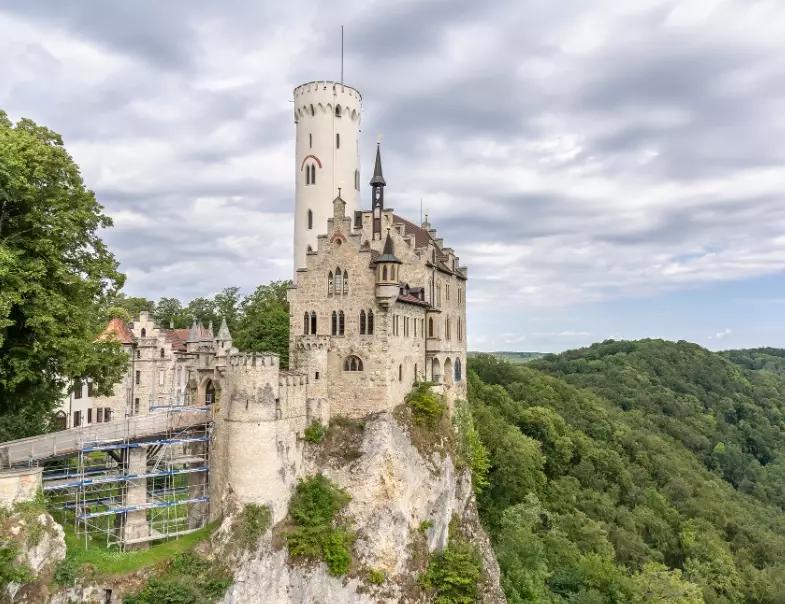
The Best Estimates from People Who Should Know
Instead of random internet numbers, let's look at sources with some authority. These won't give you a perfect number, but they give us the best available benchmarks.
The German National Tourist Board (GNTB) is careful. They don't publish a hard total, but their marketing and literature often allude to Germany having "more castles and palaces than any other country," with the implied scale being in the tens of thousands. They focus on the accessible, tourist-ready ones, which is smart.
Academic and enthusiast organizations try harder. The European Castle Institute (Europäisches Burgeninstitut), while not publishing a simple list, supports research that points to the German lands (including areas now in neighboring countries) having had an immense density of castle construction in the Middle Ages. Their work underpins the high estimates.
Perhaps the most useful resource is the EBIDAT database, the database of the German Castles Association (Deutsche Burgenvereinigung e.V.). This is as close to an authoritative registry as exists. It's a work in progress, compiled by experts. As of my last deep dive, it contained detailed entries for over 4,000 specific castle sites. Crucially, these entries are vetted—they know what a castle is. This number is a solid floor for significant, verifiable sites. It tells us that the number of "documented, historically recognized castles" is already in the thousands, and the database is growing as volunteers add more.
So, if we synthesize this: The 4,000+ in EBIDAT are the verified, significant core. The 20,000-25,000 figure is the expansive estimate that includes every trace of feudal fortification ever built. The truth for a curious traveler lies somewhere in the middle—thousands of places where you can still feel the history.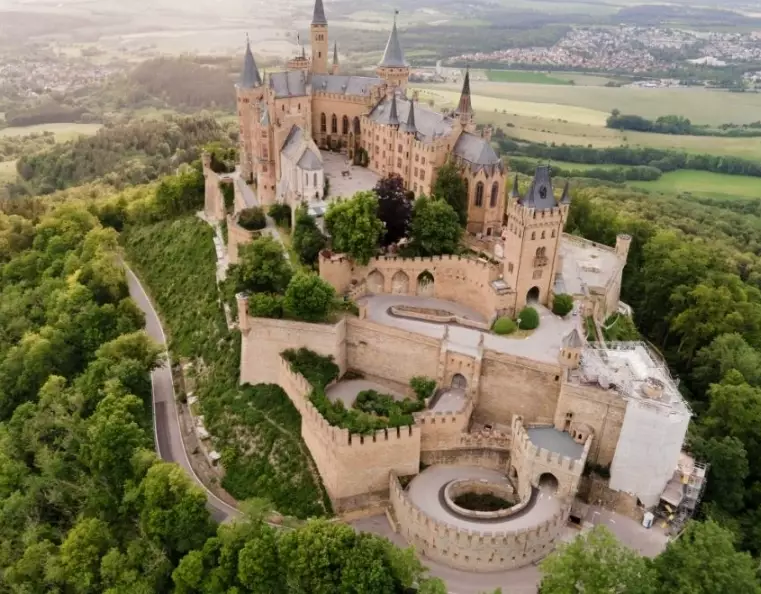
A Practical Guide: How to Think About "The Count" for Your Trip
Forget the grand total. It's not useful for planning. Instead, break it down. This is how I plan my castle visits now, and it's way more satisfying.
By Type and Experience
What do you want to see? Categorize them by what they offer you today.
| Type | Description | Best For | Estimated Number* |
|---|---|---|---|
| World-Class Icons | The must-sees. Immaculately maintained, often UNESCO sites or global symbols. | First-time visitors, iconic photography. | ~50-100 |
| Major Museums & Residences | Fully furnished palaces or large castles with extensive collections and tours. | History deep dives, art lovers, rainy days. | ~200-500 |
| Romantic Ruins | Picturesque, partially collapsed structures, often in stunning landscapes. Accessible and signposted. | Hikers, photographers, atmosphere seekers. | ~1,000+ |
| Hotels & Restaurants | Castles converted for overnight stays or fine dining. | Unique experiences, special occasions. | ~100-200 |
| "Hidden Gem" Ruins | Lesser-known, overgrown sites requiring a bit of a hunt or a local tip. | Adventurers, off-the-beaten-path travelers. | Several thousand |
*These are my own rough estimates based on travel experience and research, not official stats. They illustrate scale.
See? Suddenly, the impossible question "How many total castles are there in Germany?" becomes a series of manageable questions: "How many great castle museums are in the Moselle Valley?" or "What are the top 5 ruins for hiking near Dresden?"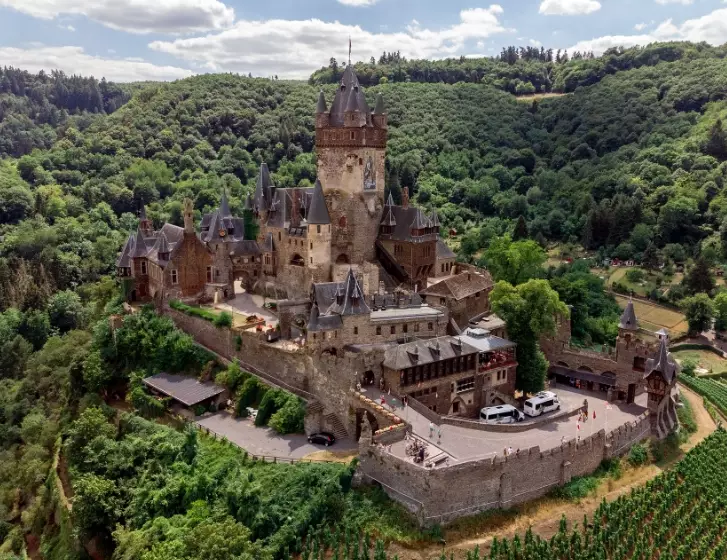
By Region: Where the Castles Are
They're not evenly spread. History deposited them in specific areas. If you want density, go here:
- The Rhine Valley: The undisputed king. The Middle Rhine between Bingen and Koblenz is a UNESCO World Heritage site specifically for its castle landscape. In just a 40-mile stretch, you can see over 40 hilltop castles and ruins. It's insane. A river cruise here is the ultimate castle-binging experience.
- Bavaria & Franconia: Home to the fairy-tale palaces (Neuschwanstein, Linderhof, Herrenchiemsee) and a huge number of sturdy medieval Burgen. The "Castle Road" (Burgenstraße) tourist route stretches for hundreds of miles here.
- The Harz Mountains: A lesser-known treasure trove. Dense forests hide numerous ruins from the era of Saxon emperors and medieval mining wealth.
- Baden-Württemberg: The Swabian Alb region and the Neckar Valley are dotted with impressive fortifications like Hohenzollern Castle (that dramatic mountaintop one) and Heidelberg.
I made the mistake once of trying to find major castles in the far north, like around Hamburg. It's a different history—fewer hills, different political structures. You find more Wasserburgen (moated castles) and later-period manor houses instead of craggy fortresses. Adjust your expectations by region.
Common Questions (That You're Probably Asking)
The Bottom Line on the German Castle Count
Look, after all this, here's my take. Obsessing over the final digit is a fool's errand. The real answer to "How many total castles are there in Germany?" is this: More than you could ever visit in a lifetime, but less than the biggest estimates make it seem if you're imagining intact fairy-tale structures.
The magic of Germany's castle landscape isn't in a statistic. It's in the sheer, palpable density of history. You can be driving on an Autobahn, look up, and see a ruin on a hill. You can hike in a random forest and stumble upon a mossy wall. You can tour a world-famous palace in the morning and have lunch in a 12th-century vaulted cellar that afternoon.
The number 20,000 or 25,000 is just a way of quantifying that overwhelming feeling. It's a testament to a fragmented, turbulent, and incredibly rich past that physically shaped the land. So instead of looking for the count, look for the stories. Pick a region, pick a type, and start exploring. You'll never run out of places to discover, and that's a much better truth than any precise number could ever be.
And if anyone asks you the question point-blank, you can now give them the smart answer: "Well, it depends on how you count, but the important thing is there are enough to spend a lifetime exploring." Then send them a link to the EBIDAT database if they really want to fall down the rabbit hole. Happy castle hunting.