What’s Inside?
- Why on Earth Would a Town Offer Free Accommodation?
- The Nuts and Bolts of the Albersloh Free Stay Program
- The Application Process: How to Actually Get That Free Stay
- Living in Albersloh: The Reality Check
- Beyond Albersloh: Are There Other Towns Offering Free Stay?
- Your Burning Questions, Answered (FAQ)
- Final Thoughts: Is This For You?
Okay, let's cut right to the chase. You typed that question into Google, probably with a mix of hope and skepticism. A free stay in Germany? Sounds too good to be true, right? I thought the exact same thing when I first stumbled across the story a while back. I was researching unique relocation programs in Europe, you know, the kind that pop up when towns are trying to breathe new life into their communities. And there it was.
The answer to "Which German town is offering free stay?" is a place called Albersloh. It's not a typo, and it's not a scam—at least, not based on the official information available. Albersloh is a small district, technically part of the town of Senden, in the state of North Rhine-Westphalia. It's about 30 minutes north of Münster, which is a proper university city. So you're not in the middle of absolute nowhere, but you're also not in Berlin or Munich.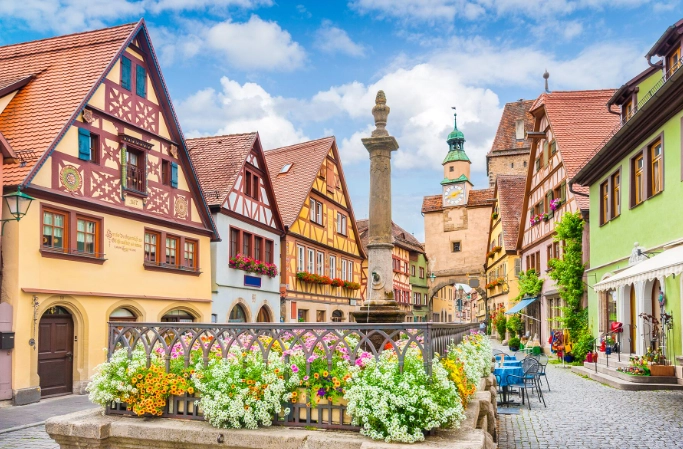
The Core Deal: To combat a declining and aging population, Albersloh launched an initiative where they offer new residents free rent for up to three years. They aren't just giving away empty promises; they've renovated vacant houses and apartments specifically for this program. The goal is simple: attract families, remote workers, and skilled professionals who will put down roots, contribute to the community, and help the town thrive again.
Now, before you start packing your bags, there's a mountain of details you need to know. "Free" always comes with conditions, and this is no exception. I've dug through local news, official council documents (where I could find them translated or with help), and community updates to piece together what this actually means for someone like you or me.
Why on Earth Would a Town Offer Free Accommodation?
It's a fair question. From a purely economic standpoint, it seems like they're losing money. But the logic is actually pretty sound from a community survival perspective. Many smaller towns across Germany, especially in former industrial regions or rural areas, are facing a brutal double-whammy: young people move to big cities for education and jobs, and birth rates are low. This leaves behind an aging population, empty houses, struggling local businesses (like the lone bakery or pub), and a shrinking tax base.
Albersloh looked at this trend and decided to be proactive. Instead of letting the town slowly fade, they invested in a radical solution. The thinking is that the long-term gain of new, active residents—who will shop locally, potentially start businesses, and have children who attend the local school—far outweighs the short-term cost of providing free housing. It's an investment in their own future.
I have to admit, the concept is clever. It gets massive media attention (case in point, you're reading this), which in itself is free advertising. It targets a modern demographic: digital nomads, remote workers, and young families who aren't tied to a specific office location. For them, the question "Which German town is offering free stay?" isn't just a curiosity; it's a potential life-changing opportunity.
The Nuts and Bolts of the Albersloh Free Stay Program
Let's get concrete. What does "free stay" actually entail? This is where most articles stop, but we're going deep.
What You Actually Get (And What You Don't)
The main offer is rent-free living in a renovated apartment or house for a maximum period of three years. The properties are provided by the local housing association, which is a key point—it's not some random private landlord.
But—and this is a huge but—"free rent" does not mean "free living." You are 100% responsible for all your Nebenkosten (additional costs). This is standard in Germany but can catch newcomers off guard. These include:
- Heating and electricity bills (gas/Strom).
- Water charges.
- Waste collection fees.
- Potential property tax if it's a house (though this is often included in the *Nebenkosten*).
- Internet and phone, of course.
So your core housing cost is zero, but your monthly outgoings could still be a few hundred euros depending on the size of the property, your energy use, and the current crazy energy prices in Europe. It's still a phenomenal deal, but you need to budget for it.
Personal Take: I've lived in Germany, and the *Nebenkosten* can be a shock if you're used to all-inclusive rents. In my first apartment, the annual *Nebenkosten* settlement bill was a nasty surprise. Always, always ask for an estimated breakdown (*Nebenkostenabrechnung*).
Who Can Apply? The Eligibility Checklist
This isn't an open invitation for anyone with a passport. The town has specific criteria to ensure new residents are a good fit for their long-term goals. You'll need to demonstrate:
- Financial Independence: You must have a secure, verifiable source of income. This is non-negotiable. Remote work with an international company, a stable freelance income, or a job where you can work from anywhere (like software development, writing, design) is ideal. They want to know you can cover your living costs beyond rent.
- Commitment to Community Integration: This is vague but important. They want people who will join the local sports club (like the football club SV Eintracht Albersloh), participate in festivals, shop at local stores, and generally become part of the social fabric. Your application should reflect a genuine interest in small-town community life, not just a free ride.
- Family or Long-Term Potential: While not explicitly excluding singles, the program is heavily geared towards families, couples, or individuals planning a long-term stay. Bringing school-aged children is a big plus, as it helps sustain the local school.
- A Clean Background: Standard checks apply.
So, if you're a digital nomad with a steady client base, a remote employee with a letter from your HR department, or a skilled professional who can work from home, you're in the target demographic. If you're just looking for a free vacation or a gap-year crash pad, this isn't it.
Useful Resource: For understanding the official framework of such integration programs, the German Federal Ministry of the Interior and Community (BMI) oversees policies on community development and integration, which is the broader context for initiatives like Albersloh's.
The Application Process: How to Actually Get That Free Stay
This is the part that frustrates everyone. Specific, step-by-step application details for "Which German town is offering free stay?" can be elusive because these programs are hyper-local and often managed by a small town office. However, based on how similar German town initiatives work, here's a realistic roadmap.
Step 1: The Initial Inquiry (Do Your Homework First)
Don't just send a blank email saying "I want free house." Your first contact should be professional and informed. I'd recommend starting with the town administration (*Gemeindeverwaltung*) of Senden, since Albersloh falls under it. Find the official contact for economic development or citizen services. In your email, briefly introduce yourself, state your clear interest in the relocation program, and ask for the current application guidelines and any required forms. Mention your profession and family situation concisely.
Step 2: Prepare a Dossier, Not Just an Application
Think of this as a job application for a new life. You'll likely need to provide:
- A detailed motivation letter (in German or professionally translated). Explain why Albersloh, not just why free rent. Talk about your work, your family, and how you see yourself contributing.
- Proof of income (tax returns, employment contracts, bank statements, client contracts).
- CV/Resume.
- Copies of passports for all family members.
- Maybe even a police clearance certificate.
Step 3: The Interview (Likely Virtual First)
If your dossier is strong, expect an interview, probably via video call. This is where they assess your personality and genuine interest. Be ready to talk about your remote work setup, your hobbies, and your thoughts on community living. Ask them smart questions about the town, schools, and local groups.
Step 4: The Visit and Final Decision
For serious candidates, a visit to Albersloh will probably be encouraged or required. This is a two-way street. You need to see if you can actually live there. Walk around, talk to people in the street (if your German allows), try the bakery. The final decision will come from the town council or the housing association board.
The whole process could take several months. Patience is key. And remember, they have a limited number of properties. Competition might be stiff once the word gets out (which, thanks to articles like this, it certainly is).
Living in Albersloh: The Reality Check
Let's paint a picture of daily life. Albersloh has around 1,800 people. It's quiet. There's a primary school, a kindergarten, a sports field, a few clubs, and a couple of restaurants/pubs. For serious shopping, a doctor, or a cinema, you'll go to Senden or Münster.
The pros are obvious: incredibly low living costs, a safe and green environment, a tight-knit community where you can quickly get to know people, and the chance to be part of a unique social experiment. For families with young kids, it could be idyllic. For writers, programmers, or artists seeking quiet to focus, it's a dream.
The cons are just as real: Potential isolation if you don't speak German (though younger people often speak English), limited nightlife and cultural events, dependence on a car or regional trains for bigger city amenities. The famous German bureaucracy for residency permits, registration (*Anmeldung*), and all that still applies in full force.
You also have to genuinely want the small-town vibe. If you thrive on the anonymity and constant buzz of a metropolis, you might go stir-crazy after six months. I spent a month in a similar-sized village once. Loved the peace for two weeks, then desperately missed the convenience of a late-night coffee shop.
Beyond Albersloh: Are There Other Towns Offering Free Stay?
This is a smart follow-up question. While Albersloh's program is one of the most direct and well-publicized answering "Which German town is offering free stay?". It's part of a wider trend. Other regions in Europe, like Italy, Spain, and Portugal, have villages offering cheap or symbolic 1-euro homes, but those usually require massive, costly renovations.
In Germany, other incentives exist but are often different. Some towns offer cash grants for building or renovating a home (*Baugeld*), subsidized kindergarten spots, or tax breaks for new businesses. They are financial incentives rather than direct free housing. For the most accurate and updated information on regional development programs, checking the websites of individual federal states (*Bundesländer*) is crucial. For example, the Ministry of Economic Affairs for North Rhine-Westphalia might have listings or information on various regional revitalization schemes.
So, for now, Albersloh seems to be the flagship example for the pure "free rent" model. But it's worth keeping an eye on similar initiatives in the states of Saxony-Anhalt, Thuringia, or parts of Lower Saxony, where population decline is also an issue.
Your Burning Questions, Answered (FAQ)
Let's tackle the stuff you're really wondering about.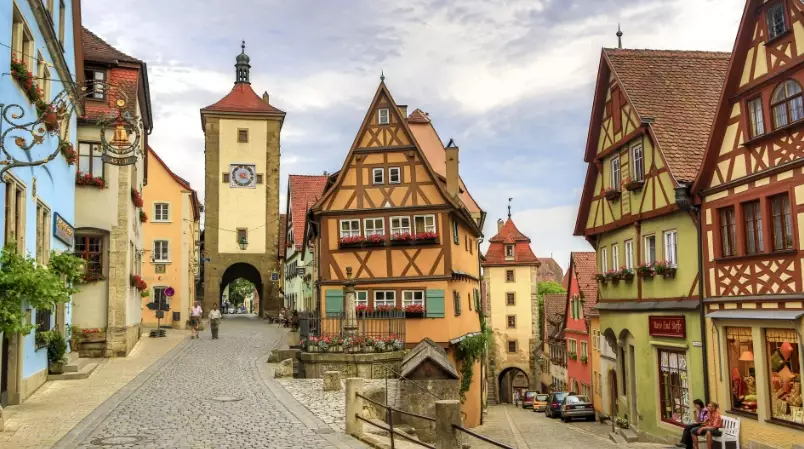
Final Thoughts: Is This For You?
Figuring out "Which German town is offering free stay?" was just the first step. The real question is whether Albersloh's unique offer aligns with your life and goals.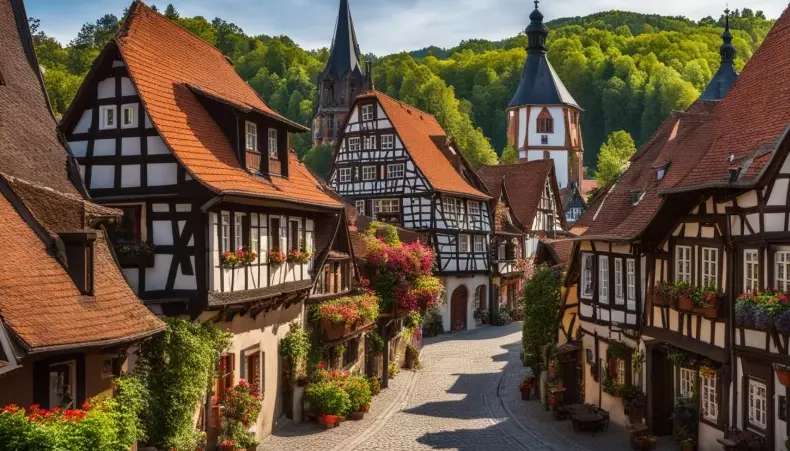
It's an incredible, genuine opportunity for the right person or family. It's a chance to reset your finances, immerse yourself in German culture at a deep level, and be part of a community in a way that's almost impossible in a big city. The financial breathing room it provides is nothing short of transformative.
But it's not a free lunch. It requires work—the work of applying, of moving countries, of learning a language, and of consciously building a life in a small community. If you're a remote worker tired of city rents, a family looking for a safe and affordable place to raise kids, or someone seeking a simpler, more connected way of life, this could be your answer.
If you're unsure, start with the first step: send that inquiry email. See what they send back. The worst that can happen is they say no, or the program is full. The best that can happen? Well, you might just find yourself with a new home in Germany, wondering how you ever got so lucky as to find the answer to that search: which German town is offering free stay.
Good luck. And if you do make the move, drop me a line. I'd love to hear how it goes.