Let's cut to the chase: yes, Munich is an exceptionally walkable city, but with a big, Bavarian-sized asterisk. The compact historic center is a pedestrian's dream, a seamless open-air museum where you can stumble from a medieval square to a royal palace in ten minutes. But step beyond the Altstadt ring, and the story changes. Munich sprawls. It's a city of villages, gardens, and wide boulevards. So, the real question isn't "Is Munich walkable?" but rather "Which parts of Munich are best explored on foot, and when should you hop on the U-Bahn?" Having spent weeks wandering its streets, I'll give you the unvarnished, step-by-step truth.
What’s Inside This Guide
Munich's Walking Infrastructure: The Good, The Bad, The Cobblestone
Munich didn't become one of Europe's most livable cities by accident. Its walkability is engineered.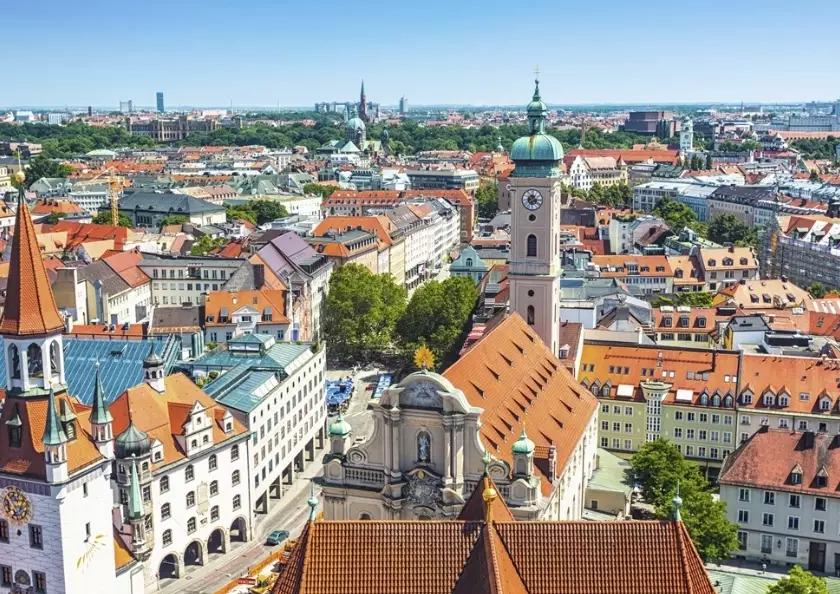
The Good: The entire Altstadt (Old Town) is largely pedestrianized. Marienplatz, the Viktualienmarkt, the Hofgarten – these are connected by vast, car-free zones. Sidewalks are wide and almost universally well-maintained. Crosswalks are plentiful, and drivers, for the most part, respect pedestrians. The city's signature "Grüß Gott" politeness extends to street etiquette.
The Bad (or rather, the Challenging): Cobblestones. They're picturesque until you've been on them for three hours in thin-soled shoes. Areas around the Residenz and some smaller alleys can be a real ankle-test. Also, while the center is compact, distances between major "village" districts like Schwabing and Haidhausen are significant – a 45-minute walk that most would find better served by the superb public transport.
The 3 Best Areas to Explore on Foot in Munich
Focus your walking energy here. Trying to walk everywhere in Munich is a rookie mistake.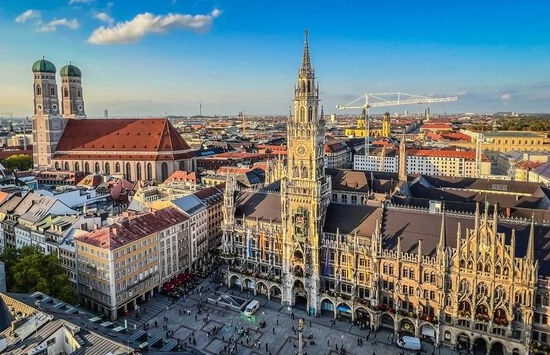
1. The Historic Core (Altstadt)
This is the no-brainer. Bounded by the ring of roads that follow the old city wall, it's dense with attractions. You can realistically see 80% of Munich's postcard sights here. Start at Karlsplatz (Stachus), walk down the pedestrian Neuhauser Straße to Marienplatz (10 mins), see the Glockenspiel, then meander to the Viktualienmarkt for a snack. From there, it's a five-minute walk to the Hofbräuhaus, and another ten to the Residenz and Odeonsplatz. The logic is geographical, not checklist-based.
2. The Museum & University Quarter (Kunstareal & Schwabing)
South of the Altstadt, around Königsplatz. The walk from Odeonsplatz to the Pinakothek museums is pleasant, about 15 minutes along Brienner Straße. The area is less crowded, greener, and the museums themselves (Alte Pinakothek, Neue Pinakothek, Lenbachhaus) are close enough to hop between. Continue north into Schwabing for cafe culture on Leopoldstraße. It feels like a different, more laid-back city.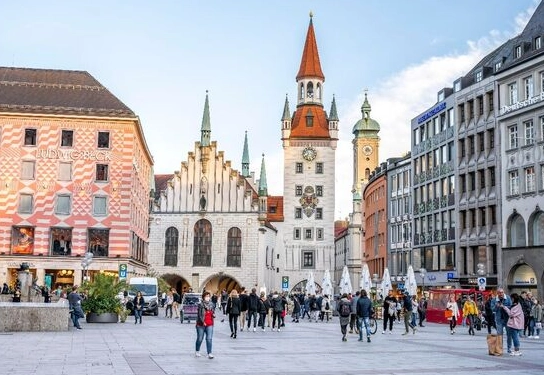
3. The Isar River Banks & Deutsches Museum
For a nature-infused walk, descend from the Altstadt near the Isartor to the Isar River. The paths are excellent. You can walk for miles south past the Deutsches Museum (allow 20 mins from the museum to the Friedensengel monument) or north towards the English Garden. It's where Munchners jog, bike, and sunbathe. You get stunning views of the city skyline, especially from the Ludwigsbrücke.
Two Perfect Sample Walking Routes (With Maps & Times)
Here are two concrete itineraries. One classic, one less obvious.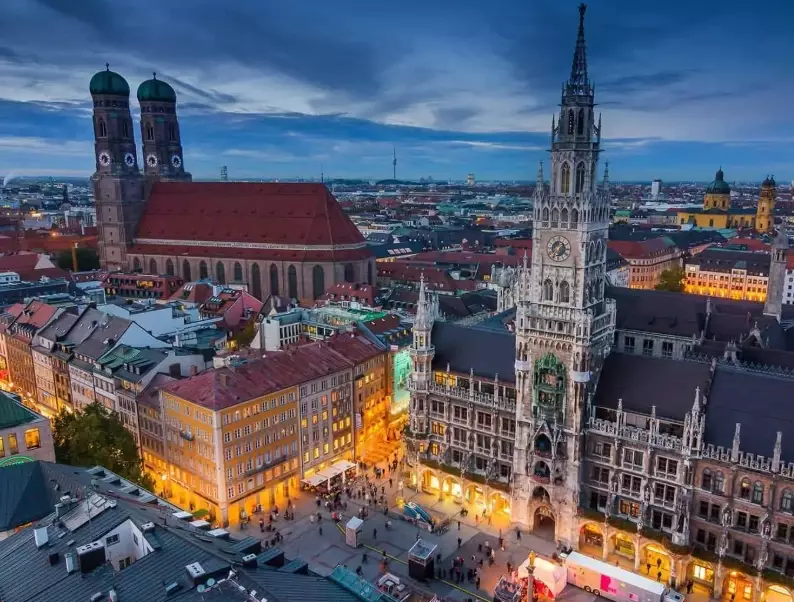
| Route Name | Start Point | Key Stops | Approx. Walking Time | Character |
|---|---|---|---|---|
| The Classic Altstadt Loop | Marienplatz (S/U-Bahn) | Marienplatz, Viktualienmarkt, Hofbräuhaus, Residenz, Hofgarten, Odeonsplatz, Theatinerkirche, back to Marienplatz. | 2.5 - 3.5 hours (with brief stops) | Historic, bustling, iconic sights. Heavy on crowds and photo ops. |
| The Green & Cultural Stroll | Odeonsplatz (U-Bahn) | Hofgarten, English Garden (Chinese Tower, Monopteros), cross to Schwabing, Leopoldstraße (cafes), walk south to Ludwig-Maximilians-Universität. | 3 - 4 hours | Relaxed, green, local vibe. Mix of park life and academic culture. More breathing room. |
My personal tweak to the Classic Loop: Everyone walks from Marienplatz to the Viktualienmarkt. Try taking the tiny, parallel street Dreifaltigkeitsplatz instead. You'll pass the beautiful Asam Church with barely a soul inside, a welcome respite from the crowds.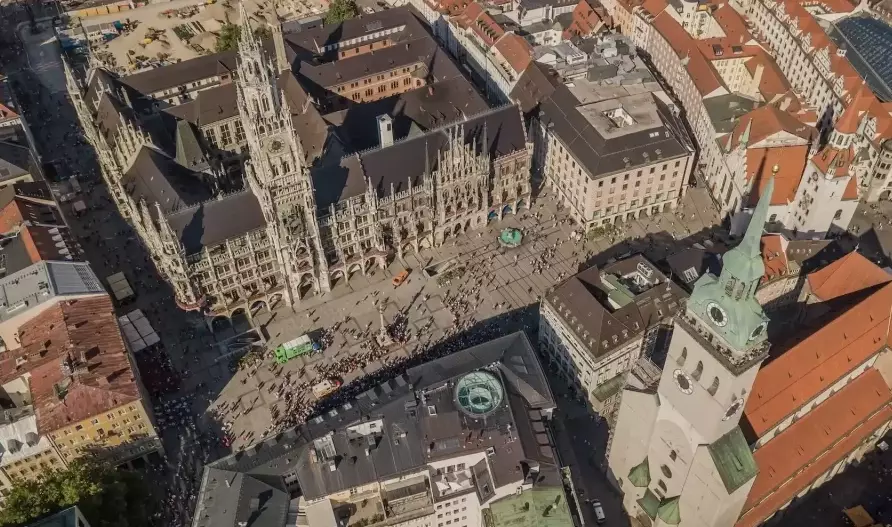
Pro Walking Tips: Comfort, Safety & Avoiding Tourist Traps
- Shoe Choice is Non-Negotiable: This is the most important tip. Wear broken-in, supportive walking shoes with thick soles. Your Converse or fashion sneakers will fail you on the cobblestones by lunchtime.
- Use Public Transport as a Bridge, Not a Crutch: Plan your day in walking "clusters." Take the U-Bahn to a district (e.g., Sendlinger Tor for the Altstadt, Universität for Schwabing), explore it thoroughly on foot, then take the train to your next cluster. The MVV network is flawless for this.
- Hydration & Snacks: While beer gardens are everywhere, carry a water bottle. Public fountains with potable water are common. Grab a pretzel from a bakery for sustained energy—it's cheaper and faster than sitting down every time.
- Safety: Munich is incredibly safe for walking, even at night in the central areas. Standard city awareness applies, but violent crime is rare. The main safety issue is bicycle traffic on shared paths—always check before stepping off a curb.
- The "Marienplatz Glockenspiel" Timing Trap: Don't structure your entire walk around seeing it chime at 11 am or 12 pm. The square becomes a human wall. See it if you're nearby, but it's not worth fighting the crowd. The view from the St. Peter's Church (Alter Peter) tower is a better use of your time.