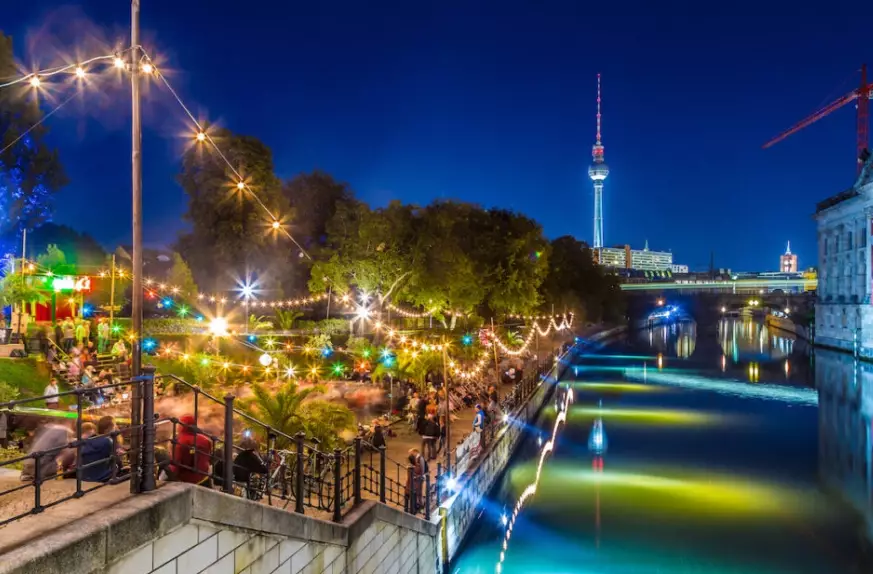
Berlin hits you with a certain energy. It's not a pretty postcard city. It's raw, it's real, and it's constantly rewriting its own story. For a first-time visitor, that can be overwhelming. Is it all about the Cold War and techno clubs? Where do you even start? Having spent years exploring its streets, I've learned that the magic of Berlin lies in embracing its contrasts. This guide cuts through the noise. We'll map out the unmissable sights, share how to move around without stress, point you to the real food, and tackle the questions that keep popping up when you plan a trip here.
Your Berlin Trip at a Glance
Must-See Berlin Attractions & How to Visit Them
Berlin's sights tell a fractured history. Don't try to see them all in one go. Group them geographically. Mitte holds the heavyweight historical landmarks, while Kreuzberg and Friedrichshain offer a taste of its rebellious, creative heart.
The Historical Heavyweights
Brandenburg Gate (Brandenburger Tor): The symbol of German unity. It's always impressive, but it's also always crowded. Go early in the morning (before 9 AM) for a photo without the tour groups, or see it beautifully lit at night. It's just a gate, so you don't need more than 20 minutes here. Address: Pariser Platz, 10117 Berlin. Public Transport: S-Bahn or U-Bahn to Brandenburger Tor.
Berlin Wall Memorial (Gedenkstätte Berliner Mauer) on Bernauer Strasse is the most authentic preserved section. It's free, sobering, and does a far better job explaining the Wall's impact than the more touristy East Side Gallery. The outdoor exhibition is open 24/7; the visitor center is open 10 AM–6 PM (Apr-Oct) / 9:30 AM–5 PM (Nov-Mar), closed Mondays. Address: Bernauer Str. 111, 13355 Berlin. Public Transport: U-Bahn U8 to Bernauer Strasse or S-Bahn to Nordbahnhof.
Reichstag Building & Dome: Visiting the glass dome atop the German parliament is free, but you must book a time slot online in advance on the official Bundestag website. Slots fill up weeks ahead, especially in summer. Bring your passport/ID for security. The audio guide is excellent. Address: Platz der Republik 1, 11011 Berlin. Public Transport: S-Bahn or U-Bahn to Brandenburger Tor or Bundestag.
The Museum Powerhouses
Museum Island (Museumsinsel): A UNESCO site with five world-class museums. The Pergamonmuseum (currently partially closed for renovation, but the Panorama exhibition is open) and the Neues Museum (home to Nefertiti) are the stars. Buying a Museum Island Day Pass is much cheaper than individual tickets. Be prepared for lines; book timed tickets online. General Opening: 10 AM–6 PM, some until 8 PM on Thursdays. Closed Mondays. Address: Bodestraße, 10178 Berlin.
Topography of Terror: Located on the site of the former Gestapo and SS headquarters, this free documentation center is a harrowing but essential look at Nazi terror. It's extremely well-curated. Give yourself at least 90 minutes. Opening: 10 AM–8 PM daily (outdoor exhibition until dusk). Address: Niederkirchnerstraße 8, 10963 Berlin. Public Transport: U-Bahn U6 to Kochstraße or Potsdamer Platz.
The Modern & Alternative Icons
East Side Gallery: The 1.3 km-long painted section of the Wall. It's iconic, but honestly, it can feel a bit like a crowded open-air souvenir stand. Go, but manage expectations. The art is powerful, but the atmosphere is less contemplative. It's always accessible. Address: Mühlenstraße, 10243 Berlin. Public Transport: S-Bahn to Ostbahnhof or Warschauer Straße.
Kreuzberg & Tempelhofer Feld: To feel Berlin's pulse, wander through Kreuzberg (especially around Oranienstraße and the Landwehrkanal). Then, head to Tempelhofer Feld, a former airport turned massive public park where people barbecue, kite-surf on land, and garden on the old runways. It's uniquely Berlin. Free entry. Address: Tempelhofer Damm, 12101 Berlin. Public Transport: U-Bahn U6 to Platz der Luftbrücke or Paradestraße.
How to Get Around Berlin Efficiently (Skip the Rental Car)
Driving in central Berlin is a headache. Parking is expensive and scarce, and the Umweltzone (environmental zone) requires a specific emissions sticker. The public transport system (BVG), covering U-Bahn, S-Bahn, trams, and buses, is your best friend.
Tickets must be validated (stamped) before your first journey at the small red or yellow boxes on station platforms or inside trams/buses. Inspections are common, and fines are steep (€60).
For point-to-point navigation, use the BVG FahrInfo Plus app or Google Maps. They give real-time routes combining all modes of transport.
Taxis are relatively affordable compared to other Western capitals. Ride-hailing apps like Free Now work well. For short distances, e-scooters (Lime, Tier) are everywhere—just wear a helmet, which they rarely provide.
Berlin Food & Drink: Beyond Currywurst
Yes, try a Currywurst (grilled sausage with curry ketchup) at a street stand like Curry 36 (multiple locations) for the experience. But Berlin's food scene is a global affair, heavily influenced by Turkish, Vietnamese, and Middle Eastern communities.
Must-Try Dishes & Where to Find Them:
- Döner Kebab: Berlin's signature fast food. Not just late-night drunk food. Mustafa's Gemüse Kebap in Kreuzberg (Mehringdamm 32) is famous for its veggie-loaded version, but be prepared for a long queue. Şimşek in Schöneberg (Hauptstraße 133) is a local favorite with less wait.
- German Classics: For a cozy, traditional meal, head to a Brauhaus. Brauhaus Lemke near the Schloss Charlottenburg (Luisenplatz 1) serves solid schnitzel and its own brewed beer. Expect to pay €15-25 for a main.
- Markthalle Neun: This market hall in Kreuzberg (Eisenbahnstraße 42/43) is a foodie paradise. Go on a Thursday evening for "Street Food Thursday" (5 PM–10 PM) to sample dozens of international vendors.
- Third Wave Coffee: Berlin takes its coffee seriously. The Barn (multiple locations) and Bonanza Coffee Heroes in Prenzlauer Berg (Oderberger Str. 35) are institutions.
Tap water (Leitungswasser) is safe and excellent to drink. In restaurants, you can ask for it, though some places might give you a funny look or charge a small fee for the glass.
The Perfect 3-Day Berlin Itinerary
This plan balances history, culture, and local flavor at a realistic pace.
| Day | Morning | Afternoon | Evening |
|---|---|---|---|
| Day 1: History & Icons | Brandenburg Gate, Reichstag Dome (booked slot), Memorial to the Murdered Jews of Europe. | Checkpoint Charlie (just for a quick look—it's very touristy), then the profound Topography of Terror exhibition. | Dinner in Mitte, then see the Brandenburg Gate and Reichstag beautifully illuminated. |
| Day 2: Museums & The Wall | Pick one museum on Museum Island (e.g., Neues Museum). Book ahead. | Walk along the River Spree to the Berlin Wall Memorial on Bernauer Strasse for a deep dive into Wall history. | Head to lively Prenzlauer Berg for dinner. Explore the cafes and boutiques around Kollwitzplatz. |
| Day 3: Kreuzberg & Alternative Berlin | Explore Kreuzberg: Walk along the Landwehrkanal, visit the Jewish Museum (architecture is a highlight). | Visit the East Side Gallery, then cross the Oberbaumbrücke into Friedrichshain. Relax at Tempelhofer Feld park. | Experience Berlin's famous nightlife. A guided pub crawl can be a safe intro, or find a live music venue in Kreuzberg. |
This itinerary assumes you have a 72-hour transport pass. It's packed but doable. For a more relaxed trip, stretch it to 4 days.
Practical Berlin Tips & Tricks
Money: Germany is still a cash-friendly society, especially in smaller restaurants, bars, and markets. Always have some euros on you. Cards are widely accepted, but don't assume.
Language: Learn a few basics: Hallo (Hello), Danke (Thanks), Entschuldigung (Excuse me). Most people in service roles speak good English, but starting in German is polite.
Sundays: Almost all shops are closed. Plan accordingly—visit museums, parks, or cafes.
Tipping: Rounding up the bill or adding 5-10% is standard. Just tell the server the total amount you want to pay (e.g., if the bill is €18.50, say "€20" when paying).
Safety: Berlin is generally safe. Standard big-city precautions apply: watch for pickpockets in crowded tourist areas and on public transport at night.
Your Berlin Questions, Answered
Berlin rewards curiosity. Don't just tick off the list. Get lost in a neighborhood, sit in a beer garden, and let the city's layers reveal themselves. It might challenge your idea of what a European capital should be, and that's precisely why you should go.