In This Guide
Ask ten people what's the prettiest town in Germany, and you'll likely get twelve different answers. That's the thing about beauty—it's fiercely subjective. One traveler's dreamy medieval lane is another's tourist-clogged path. For some, "pretty" means postcard-perfect half-timbered houses dripping with flowers. For others, it's an alpine backdrop so dramatic it doesn't look real, or a serene riverside setting that feels untouched by time.
I've spent years wandering Germany, getting lost in tiny alleyways, drinking terrible coffee in stunning market squares, and arguing with friends about this very topic. I remember sitting in a gasthof in the Moselle Valley, rain pattering outside, having a heated debate with a local about whether his town was prettier than the one down the river. He was, of course, biased. Aren't we all?
The truth is, there's no single winner. Germany is packed with contenders, each with a unique charm. But that doesn't mean we can't try to narrow it down. The real question behind "what's the prettiest town in Germany?" is usually a practical one: "Which one should I visit with my limited time?"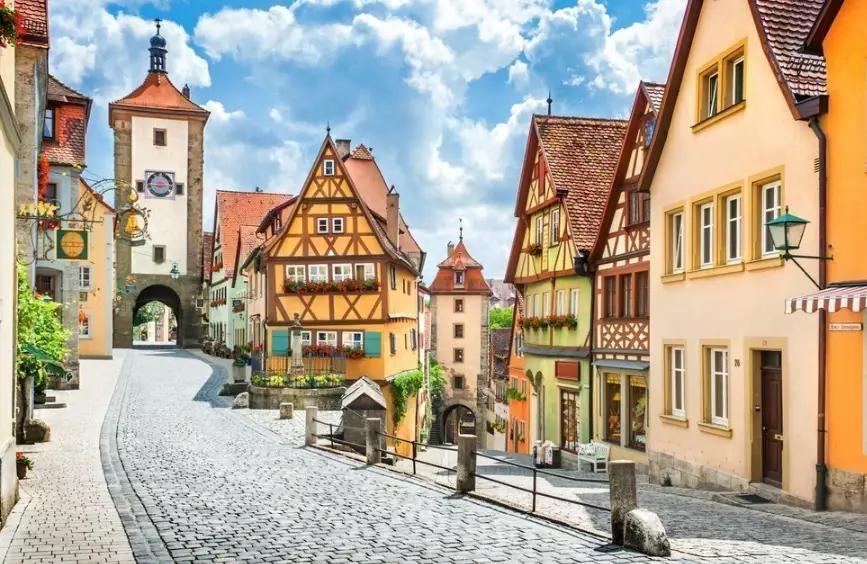
Let's break it down.
What do we even mean by "pretty" here? For this guide, we're looking at the whole package: architectural harmony and preservation, natural setting, overall atmosphere, and that intangible feeling of being somewhere special. A town that's just a museum piece can feel sterile. One that's purely scenic might lack soul. The best ones blend it all.
The Heavy Hitters: Towns You Can't Ignore
These are the names that always come up. They're famous for a reason, but fame has its costs.
Rothenburg ob der Tauber
This is the poster child. If you've ever seen a picture of a German town with crooked, colorful timber-frames, a towering gate, and a cobbled lane, it was probably Rothenburg. The Plönlein intersection is arguably one of the most photographed spots in the country. Walking the intact medieval walls that encircle the entire old town is a magical experience.
The catch? It knows it's pretty. During the day, especially in summer, the main streets can feel like a theme park. The key is time. Stay overnight. After the tour buses leave at 5 PM, the town reclaims its quiet, ancient magic. Wander the side streets like Herrngasse or Klostergasse, and you'll find the solitude you're craving.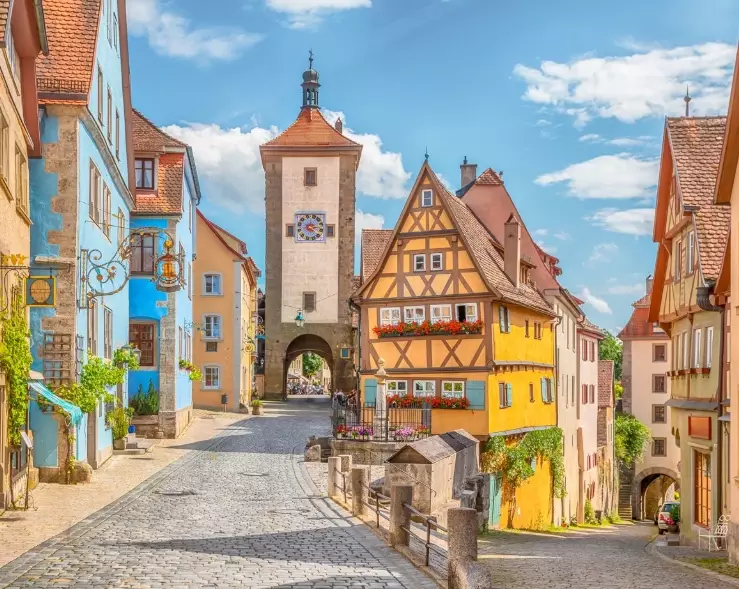
Bamberg
A UNESCO World Heritage site that often gets overshadowed by its Bavarian cousins. Bamberg's beauty is more... substantial. It wasn't bombed in WWII, so its historic core is astonishingly complete and authentic, not a reconstruction. The layout alone is stunning: built on seven hills, with the Regnitz River cutting through the middle.
The iconic view is of the Altes Rathaus (Old Town Hall), perched on an island in the river, looking like a ship. Then there's "Little Venice," a row of old fishermen's houses leaning over the water. But beyond the postcard spots, it's a living, breathing university town. The beauty here feels earned, not just staged. And they brew a unique smoked beer (Rauchbier)—an acquired taste, but part of the experience!
Meersburg
For those who think a pretty town needs a stunning natural backdrop, Meersburg on Lake Constance (Bodensee) is a top contender. The setting is unbeatable: vineyards terraced on sunny slopes, the deep blue lake stretching to the Alps, and two castles (one medieval, one Baroque) looming above the waterfront.
You can sip local wine at a hillside winestube with a view that goes on forever. The lake gives it a light, almost Mediterranean vibe that's different from the deep-forest feel of towns along the Romantic Road. It's elegant and relaxed.
Local Insight: The lower town (Unterstadt) by the ferry port is nice, but the real charm is in the upper old town (Oberstadt). Get lost in the steep, narrow lanes between the Old Castle and the Neue Schloss. The view from the castle terraces is worth the climb.
But maybe you're thinking, "Everyone goes there. Tell me somewhere I haven't seen a thousand times on Instagram." Fair point.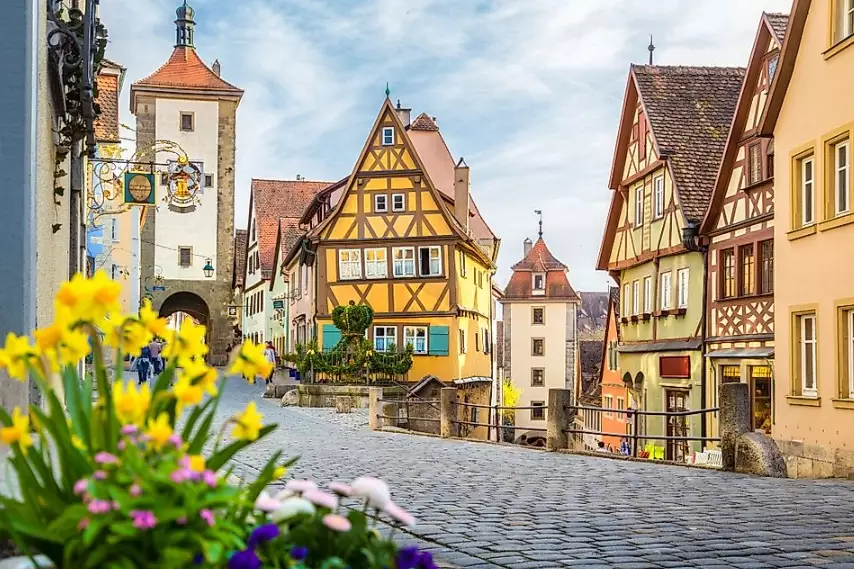
The Underrated Gems: Where the Crowds Thin Out
This is where the fun really begins. Germany's prettiness isn't confined to the guidebook top ten.
Monschau
Tucked in the hilly Eifel region near the Belgian border, Monschau feels like a secret. A fast-flowing river, the Rur, tumbles right through the middle of the town, lined with slate-roofed, half-timbered houses that seem to grow out of the rocks. It's compact, wildly picturesque, and surrounded by dense forest perfect for hiking.
It gets busy on weekends, but it lacks the international tourist crush of Rothenburg. The atmosphere is cozier, more local. In winter, it's especially charming, with the stone buildings and narrow lanes dusted with snow.
Freiburg im Breisgau
Okay, Freiburg is a city, not a town. But its old town (Altstadt) has a town-like charm that's impossible to ignore. It's the gateway to the Black Forest, with the wooded hills literally at the end of the tram line. The beauty here is vibrant and sunny.
The magnificent red-sandstone Freiburg Minster cathedral dominates the skyline. But look down—the real charm is in the Bächle, tiny little water-filled runnels that run along the gutters of the old town streets. Legend says if you step in one, you'll marry a local. (I've stepped in many. Still waiting.) The city buzzes with students, markets, and a fantastic food scene. It's pretty in a lively, sustainable, lived-in way.
And then there are the regions that are just cheating, with pretty towns stacked one after another.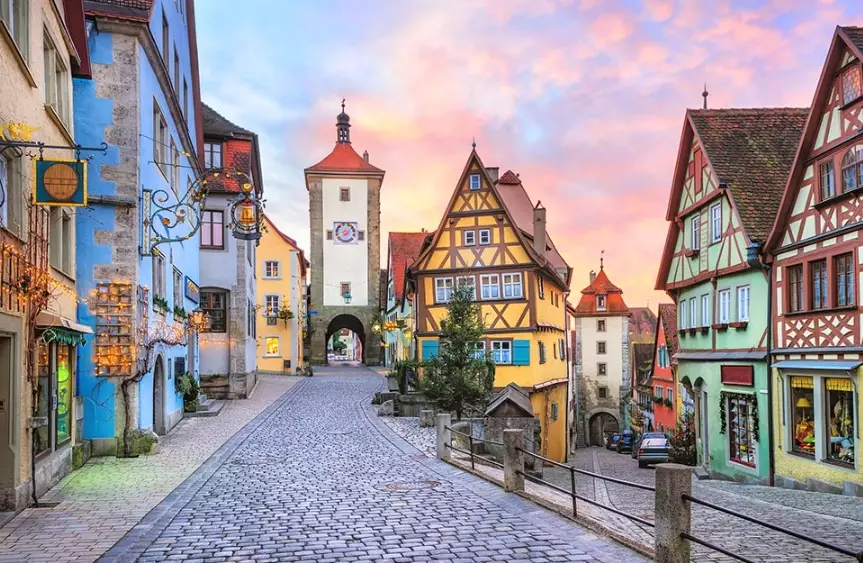
Pretty by Region: Where to Go for a Concentration of Charm
Sometimes you don't want to pick just one. You want to wander and discover.
The Romantic Road (Romantische Straße)
This famous tourist route is a parade of contenders. Rothenburg is the star, but don't sleep on:
- Dinkelsbühl: Often called "Rothenburg's quieter sister." It has similarly intact walls and gorgeous timber-frames, but only a fraction of the visitors. The St. George's Minster is breathtaking.
- Nördlingen: A unique circular town built inside a massive meteorite crater! You can walk its walls and see the perfectly round layout.
Driving this route lets you compare and contrast, answering "what's the prettiest town in Germany?" for yourself.
The Moselle Valley (Moseltal)
If your definition of pretty involves vine-covered slopes, a winding river, and castles on every other hilltop, head here. The towns are smaller, focused on wine.
- Cochem: Its skyline is dominated by the fairy-tale Reichsburg Castle perched high above. The town itself is a colorful jumble of buildings along the river. It's popular, but for good reason.
- Bacharach: My personal favorite on the Rhine (close to the Moselle). Its name means "Altar of Bacchus," hinting at its wine roots. The half-timbered buildings are exquisite, and the view from the ruined castle above, looking down the river bend, is unforgettable.
Okay, let's get practical. How do you choose?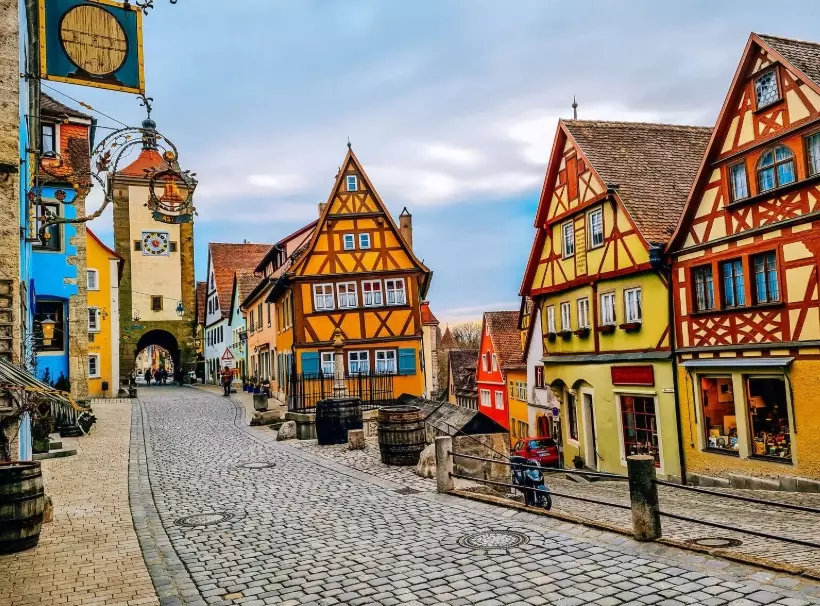
Choosing Your "Prettiest Town": A Decision Framework
Instead of me telling you the answer, ask yourself these questions:
| If you love... | Then consider... | Why it fits |
|---|---|---|
| Perfect, iconic postcard scenes | Rothenburg ob der Tauber | The definitive medieval German town image. Pure fantasy made real. |
| Authentic, lived-in history & culture | Bamberg or Freiburg | UNESCO sites that are also vibrant, working cities with great food and drink. |
| Dramatic lake/mountain scenery | Meersburg or Garmisch-Partenkirchen area | Natural beauty is the star, with the town complementing it perfectly. |
| Getting off the beaten path | Monschau or towns in Saxony Switzerland | Deep, regional charm without the international tourist infrastructure (or crowds). |
| A deep dive into one region | The Moselle Valley or Romantic Road | Multiple pretty towns close together, letting you explore and find your own favorite. |
See? It's about what *you* find pretty. A wine lover will be happiest in a Moselle village. A hiking enthusiast will find more beauty in a town that's a trailhead for the Black Forest.
Beyond the View: Practicalities for Your Visit
Pretty is nice, but can you get a decent meal? Is there anywhere to stay?
When to Go
Shoulder seasons (April-May, September-October) are golden. The weather is often still good, the crowds are manageable, and the landscapes are changing (blossoms or autumn colors). Summer is peak, pure and simple. Winter can be magical with Christmas markets and snow, but some smaller attractions may have limited hours.
Getting There & Around
Major towns like Bamberg or Freiburg are well-connected by train (Deutsche Bahn). For the smaller villages, you'll often need a car to really access them conveniently. Regional trains and buses do serve many, but schedules can be infrequent. Renting a car gives you the freedom to explore those hidden valleys. For reliable train planning, the official Deutsche Bahn website is indispensable.
Where to Stay
For the full experience, stay within the old town. Look for family-run guesthouses (Pensionen or Gasthöfe) or boutique hotels. They often have more character than chain hotels. Booking.com or Airbnb are useful, but for the real gems, sometimes you need to find the town's tourism website and book directly.
Budget Reality Check: The prettiest towns are not budget destinations. Accommodation inside the historic centers commands a premium, especially in peak season. Dining in the main square will also be more expensive. For a more affordable experience, look for lodging just outside the old walls and walk in, or eat where the locals do, often a street or two away from the prime tourist real estate.
Answering Your Questions (The FAQ Bit)
Is Heidelberg one of the prettiest towns?
Heidelberg is a beautiful city, no doubt. The castle ruins overlooking the Neckar River and the old bridge are iconic. But it's a major city and a huge international tourist destination. It feels more grand and academic than quaint. For a "town" vibe, the places listed above often feel more cohesive and intimate.
What about towns in Bavaria like Oberammergau or Mittenwald?
Absolutely! The Alps throw gorgeous towns like confetti. Oberammergau is famous for its Passion Play and stunning Lüftlmalerei (traditional frescoes) on the house façades. Mittenwald is a violin-making town nestled in a tight Alpine valley, with painted houses and incredible mountain views. They offer a very different, alpine version of "pretty." Don't limit yourself to the half-timbered classics.
Are there pretty towns in former East Germany?
Yes, and some are spectacular. The restoration efforts since reunification have been heroic. Görlitz on the Polish border is often cited as Germany's most beautiful *city*—it has architecture from every era, virtually untouched by war. Quedlinburg in the Harz Mountains has over 1,300 half-timbered houses! It's a UNESCO site that feels more authentic and less commercial than some western counterparts. It's firmly in the conversation for anyone asking what's the prettiest town in Germany.
I only have time for one day trip from Frankfurt/Munich. Which one?
From Frankfurt: The Rhine or Moselle valleys are your best bet. You can do a boat cruise from Rüdesheim or take a train to Koblenz and explore. For a single town, Bacharach on the Rhine is a solid, manageable choice.
From Munich: You have easy train access to the Alps. Mittenwald or Garmisch-Partenkirchen offer that stunning mountain scenery. For classic Bavarian charm, Regensburg (a city, but with a fantastic old town) is a UNESCO site on the Danube and is an easy train ride away.
Look, at the end of the day, the search for the prettiest town in Germany is a wonderful excuse to explore. You might find your answer in the quiet of a morning in Rothenburg's gardens, over a glass of Riesling on a Moselle terrace, or watching the light fade behind the Alps from a Meersburg balcony.
The journey is the point.
So pack your walking shoes, grab a good map (digital or paper), and go find your own prettiest town in Germany. There are worse quests to have.