Seven days for a Germany road trip is tight, but absolutely doable if you focus. The classic route, and the one I’ve driven three times now, strings together the financial hub of Frankfurt, the romantic medieval towns along the Romantic Road, King Ludwig’s insane castles, and finishes in the Bavarian capital of Munich. You get cities, forests, history, and mountain views—a solid sampler pack of German experiences. The key is not trying to see everything, but picking a logical route and sticking to it. This itinerary is designed for first-timers who want the highlights without the stress of constant, long drives.
Your Road Trip Journey at a Glance
- Day 1: Arrival & Frankfurt's Modern Skyline
- Day 2: Heidelberg's Castle & Rothenburg's Fairytale
- Day 3: Neuschwanstein Castle & Füssen
- Day 4: Munich's Historic Heart
- Day 5: Munich's Dark History & Modern Engineering
- Day 6: Into the Alps - The Zugspitze
- Day 7: Return & Departure
- Germany Road Trip Essentials: Driving, Budget, Tips
- Your Germany Road Trip Questions Answered
Day 1: Arrival & Frankfurt's Modern Skyline
Fly into Frankfurt Airport (FRA). Pick up your rental car. A common mistake is renting from the airport's on-site counters, which often have longer lines and higher fees. I usually book with a company that has a shuttle to an off-airport facility—it's faster. Head to your hotel, drop your bags, and start exploring.
Frankfurt is Germany's financial capital, so don't expect a quaint old town. The contrast is the point. Walk across the Eiserner Steg iron footbridge for the postcard view of the skyscrapers. Then, dive into the Römerberg, the reconstructed old square with its charming timber-framed houses. It feels like a movie set because, well, much of it was rebuilt after the war.
Dinner? Skip the overly touristy spots on the Römerberg. Walk 10 minutes to the Kleinmarkthalle (Hasengasse 7, 60311 Frankfurt), an indoor market. Upstairs, Market Green has great local dishes, or grab a classic Frankfurt sausage from one of the downstairs stalls.
Day 2: Heidelberg's Castle & Rothenburg's Fairytale
Drive: Frankfurt to Heidelberg (~1 hour), then Heidelberg to Rothenburg ob der Tauber (~2 hours).
Heidelberg Castle (Heidelberger Schloss, Schlosshof 1, 69117 Heidelberg) is a magnificent ruin. You can drive up or take the funicular from the Kornmarkt. The view of the red-roofed old town and the Neckar River from the castle terrace is worth the trip alone. Don't feel you need to do a full interior tour; the grounds and the giant wine barrel are the main attractions.
After lunch in Heidelberg's old town, drive to Rothenburg ob der Tauber. This is the iconic, walled medieval town you see in every Germany brochure. It's touristy, yes, but for good reason. Park outside the walls (follow signs for Parkplatz) and walk in.
The must-do here is the Night Watchman's Tour (starts at 8 pm at the market square). It's theatrical, informative, and surprisingly entertaining. For a unique, quieter experience, visit the Christmas Museum (Herrngasse 1) run by the Käthe Wohlfahrt store—it's Christmas year-round and oddly fascinating.
Where to Eat in Rothenburg: For dinner, try Altfränkische Weinstube (Klosterhof 7). It's tiny, atmospheric, and serves solid Franconian food. For the famous Schneeballen (snowball pastry), I prefer Bäckerei Striffler (several locations) over the most hyped spots.
Day 3: Neuschwanstein Castle & Füssen
Drive: Rothenburg to Hohenschwangau (village below Neuschwanstein) (~2.5 hours).
Book your Neuschwanstein Castle tickets online in advance. This is non-negotiable. Tickets are for timed slots and sell out days ahead. You can only buy them from the official Ticket Center Hohenschwangau. The ticket includes a guided tour. Park in one of the large paid lots in Hohenschwangau.
You have choices to reach the castle: a 30-40 minute uphill walk, a shuttle bus (drops you near Marienbrücke bridge), or a horse-drawn carriage. I usually take the bus up to Marienbrücke first for the photo of the castle, then walk down to the castle entrance for my tour time.
Let's be honest: the interior of Neuschwanstein, while opulent, feels incomplete and the tour is rushed. The real magic is the exterior and the setting. After your tour, consider a quick visit to the more livable Hohenschwangau Castle next door, where King Ludwig grew up.
Spend the night in the lovely town of Füssen, just 10 minutes away. It's far more pleasant than staying in Hohenschwangau. Hotel Das Rübezahl (Alatseestraße 12, 87629) is a charming, family-run option with a good restaurant.
Day 4: Munich's Historic Heart
Drive: Füssen to Munich (~1.5 hours). Return your rental car at Munich Central Station (Hauptbahnhof). You won't need it in the city, and parking is expensive and stressful.
Check into your Munich hotel. I'm partial to the Marc München (Senefelderstraße 12, 80336) near the station—modern, clean, good value. For a splurge, the Hotel Bayerischer Hof (Promenadeplatz 2-6, 80333) is legendary.
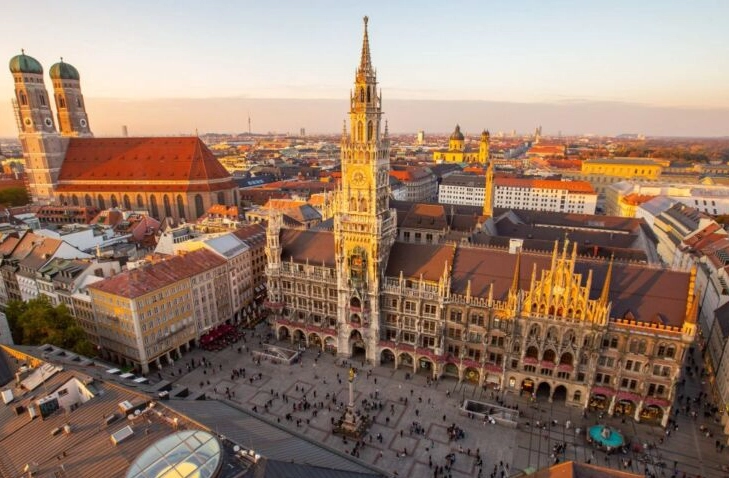
Now, hit the old town on foot/U-Bahn. Start at Marienplatz for the glockenspiel show (11 am & 12 pm). Walk to the Viktualienmarkt for lunch—grab a pretzel, some cheese, and people-watch. Then, visit the Residenz München, the vast former royal palace. Its treasury and antique collection are world-class.
Evening means one thing: a beer hall. The Hofbräuhaus (Am Platzl 9) is the famous one, but it's a circus. For a more authentic local vibe, try Augustiner-Keller (Arnulfstraße 52) or Hofbräukeller (Innere Wiener Straße 19). Just don't expect a quiet, intimate dinner.
Day 5: Munich's Dark History & Modern Engineering
Today is about contrast. Take the S-Bahn (S2 line from Hauptbahnhof) to Dachau Concentration Camp Memorial Site (Alte Römerstraße 75, 85221 Dachau). Admission is free, but the audio guide is essential. It's a sobering, necessary visit. Plan for at least 3-4 hours. There's a café on site, but I usually prefer to eat elsewhere afterwards.
In the afternoon, shift gears completely. Head to the BMW Welt and Museum (Am Olympiapark 1, 80809 Munich). Even if you're not a car enthusiast, the architecture is stunning and the museum does a brilliant job of showcasing design and engineering history. The adjacent Olympiapark, built for the 1972 Olympics, is perfect for a stroll.
For dinner, escape the tourist centers. The Glockenbachviertel neighborhood is full of trendy cafes and restaurants. Hans im Glück (multiple locations) is a reliable German burger chain with great vegetarian options, while Wirtshaus in der Au (Lilienstraße 51) serves excellent traditional Bavarian food in a cozy setting.
Day 6: Into the Alps - The Zugspitze
This is a long but spectacular day trip by train. From Munich Hauptbahnhof, take the direct Bayerische Zugspitzbahn train to Garmisch-Partenkirchen (about 80 minutes), then change to the cogwheel train that goes all the way up to the Zugspitze, Germany's highest peak.
The journey is part of the fun. The final ascent involves a cable car. At the top, you're standing at 2,962 meters with views into four countries. There are restaurants, a chapel, and plenty of walking paths. The round-trip ticket isn't cheap (around €60), but it's a unique experience. Check the weather before you go—if it's fully cloudy, you'll see nothing.
Return to Garmisch for a late lunch and wander through this classic Alpine resort town before heading back to Munich on the train.
Day 7: Return & Departure
Depending on your flight time, you might have a final morning in Munich. Consider visiting the Deutsches Museum (one of the world's largest science and technology museums) or simply enjoy a last coffee and Apfelstrudel at a café like Café Frischhut (Prälat-Zistl-Straße 8) near the Viktualienmarkt for their famous Schmalznudel pastries.
Take the S-Bahn (S1 or S8) from Hauptbahnhof back to Munich Airport (MUC) for your departure.
Germany Road Trip Essentials: Driving, Budget, Tips
Here’s the practical stuff you need to know before you go.
| Category | Details & Recommendations |
|---|---|
| Rental Car & Docs | Book an automatic if you're not used to manual. You need your home license, passport, and a credit card in the driver's name. An International Driving Permit (IDP) is recommended by many rental companies and is cheap to get from AAA before you leave. |
| Road Rules | Drive on the right. Speed limits: urban areas (50 km/h), rural roads (100 km/h), highways (Autobahn – recommended 130 km/h, but often unlimited). Crucial: There is always a speed limit in construction zones and urban areas. No right turn on red unless a specific green arrow sign permits it. |
| Tolls & Parking | No toll for cars on German highways. Parking: Look for blue Parkscheinautomat zones (pay and display) or green zones (resident permits). Parking garages (Parkhaus) are plentiful and often easier. Always keep change (coins) for meters. |
| Navigation | Google Maps/Apple Maps work well with offline maps downloaded. For reliable traffic and Autobahn routing, a dedicated GPS or the app ViaMichelin can be better. Have a phone mount and a 12V charger. |
| Estimated Budget (Per Person) | Mid-range travel: Rental Car/Gas: €250-350, Hotels (double room split): €70-120/night, Food: €40-60/day, Attractions/Tours: €200-300, Miscellaneous: €100. Total (excluding flights): ~€1,300 - €1,800. |