You've seen them in pictures, movies, and maybe even hoisted one yourself at a festival. Those iconic, hefty mugs brimming with golden beer are a symbol of Germany as much as castles and cars. But if you've ever tried to order one or buy a souvenir, you might have stumbled. Are they steins? Maßkrüge? Tankards? The answer isn't as simple as you think, and getting it wrong can mark you as a tourist faster than socks with sandals. Let's clear up the confusion once and for all.
What You'll Find in This Guide
What Exactly is a "Beer Stein"?
In English, we blanket-call them "beer steins." The word "stein" is actually a shortened form of "Steingut," which means "stoneware." So, technically, a true stein is a beer mug made from stoneware or ceramic, often with a pewter lid and elaborate hand-painted scenes.
Here's the first nuance most people miss: In Germany, the term "Stein" is used more by tourists. Locals might use it, but they're more precise. If it's made of glass, it's not really a Stein in the traditional sense. The classic stein is heavy, sturdy, and often a cherished collectible or family heirloom.
Key Takeaway: "Stein" is correct for decorative, lidded stoneware mugs. But the giant mug you get at Oktoberfest is rarely called a Stein there. It's something else entirely.
The Maßkrug: The Oktoberfest King
This is the one you're most likely picturing. The liter-sized, handled glass mug you see sloshing around the tents of Munich's Oktoberfest. Its proper name is Maßkrug (pronounced "mass-kroog"), or simply a Maß (pronounced "mass").
The word "Maß" literally means "measure" in German, referring to the exact one-liter volume it's supposed to hold. Getting a proper Maß is serious business in Bavaria. There are official state regulations that govern the size and the line marking the true liter fill level. If you get shorted, you can complain.
Handling a full Maßkrug is an art. It weighs about 2.3 lbs (1.1 kg) when empty and over 5.5 lbs (2.5 kg) when full. Most first-timers try to grip it by the handle with a full palm, which strains your wrist. The local method is to hook your fingers through the handle and let the base rest on the heel of your palm for support. It feels awkward until suddenly it doesn't.
The Oktoberfest Ritual
Ordering a Maß at Oktoberfest is a rite of passage. You'll sit at long communal tables in a massive tent like the Hofbräu-Festzelt or Schottenhamel. A server ("Kellnerin") will carry up to 12 full Maßkrüge at once – a breathtaking feat. In 2024, expect to pay between €13.50 and €14.90 per liter, depending on the tent. It's not cheap, but the experience is the price.
Beyond the Stein: Other German Beer Vessels
Germany's beer culture has a mug for every occasion. Calling everything a "stein" is like calling every car a "sedan." Here’s a quick breakdown of the main types:
| Name | Material | Typical Capacity | Key Features & Use |
|---|---|---|---|
| Stein | Stoneware/Ceramic | 0.5L - 1L | Often has a pewter lid, decorative, collectible. Used in traditional pubs and at home. |
| Maßkrug / Maß | Thick Glass | 1 Liter (exact) | The Oktoberfest standard. Heavy, dimpled glass, marked fill line. |
| Humpen | Glass or Stoneware | 0.5L - 2L+ | Cylindrical shape, often less ornate than a Stein. A general term for a large beer mug. |
| Stange | Tall, Thin Glass | 0.2L or 0.3L | Used for Kölsch (Cologne) and Altbier (Düsseldorf). Served in small, repeated rounds. |
| Weizen Glass | Tall, Curved Glass | 0.5L | Specific for wheat beers (Weißbier). Shape promotes the aroma and head. |
Notice that the Humpen is a key term you don't hear often in English. It's a great word to know if you're browsing a traditional shop like Käthe Wohlfahrt (a famous Christmas and German handicrafts chain). You'll sound more in-the-know asking for a "Bierhumpen" than a generic "stein."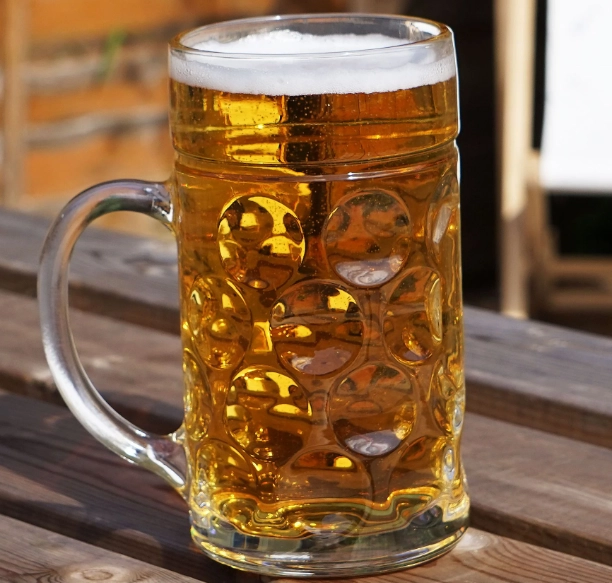
Why the Lid? A Quick Sip of History
Those ornate pewter lids on traditional steins aren't just for show. Their origin is surprisingly practical – and a bit grim. The most common theory points to the bubonic plague in the 14th century. Authorities passed laws (like the Reinheitsgebot or other local ordinances) requiring food and drink covers to prevent flies, which were believed to spread the disease, from contaminating beverages.
Later, the lids became symbols of status. More elaborate engravings, intricate hinges, and even thumb-levers indicated a wealthier owner. Today, they're purely traditional. You'll almost never get a lidded stein served to you in a beer garden. That's for your display cabinet at home.
How to Choose and Buy an Authentic German Beer Stein
Want to bring one home? Skip the cheap, made-overseas souvenirs at the airport. Here’s how to find a real one.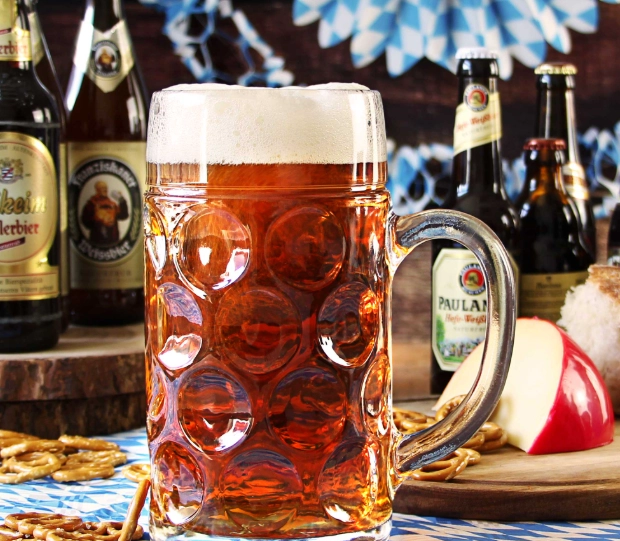
Where to Buy: For authenticity, head to traditional handicraft stores or breweries. In Munich, shops around the Marienplatz like Ludwig Mory or Andechser am Dom have good selections. The Hofbräuhaus gift shop sells its own branded Maßkrüge. In Rothenburg ob der Tauber, the Käthe Wohlfahrt flagship store has a stunning array of steins year-round.
Price Range: A simple, new 1-liter glass Maßkrug costs €10-€20. A hand-painted, mid-range stoneware stein with a pewter lid starts around €50-€150. Antique or highly detailed collector pieces can run into the hundreds or thousands.
What to Look For: Material: Feel the weight. Real stoneware is heavy and cool to the touch. Markings: Look for "Germany" or "Handarbeit" (handwork) on the bottom. Many have the maker's mark. Lid Fit: The lid should fit snugly and swing smoothly. Artwork: Hand-painting will have slight imperfections; decals look too perfect.
My personal tip? If you want a true drinking vessel, get a glass Maß. It's what's actually used. If you want a decorative souvenir, a stoneware stein is perfect. Don't try to use a detailed collectible stein for daily drinks – they're often hard to clean thoroughly.
Your German Beer Cup Questions Answered
Is it rude to clink glasses with a Maßkrug?
It's not so much rude as it is risky. Clinking two heavy glass Maßkrüge together with gusto is a great way to chip them or, worse, shatter one. A gentle tap at the top is acceptable, but in the noisy tent, a hearty "Prost!" and eye contact is the real tradition. Save the forceful clinking for lighter wine glasses.
Why do some steins have a thumb rest on the lid?
That's a functional feature called a "Daumenrast" (thumb rest). It allows you to hold the heavy lid open with your thumb while you drink one-handed. It's a sign of a well-designed, drinkable stein rather than a purely decorative one. If you see one, it means the maker actually thought about someone using it.
Can I take my empty Maßkrug home from Oktoberfest as a souvenir?
Absolutely not. Taking the glassware is considered theft. The deposit ("Pfand") you pay, usually around €5-€7, is for the safe return of the mug. If you want one, you must buy a new one from the gift stands outside the tents. Every year, thousands try to sneak them out, and security is wise to it.
What's the difference between a "Krug" and a "Humpen"?
"Krug" is a more general word for a jug or pitcher, but it's commonly used for a large beer mug (hence Maßkrug). "Humpen" specifically denotes a large, cylindrical drinking vessel, often without a taper. In practice, they're used interchangeably, but Humpen sounds more old-fashioned and traditional.
Are there smaller versions of the Maß for people who can't drink a liter?
Yes, thankfully. You can order a "Halbe" (pronounced "hal-buh"), which means "half" – a half-liter (0.5L) mug. It looks like a smaller version of the Maßkrug. In many beer gardens outside of festival settings, the Halbe is actually the standard serving size. Don't be afraid to ask for one; it's perfectly normal.
So, next time you see those big German beer cups, you'll know they're not just "steins." They're Maßkrüge, Humpen, and Steingut, each with its own story, purpose, and proper way to be held. It’s a small detail, but understanding it gets you closer to the heart of German Gemütlichkeit. Now, go practice your one-handed lift. Prost!