Five days for a Germany road trip. It sounds tight, but let me tell you, it's the perfect amount of time to get a real taste of the country's soul if you plan it right. Most itineraries you find online will have you rushing from one mega-city to another, spending half your trip in traffic or train stations. That's not a road trip; that's a commute with scenery.
After driving these routes more times than I can count, I've refined a loop that hits the iconic postcard spots and the hidden gems in between, balancing driving time with actual exploration. We're starting and ending in Frankfurt for easy flights, but the heart of this journey is in the smaller towns, the winding forest roads, and the castles that look too perfect to be real.
Your 5-Day Germany Road Trip Roadmap
Day 1: Frankfurt to the Rhine Valley (Rheingau)
Pick up your rental car at Frankfurt Airport (FRA). Pro tip: book an automatic transmission well in advance if you're not comfortable with manual—they're less common and sell out fast. Skip downtown Frankfurt traffic and head straight southwest, about a 45-minute drive, to the Rhine River.
Morning: Rüdesheim am Rhein
Your first stop is Rüdesheim, a classic Rhine wine town. Don't just walk the main Drosselgasse lane (it's very touristy). Instead, take the Seilbahn Rüdesheim cable car up to the Niederwald Monument. The view over the river bend is worth the €10 round-trip. It opens at 10:00 AM. For a late breakfast, grab a coffee and a slice of Streuselkuchen (crumb cake) at a bakery.
Afternoon: Rhine River Cruise & Castle Spotting
This is where the road trip truly begins. Drive south along the B42 road on the left bank of the Rhine. This is the Romantic Rhine stretch. You'll see castles like a kid pointing at airplanes. Pull over at viewpoints for Burg Rheinstein and the famous Loreley Rock. For a closer look, consider a 1-2 hour river cruise from St. Goar to Bacharach with KD Rhine. Parking in these tiny towns is tricky; look for designated lots (Parkplatz) by the river.
Evening: Overnight in Bacharach or Boppard
Spend your first night in a half-timbered hotel within medieval walls. I prefer Bacharach. Try Hotel Rheinstein (Mittelstrasse 13, 55422 Bacharach) for authentic charm, with rooms around €110-140 per night. For dinner, find a Weinstube (wine tavern) and order Riesling (the local wine) and Zwiebelkuchen (onion tart) if in season, or a hearty Schnitzel.
Day 2: Rhine Castles & The Road to Baden-Baden
Today mixes history with a taste of luxury. Start early to visit one castle interior before the crowds.
Morning: Burg Eltz or Marksburg Castle
You have a choice. Burg Eltz is the fairytale castle hidden in a forest, a 30-minute detour from the river. It requires a 15-minute walk from the parking lot (€4 fee). Tours start at 9:30 AM, cost €14, and it gets packed. Alternatively, Marksburg Castle in Braubach is right on the Rhine, never destroyed, and offers a great medieval tour (€11, open from 10:00 AM). Eltz is prettier for photos; Marksburg is more authentic.
Afternoon: Drive to Baden-Baden via the Black Forest High Road
Head towards Baden-Baden. Instead of the highway, take the Black Forest High Road (B500) from Freudenstadt. This is one of Germany's great driving roads—sweeping curves through dense, dark fir forests with panoramic pull-offs. Stop at the Mummelsee lake for a short walk and maybe a slice of Black Forest Gateau. The drive is about 2.5 hours.
Evening: Baden-Baden Elegance
Baden-Baden is all about 19th-century spa glamour. You can't drive in the tiny old town. Park at a garage like Parkhaus am Augustaplatz. Stroll the Lichtentaler Allee park. For a unique experience, visit the Friedrichsbad Roman-Irish baths (€37 for 3 hours, mixed nude days, check schedule) or the modern Caracalla Therme. Stay at Hotel am Markt (Marktplatz 18, 76530 Baden-Baden) for a central, affordable option (€100). Dinner at a bistro on Sophienstrasse.
Day 3: Black Forest Scenic Drive to Lake Constance
Forget the cuckoo clock shops on the tourist trails. Today is about the quiet, deep Black Forest.
Morning: Triberg Waterfalls & The Real Black Forest
Drive south from Baden-Baden on smaller roads (like the B294/B33) towards Triberg. Visit the Triberg Waterfalls—Germany's highest. Entrance is €9. It's a well-maintained path. Afterwards, walk the main street. Yes, it's touristy, but the House of 1000 Clocks is a spectacle. For a better clock, visit the nearby German Clock Museum in Furtwangen (Deutsches Uhrenmuseum, €9, open 9-6). It's the real deal.
Afternoon: The Lake Constance Shoreline
Continue south to Lake Constance (Bodensee). Aim for the island town of Meersburg. It has an old castle (Altes Schloss, €14.50) and a stunning lakefront. Park in the large lot above the old town and walk down. Alternatively, the city of Konstanz is larger and more vibrant. Take a late afternoon stroll along the harbor (Hafen).
Evening: Overnight in Meersburg or Friedrichshafen
Sleep by the lake. See the sunset over the water. Hotel Seehof in Meersburg (Steigstrasse 5, 88709 Meersburg) has a great terrace. Rooms from €130. Eat fresh lake fish (Felchen) at a restaurant like Winzerstube zum Becher.
| Day | Key Drive | Approx. Distance | Top Attraction | Overnight |
|---|---|---|---|---|
| Day 1 | Frankfurt to Rhine Valley | ~100 km | Rhine River Scenery | Bacharach |
| Day 2 | Rhine to Black Forest (B500) | ~150 km | Black Forest High Road | Baden-Baden |
| Day 3 | Deep Black Forest to Lake Constance | ~200 km | Triberg Waterfalls / Lake Constance | Meersburg |
| Day 4 | Lake Constance to Füssen (Alps) | ~180 km | Neuschwanstein Castle | Füssen |
| Day 5 | Füssen to Munich & Return | ~130 km to Munich | Munich City Highlights | Flight Home |
Day 4: Neuschwanstein Castle & The Alps
The big one. Everyone wants to see Mad King Ludwig's castle. Most people do it wrong.
Morning: The ONLY Way to Visit Neuschwanstein
Drive from Lake Constance to Hohenschwangau (the village below the castles). This takes about 2 hours. Book your Neuschwanstein Castle tour ticket online weeks in advance via the official Hohenschwangau website. The 9:30 AM slots sell out first. The ticket center opens at 8:00 AM. If you didn't book, you're likely out of luck or facing a 4-hour wait. A tour ticket (€18.50) is mandatory to enter. The interior is impressive but oddly unfinished—managing expectations is key.
Afternoon: Marienbrücke & Alpine Views
After your timed tour, hike up to Marienbrücke (Mary's Bridge) for the iconic photo of the castle. The bridge can be closed in winter. For a less crowded, equally stunning alternative, consider visiting Hohenschwangau Castle (the yellow one) or the underrated Wieskirche (a UNESCO rococo church) a 30-minute drive away.
Evening: Overnight in Füssen
Don't rush off. Stay in the beautiful old town of Füssen. It's infinitely nicer than the tourist hub of Hohenschwangau. Hotel Hirsch (Kaiser-Maximilian-Platz 7, 87629 Füssen) is a historic gem. Wander the Lech River, visit the high castle (Hohes Schloss). Have a final Bavarian dinner with Käsespätzle (cheesy pasta) and a beer.
Day 5: Munich & The Journey Back
The last day is a gentle wind-down with a city option.
Morning: Drive to Munich
It's a relaxed 1.5-hour drive from Füssen to Munich on the A7/A96. Return your rental car at Munich Airport (MUC) or at a central station like Hauptbahnhof if your flight is later. Dropping at the airport is usually easier.
Afternoon: Munich Highlights (If Time Allows)
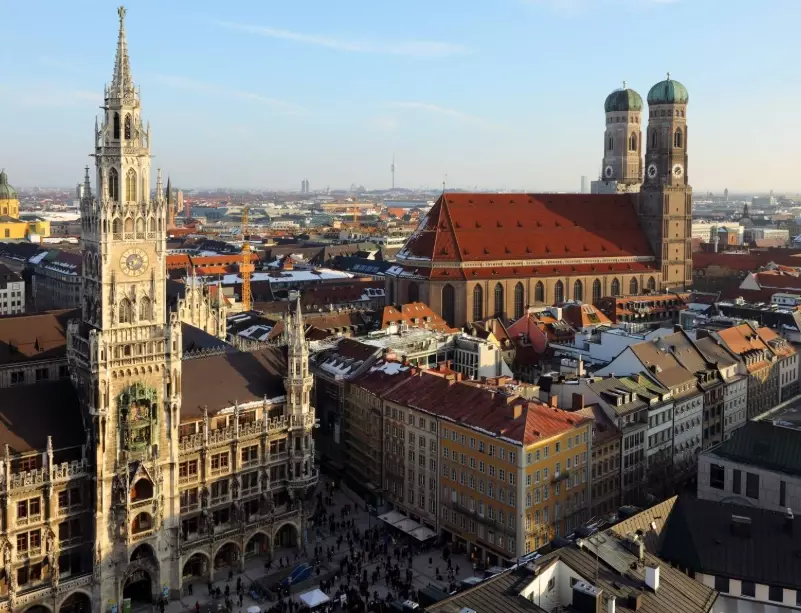
If your flight is in the evening, store luggage at the airport or main station and take the S-Bahn (suburban train) into town. You have time for one or two things: the Marienplatz Glockenspiel show (at 11 AM or 12 PM), a quick visit to the Viktualienmarkt food market, or a beer in the Hofbräuhaus for the atmosphere (the food is mediocre). Don't try to do museums today.
Evening: Departure
Head back to the airport with plenty of time (at least 3 hours before an international flight).
Practical Tips for Your German Road Trip
Let's get into the nuts and bolts that most guides gloss over.
Budget Breakdown (Per Person, Mid-Range)
- Rental Car: €50-80 per day (includes full insurance, automatic, unlimited km).
- Fuel: About €120-150 total (Diesel is cheaper than Super/Petrol).
- Tolls: Zero! German autobahns are free for cars. You'll need a vignette (sticker) only if you detour into Austria (e.g., around Lake Constance). Buy at border gas stations (€10 for 10 days).
- Accommodation: €80-140 per night for a double room in a good hotel.
- Food & Attractions: €50-70 per day.
Best Time to Go
Late May to June, or September to early October. You avoid peak summer crowds (July-August) and school holidays. The weather is pleasant, and the forests are green or autumnal. Winter can be magical with Christmas markets (late Nov-Dec), but some mountain roads and castles may close, and driving requires caution.
Navigation & Rules
Use Google Maps or Waze offline. Download the maps for the regions. Key driving rules: Always pass on the left on the autobahn. The right lane is for cruising. Speed limits are signposted—unlimited sections mean you can go fast, but only if conditions and your confidence allow. In towns, the Umweltzone (environmental zone) requires an emissions sticker (Feinstaubplakette) on your windshield. Rental cars should have this.