Quick Navigation
- Breaking It Down: What Are You Actually Looking For?
- Crafting Your Itinerary: From Theory to Concrete Plans
- Factors That Actually Change the Number
- Beyond the Cities: When You Need More Time
- Practical Stuff That Influences Your Timeline
- Common Questions (The Stuff You're Actually Wondering)
- Final Verdict: Making Your Decision
Let's cut to the chase. You're planning a trip, you've got Germany in your sights, and now you're staring at a calendar trying to figure out how many days to block off. It's the classic travel dilemma. Is a long weekend enough? Do you need two full weeks? The short, utterly unhelpful answer is: it depends. But since you didn't come here for that, let's dig into the real, practical details that will help you decide.
Germany isn't a one-size-fits-all destination. Trying to see the Black Forest, the Baltic Sea coast, Berlin's nightlife, and Bavaria's castles in four days is a recipe for exhaustion and a blur of train windows. I learned that the hard way on my first attempt, rushing from Frankfurt to Munich with barely a pause. Not fun. The magic number for a satisfying first taste, for most people, lands somewhere between 7 and 14 days. That gives you breathing room.
Breaking It Down: What Are You Actually Looking For?
Before we throw numbers around, ask yourself a few questions. Are you a city person, drawn to museums, history, and urban energy? Or does the idea of hiking in the Alps or driving the Romantic Road make your heart beat faster? Maybe it's a mix. Your personal travel style—fast-paced explorer vs. slow soak-it-in traveler—is the biggest factor in determining how many days are sufficient for Germany.
Here’s a blunt truth: if you only have 3-4 days, pick ONE city and its immediate surroundings. Don't try to do Berlin and Bavaria. Just don't. You'll spend half your trip in transit. For a trip that feels fulfilling rather than frantic, you need to match your ambitions to your available time.
The Quick Answer: Classic Trip Lengths
| Trip Style & Focus | Recommended Days | What You Can Realistically Cover | Best For... |
|---|---|---|---|
| The City Sampler | 5-7 days | Two major cities (e.g., Berlin + Munich or Hamburg + Cologne) with a day trip. | First-timers, urban enthusiasts, shorter vacations. |
| The Classic Introduction | 10-12 days | Three regions (e.g., Berlin, Bavaria with castles, Rhine Valley). The sweet spot. | Most travelers wanting a comprehensive first look. |
| The Deep Dive | 14-21 days | A single region in depth (all of Bavaria) or a relaxed cross-country route. | Return visitors, slow travelers, thematic trips (hiking, history). |
| The Thematic Blitz | 7-9 days | One theme intensely (e.g., Romantic Road drive, Christmas Markets tour). | Travelers with a specific passion or interest. |
See that 10-12 day range? That's where the magic often happens. It’s enough to get over jet lag, settle into the rhythm, and not feel like you're sprinting through a museum. It allows for a couple of longer train journeys without them consuming your trip.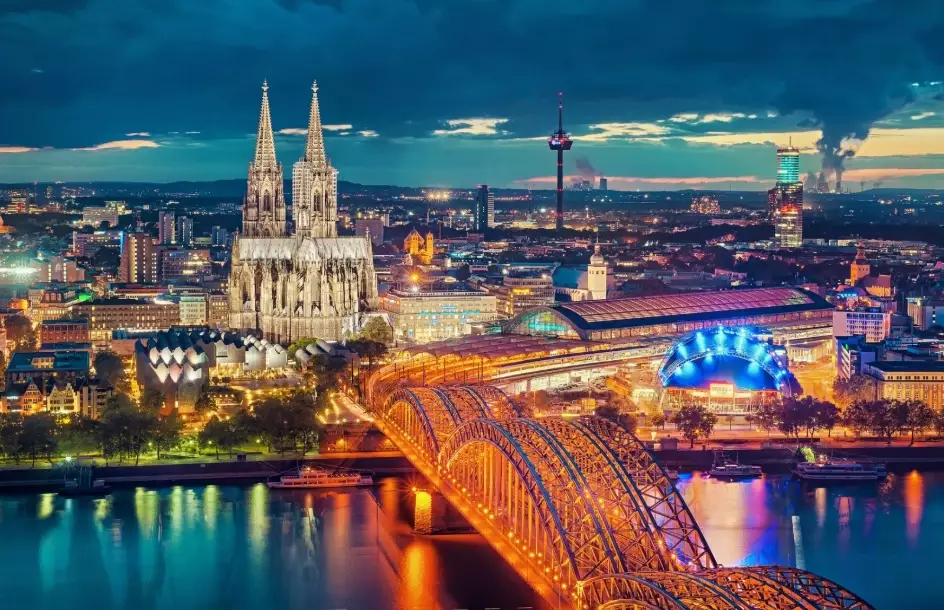
Crafting Your Itinerary: From Theory to Concrete Plans
Okay, so how does this translate into an actual plan? Let's build a few. Remember, these are frameworks. Swap cities based on your interests.
The 7-Day Power Week (The Minimum I'd Recommend)
This is tight, but doable if you're efficient. Focus on one geographical corner.
- Days 1-3: Munich. Land, recover. Dive into the city center (Marienplatz, Viktualienmarkt), a museum (the Deutsches Museum is vast), and a day trip to Dachau for a sobering historical perspective. On day three, take the train to Füssen for Neuschwanstein Castle. It's a long day, but worth it.
- Days 4-5: The Romantic Road or Salzburg. Rent a car or take a tour to Rothenburg ob der Tauber. Or, take a quick train to Salzburg, Austria (it's close and easy).
- Days 6-7: Bavarian Alps or Nuremberg. Head to Garmisch-Partenkirchen for mountain vibes, or north to Nuremberg for medieval history and the Nazi Rally Grounds documentation center.
Is 7 days sufficient for Germany? For a focused taste of Bavaria, yes. For the whole country, no way.
The 10-12 Day Gold Standard Itinerary
This is the itinerary I wish I'd done first. It balances cities, history, and scenery.
- Berlin (4 nights): You need this much. The city is sprawling and layered. Reichstag, Brandenburg Gate, Museum Island (book ahead!), the East Side Gallery, a food tour in Kreuzberg. The Berlin Wall Memorial site is more impactful than I expected.
- Train to Dresden or Leipzig (2 nights): Break up the journey to Munich. Dresden's rebuilt Baroque beauty is stunning. Leipzig is cooler, more alternative.
- Munich & Bavaria (4-5 nights): As above, but with more relaxation. Maybe add a night in a small town like Mittenwald or Oberammergau.
- Option: From Munich, you can take a scenic train to the Rhine Valley (Bacharach or St. Goar) for 2 nights of castle views before flying out of Frankfurt.
This flow makes the question of how many days are sufficient for Germany feel answered. You get the north and the south, urban and pastoral.
Factors That Actually Change the Number
It's not just about places. Other stuff stretches or shrinks your needed time.
Season Matters. A lot. Summer and Christmas market season are peak. Everything is crowded, accommodations are pricey, and you might move slower. Shoulder seasons (May-June, Sept-Oct) are glorious. You can cover more ground pleasantly. Winter days are short—fewer daylight hours for sightseeing.
Your Travel Mode. Renting a car gives flexibility in the countryside (Black Forest, Romantic Road) but is a hassle in cities. Germany's train system is excellent. The Deutsche Bahn website is your best friend for planning. For regional travel, look into Länder-Tickets for cheap group travel. Figuring this out can save you a full day of stress.
Museum Fatigue is Real. Are you the type who spends 4 hours in a museum, or 40 minutes? Be honest. Berlin's Pergamonmuseum alone could take half a day. Schedule max one major museum per day.
Beyond the Cities: When You Need More Time
If your dream Germany involves forests, vineyards, and hiking trails, you need to add days. City itineraries are dense; countryside travel has more “empty” time (driving, hiking) which is part of the point but needs to be accounted for.
- The Black Forest: A minimum of 2-3 nights to do a couple of hikes, see Triberg's waterfalls, and drive the Schwarzwaldhochstraße.
- The Rhine and Mosel Valleys: At least 2 nights to take a river cruise, visit a castle or two, and wander a couple of wine villages.
- The Baltic Coast (Rügen, etc.): This is a slow-travel zone. 3+ nights.
- The Bavarian Alps: Base in Garmisch for 2-3 nights to access Zugspitze and Partnach Gorge.
Adding any of these to a city trip easily pushes you into the 14-day+ territory. And that's okay! It means you're doing it right.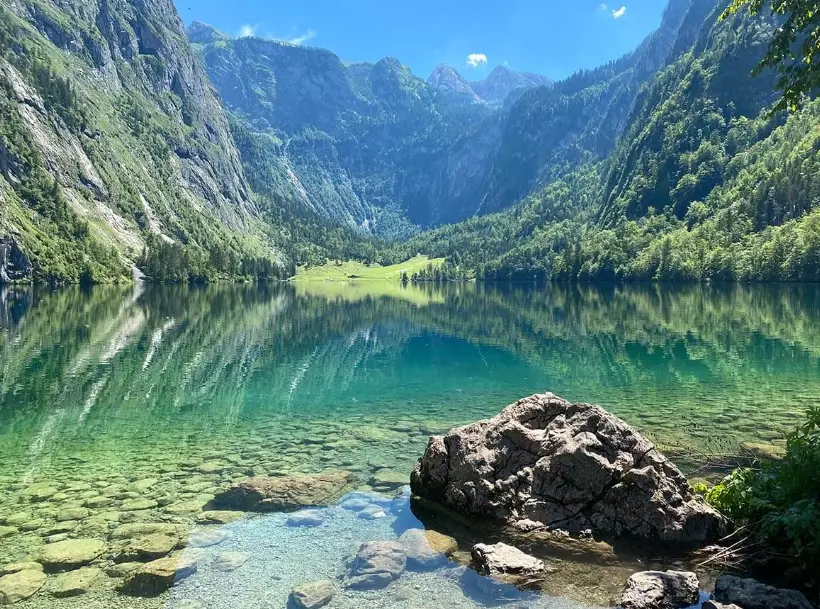
Practical Stuff That Influences Your Timeline
Getting Around
The ICE high-speed trains are fantastic but can be expensive if booked last minute. Look for Sparpreis fares weeks in advance for big savings. Regional trains (RE, RB) are slower but much cheaper and often covered by passes like the German Rail Pass (do the math to see if it's worth it for your itinerary). Driving on the Autobahn is an experience, but know that traffic jams are common and parking in cities is expensive and difficult.
Where to Stay
City center vs. near the main train station (Hauptbahnhof)? For short stays, being near the Hbf can save you hours with luggage. For longer stays, pick a neighborhood with character (like Prenzlauer Berg in Berlin or Maxvorstadt in Munich). In small towns, a family-run Gasthof is often the best experience.
Budgeting Your Days
Your daily budget shrinks or expands your effective time. A tight budget means more time spent finding cheap eats, using public transport, and maybe skipping some paid attractions. A comfortable budget lets you use taxis, take guided tours, and eat in sit-down restaurants, which is more efficient but also more expensive. Factor in costs like the Munich Oktoberfest if you're going during that time—accommodation triples.
Common Questions (The Stuff You're Actually Wondering)

Final Verdict: Making Your Decision
So, after all this, how many days are sufficient for Germany?
If you're a first-timer wanting a balanced, memorable trip without burnout, aim for 10 to 12 days. This allows for 3-4 bases, a mix of city and scenery, and some breathing room. It makes the journey enjoyable, not just a checklist.
With 7-9 days, you can have a fantastic trip, but you need to narrow your focus geographically—stick to the south, or the north, or a city-heavy route.
With 14 days or more, you unlock the ability to truly immerse yourself, add a countryside region, or travel at a much more relaxed pace. You can even venture into neighboring countries like Austria or the Czech Republic with ease.
The goal isn't to see “all of Germany.” That's impossible. The goal is to have a rich, personal experience that makes you want to come back. Whether that takes 7 days or 21, the key is matching your itinerary to your time, not the other way around. Start with the number of days you have, then build a realistic, rewarding plan from there. Germany isn't going anywhere, and its regions are distinct enough that every trip can feel completely new.
Now, go look at that calendar again. With a clearer picture, it should be a much easier decision.