Let's settle this once and for all: the biggest castle in Germany is Marburg Castle (Marburger Schloss). Perched high above the enchanting university town of Marburg in Hesse, this isn't just a single fortified palace—it's a vast, sprawling complex of buildings that crowns the entire hill. Its claim to the title isn't about having the tallest tower (it doesn't) or the most fairy-tale silhouette (that's Neuschwanstein's game). It's about sheer, undeniable scale. When you stand in its courtyards, you're not just visiting a castle; you're walking through a small fortified city that was the seat of power for the Landgraves of Hesse for centuries.
I remember my first visit. I'd seen the photos, but nothing prepared me for the climb up and the moment the scale of the place unfolded. It's massive in a way that feels lived-in and imposing, not just decorative.
What's Inside This Guide
What Makes Marburg Castle the Biggest?
The term "biggest" can be tricky. Are we talking floor area, volume, or land area? For Marburg Castle, it's a combination of factors that cement its status.
First, look at the footprint. The castle complex occupies the entire summit of Schlossberg hill. It's not one building but a collection—the Prince's Building (Fürstenbau), the Knights' Hall (Rittersaal), the Wilhelmsbau, a Gothic chapel, massive defensive walls, and multiple courtyards, all interconnected. It's a labyrinthine fortress.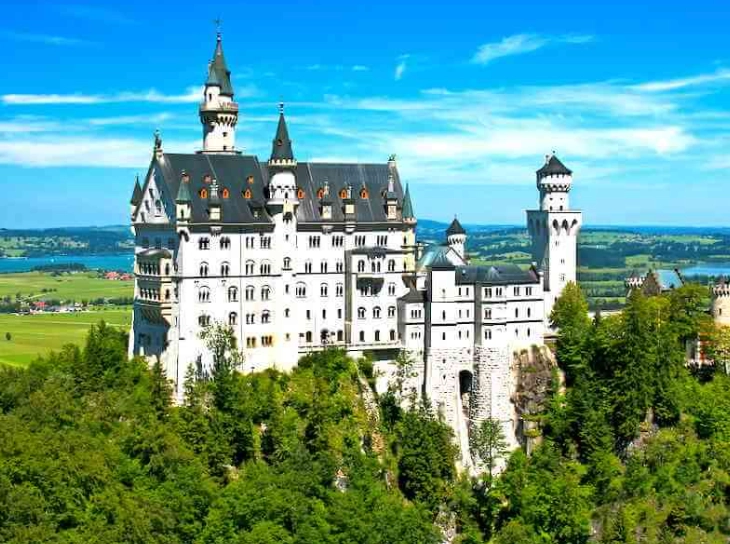
Historically, its size was a statement of power. Founded in the 11th century and significantly expanded in the 13th-15th centuries, it served as the primary residence of the Landgraves of Hesse. This wasn't a weekend retreat; it was the administrative, military, and cultural heart of a region. The Landgraves needed space for their court, soldiers, servants, and guests. The scale reflects that practical, day-to-day governance.
Here’s a quick comparison to other famous German castles to put its size in perspective. This isn't about ranking beauty, but understanding scale.
| Castle | Primary Claim | Size Context |
|---|---|---|
| Marburg Castle | Largest overall castle complex. | Sprawling hilltop complex with multiple large buildings and courtyards. |
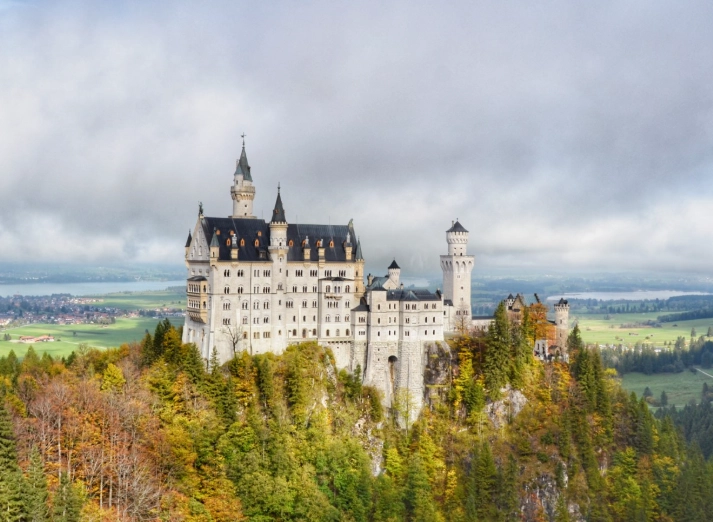
| Neuschwanstein Castle | Most famous, romantic vision. | A large, single palace building, but the complex itself is smaller than Marburg's. |
| Heidelberg Castle | Largest Renaissance ruin. | Vast ruins spread across a terrace, but much of the original structure is not intact. |
| Wartburg Castle | Profound historical significance. | Significant and large, but its hilltop footprint is more compact than Marburg's. |
Today, the castle houses the Marburg University Museum of Cultural History (Marburger Universitätsmuseum für Kulturgeschichte). This means its immense interior spaces are filled with art, historical artifacts, and exhibitions, not left empty. You're exploring size with substance.
A Practical Guide to Visiting Marburg Castle
Knowing it's the biggest is one thing. Actually visiting it is another. Here’s everything you need to plan your trip, stripped of fluff.
Marburg Castle: Vital Visitor Info at a Glance
Address: Schloss 1, 35037 Marburg, Germany. Don't just plug "Marburg Castle" into your GPS; use this specific address for the main access road.
Public Transport: From Marburg's main train station (Hauptbahnhof), take a bus to the "Rudolphsplatz" stop. From there, it's a well-signposted but steep 15-20 minute walk up through the stunning old town. There's also a public elevator (Oberstadtaufzug) that cuts out some of the climb from the river level.
By Car: There is limited parking near the castle at "Parkplatz Schloss." It fills up fast, especially on weekends. I'd strongly recommend using the park-and-ride (P+R) facilities on the outskirts of Marburg and taking the bus in. Navigating the narrow, steep streets of the upper town is not for the faint-hearted.
Ticket Prices and Opening Hours
As of my latest visit, here’s the breakdown. Always check the official Marburg University Museum website for the most current info before you go.
- Museum Admission: Around €6 for adults. Concessions are available. Family tickets are a good deal.
- Castle Courtyards & Chapel: Free to enter. You can wander the grounds without a museum ticket.
- Opening Hours (Museum): Typically Tuesday to Sunday, 10:00 AM to 6:00 PM. Closed on Mondays. Hours can vary seasonally.
- Grounds: Accessible daily during daylight hours.
A note on tours: Guided tours in English are offered, but not as frequently as in German. Booking ahead is wise if you want one. The audio guide, however, is excellent and available in multiple languages.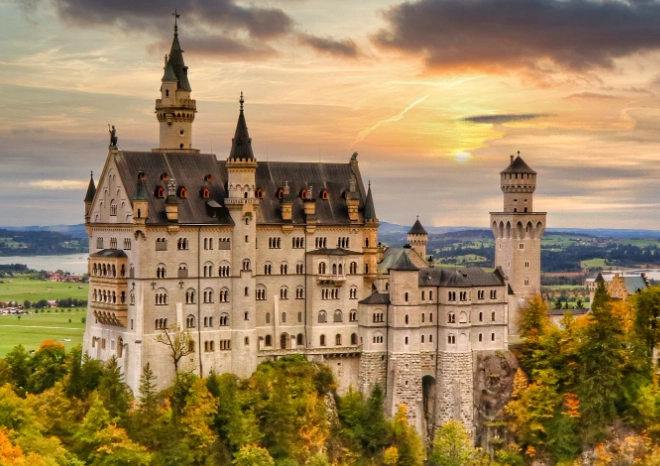
Beyond the Size: What to See and Do at Marburg Castle
Okay, it's big. But is it interesting? Absolutely. Here’s what you shouldn't miss once you're there.
The Museum Collections: Don't skip the museum. It's not a dry collection of old rocks. You'll find stunning medieval religious art, exhibits on the history of Hesse, and the famous "Marburg Globes"—some of the oldest surviving terrestrial and celestial globes in the world. The rooms themselves, like the splendid Knights' Hall with its intricate wooden ceiling, are worth the price of admission.
The Castle Chapel (Schlosskapelle): This Gothic chapel is a gem. Simple, atmospheric, and often quiet. Look for the medieval fresco fragments.
The View. This might be the best part. The panoramic view from the castle terraces over the red-roofed town of Marburg and the Lahn River valley is breathtaking. On a clear day, you can see for miles. There's a small café near the museum entrance with outdoor seating—perfect for a coffee with a view, though it can be crowded.
Exploring Marburg's Old Town: The castle visit is incomplete without descending into the Altstadt. The winding, cobbled streets (like Barfüßerstraße) with their leaning half-timbered houses are straight out of a storybook. The Elisabeth Church, one of the earliest purely Gothic churches in the German-speaking world, is a must-see.
Common Mistakes to Avoid When Visiting German Castles
After visiting dozens of castles, I've seen the same errors repeated. Here’s how to have a better experience at Marburg and beyond.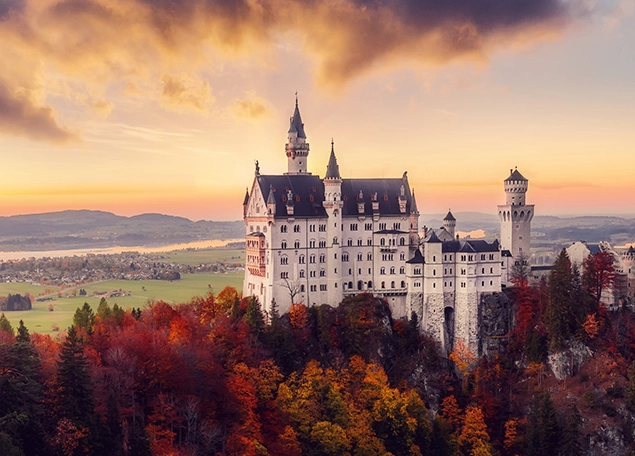
Mistake #1: Underestimating the walk. Marburg Castle is on a hill. A steep one. Wearing impractical shoes is the fastest way to ruin your day. Wear sturdy, comfortable walking shoes. Take your time. The climb is part of the experience, leading you through the picturesque upper town.
Mistake #2: Not budgeting enough time. People think, "It's a castle, I'll see it in an hour." For Marburg, that's a huge error. Between the museum, the courtyards, the chapel, and soaking in the views, you need at least 3 to 4 hours for a satisfying visit. Rushing through means you miss the context that makes the size meaningful.
Mistake #3: Ignoring the town below. Marburg isn't just a castle with a town attached; it's a symbiotic pair. The university (founded in 1527) gives the town a vibrant, youthful energy. Plan to have lunch or dinner in one of the traditional restaurants (like the historic "Zum Ritter" or a student pub) in the old town after your castle visit.
Mistake #4: Expecting a "fairytale" castle. If you want Disney-esque turrets and pastel colors, go to Neuschwanstein. Marburg Castle is austere, powerful, and historical. Appreciate it for what it is—a monumental seat of medieval and Renaissance power—not for what it isn't.
Your Questions, Answered
So, which is the biggest castle in Germany? It's Marburg Castle—a place where history is measured not just in years, but in the vast, stone-covered expanse of a hill it commands. It's a destination that rewards those who look beyond the postcard image and are ready to explore a true giant of German history.