Quick Guide
So you've heard people talk about the "Big 6" German beers and you're wondering what all the fuss is about. You're not alone. It's one of those terms that gets thrown around in beer circles, but no one ever sits down to explain it properly. Is it about the biggest brands? The oldest? The ones you absolutely must try to understand German beer? Well, sort of all of the above.
Let's clear the air right from the start. When folks ask "What are the big 6 German beers?", they're usually referring to six specific, massive breweries that have become synonymous with German brewing on a global scale. These are the household names, the ones you'll find in supermarkets from Berlin to Boston. They're not necessarily the "craft" darlings or the obscure regional specialties—those are amazing, but that's a different conversation. The Big 6 are the titans, the volume leaders, and in many ways, the ambassadors of the German beer style to the world.
Quick Reality Check: The term "Big 6" isn't an official designation from a brewing guild. It's more of a colloquial, industry-shorthand way to group the largest and most influential export-oriented German breweries. Their dominance is based on production volume, brand recognition, and historical export success.
I remember the first time I consciously tried to work my way through them. I was at a pretty standard beer garden in Munich, staring at a menu that had five of the six on tap. It was overwhelming in the best way possible. Which one do you start with? Do they actually taste different? That experience is what made me want to dig deeper, beyond just the logo on the bottle.
Who Exactly Makes the Cut? The Definitive List
Alright, let's stop beating around the hop bush. Here they are, the six breweries that collectively answer the question "What are the big 6 German beers?". I'll list them here, and then we'll get into the nitty-gritty on each one.
- Beck's
- Krombacher
- Warsteiner
- Bitburger
- Veltins
- Hasseröder
See a pattern? They're all primarily known for one specific family of beer: the German-style Pilsner, or "Pils". This is crucial. The rise of the Big 6 is intertwined with the dominance of the Pilsner style in Germany, especially after World War II. Before that, regional styles like dark lagers, wheat beers, and Kölsch ruled their respective areas. But the crisp, clean, hop-accented Pilsner became the national favorite, and these six breweries rode that wave to become giants.
It's funny, when you look for them, you realize they're everywhere. A corner shop in London, a bar in Tokyo, a grocery store in Mexico City. Their global footprint is insane.
Getting to Know Each Member of the Big 6
Listing names is one thing. Understanding what makes each tick is another. Let's pull up a chair and talk about each of these brewing behemoths. Think of this as a quick introduction before we dive into the details.
| Brewery | Founded | Headquarters | Flagship Beer | A Quick Vibe |
|---|---|---|---|---|
| Beck's | 1873 | Bremen | Beck's Pilsner | The international export king, perhaps the most globally recognized. |
| Krombacher | 1803 | Kreuztal | Krombacher Pils | The best-seller *within* Germany itself. Huge domestic volume. |
| Warsteiner | 1753 | Warstein | Warsteiner Premium Verum | Family-owned, classic premium image, ubiquitous in German restaurants. |
| Bitburger | 1817 | Bitburg | Bitburger Premium Pils | Known for its pronounced, crisp bitterness and iconic "Bitte ein Bit" slogan. |
| Veltins | 1824 | Meschede-Grevenstein | Veltins Pilsener | Modern, slightly softer Pils, big in sports sponsorships (especially football). |
| Hasseröder | 1872 | Wernigerode | Hasseröder Premium Pils | Former East German giant, known for a very smooth, drinkable character. |
Okay, so that's the bird's-eye view. But a table can only tell you so much. Let's talk flavor, history, and the stuff you won't find on the label.
Beck's: The Global Ambassador
If you've had a German beer outside of Germany, chances are high it was a Beck's. Founded in the port city of Bremen, Beck's was practically built for export. That coastal heritage matters. I've always found Beck's to have a slightly more assertive, almost salty hop character compared to some of the others—some people love that, others find it a bit sharp. It's distinctive.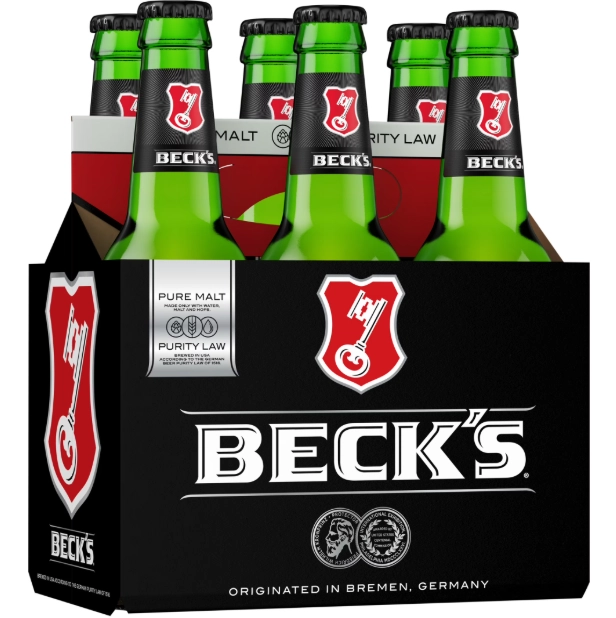
They famously use a strain of yeast that settles at the bottom of the tank (bottom-fermenting, making it a lager) and stick rigidly to the Reinheitsgebot (the German Beer Purity Law), which mandates only water, barley, hops, and later yeast. In 2002, Beck's was bought by the Belgian-Brazilian giant Anheuser-Busch InBev, which explains its incredible global distribution network. Some purists grumble about this, but there's no denying its role as a gateway German beer for millions.
Krombacher: Germany's Domestic Champion
Here's the twist: while Beck's might be the face of German beer abroad, Krombacher is the undisputed volume leader at home. They sell more beer in Germany year after year than anyone else. Their secret weapon? Arguably, their water source. They brew with water from the Felsental spring in the Rothaargebirge mountains, which gives their Pils a notably soft and rounded mouthfeel.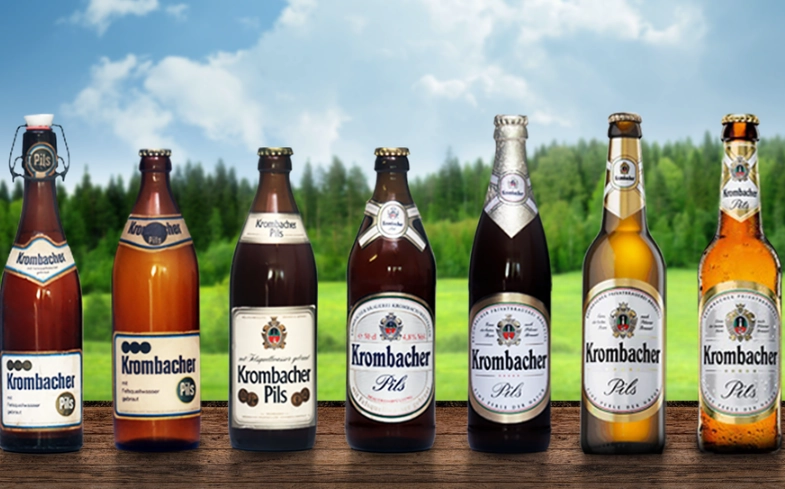
The taste is less about a bitter punch and more about a balanced, smooth, and incredibly drinkable profile. It's the kind of beer you can have a few of without your palate feeling assaulted. It's the default choice in countless German households. Their branding is all about nature, purity, and that spring water—and it clearly resonates deeply within the country.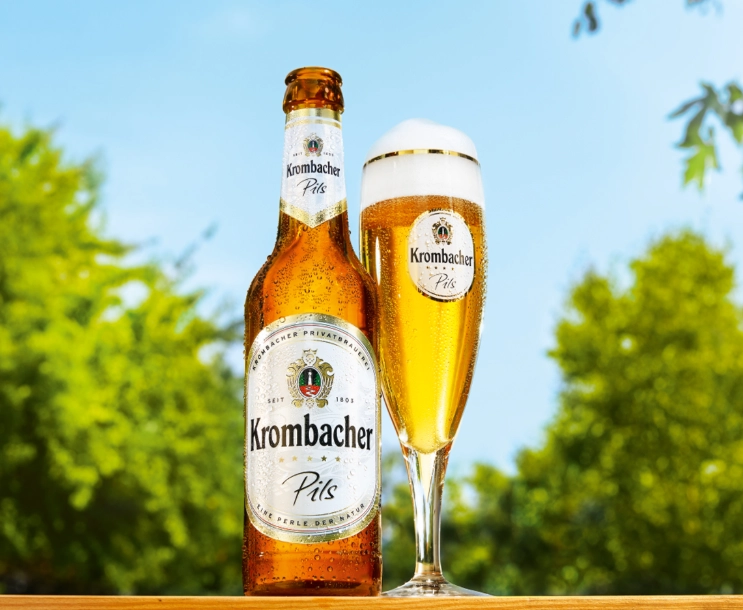
Warsteiner: The Premium Classic
Warsteiner markets itself as a premium brand, and you feel it. From the green bottle to the gold foil on the neck, it presents itself as a classy choice. It's still family-owned, which is a point of pride for them. Taste-wise, Warsteiner Premium Verum is a textbook example of a German Pilsner. It's well-balanced: a gentle malt sweetness upfront followed by a clean, floral hop finish that isn't too bitter.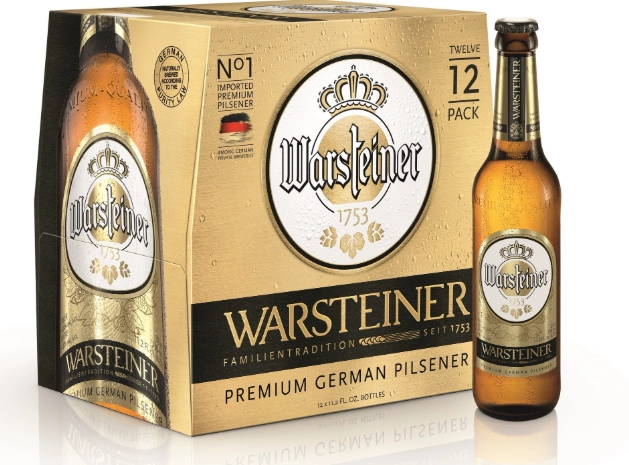
It's incredibly consistent and smooth. You'll find it in almost every German restaurant that has a decent beer selection. It's reliable. Is it the most exciting beer on earth? Maybe not. But it's rarely a bad choice. It's the safe, high-quality bet that won't let you down.
Bitburger: The One with the Bite
Bitburger is for those who like a bit of bitterness in their Pils. Their slogan, "Bitte ein Bit" ("A Bit, please"), is one of the most famous in German advertising. They really emphasize the hops, using varieties like Hallertauer Magnum and Hersbrucker to create a crisp, dry, and noticeably bitter finish. It's a more assertive flavor profile.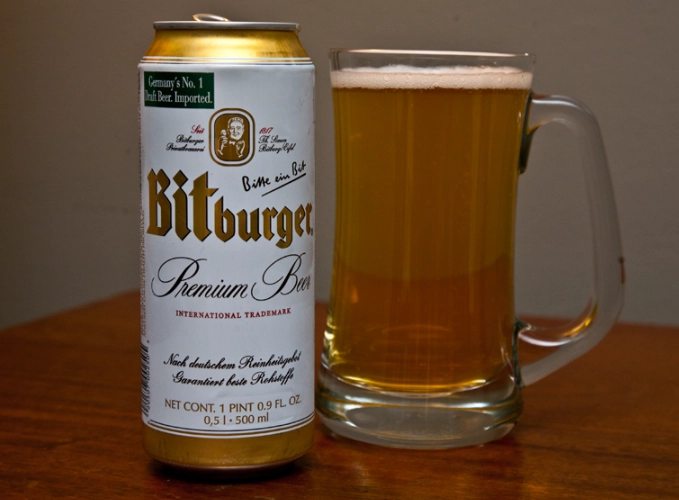
Some find it refreshingly sharp; others think it's a bit one-dimensional. I fall into the former camp, especially with food. A cold Bitburger with a schnitzel or some salty fries is a fantastic combination—the bitterness cuts right through the fat. It's a beer that makes its presence known.
Quick Taste Test Thought: If you put a Warsteiner and a Bitburger side-by-side, the difference is a great lesson in the Pilsner spectrum. Warsteiner is about harmony and smoothness. Bitburger is about structure and a clean, bitter snap. Try it sometime.
Veltins: The Modern Player
Veltins feels a bit younger and more dynamic in its marketing, heavily associating itself with sports, particularly football (soccer). They sponsor the German football league (DFL) and various clubs. Their Pilsener (they use the "-er" spelling) is known for being particularly bright, clear, and having a fine, creamy head. The flavor is often described as softer and slightly fruitier than the classic bitter Pils, with a very smooth finish.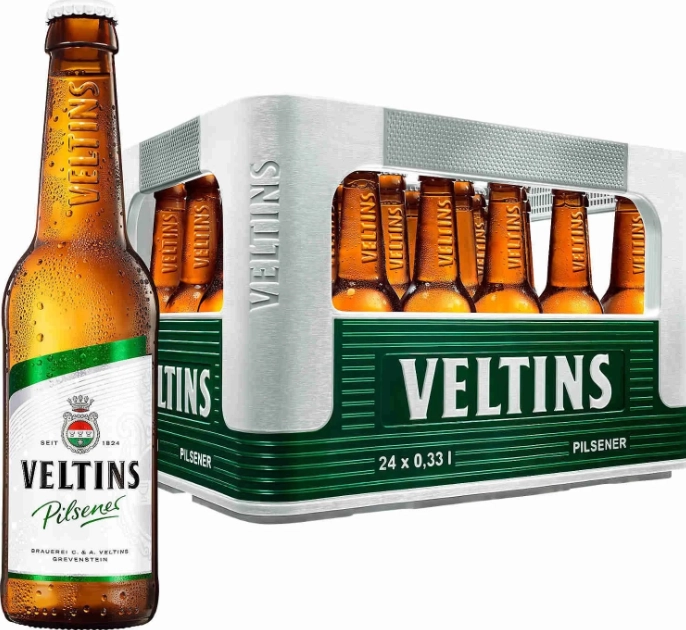
It's incredibly easy to drink. They also pioneered some interesting technical stuff in brewing, like the "Veltins Ice-Surfice" method for ultra-smooth filtration. For many younger Germans, Veltins is just a modern, reliable, good-tasting beer. It doesn't carry the same old-world weight as some others, which can be a plus.
Hasseröder: The Smooth Operator from the East
Hasseröder's story is unique. It was the flagship brand of East Germany before reunification. After the Berlin Wall fell, it was bought by the Bitburger group but maintained its own identity. Hasseröder Premium Pils is famed for its exceptional smoothness and drinkability. It's brewed with very soft water and undergoes a longer maturation period.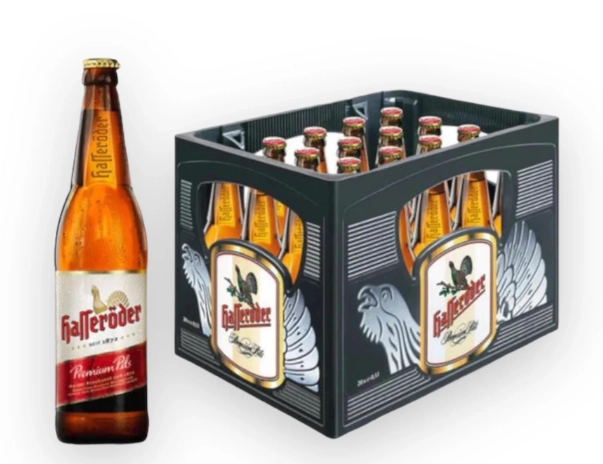
The result is a Pils that has almost no harsh edges. The hop bitterness is very muted, and the malt character is soft and slightly sweet. For people who find other Pilsners too bitter, Hasseröder is often the gateway. It's the crowd-pleaser. Some hardcore Pils fans criticize it for being too bland, but its massive popularity, especially in eastern Germany, speaks for itself. It's about refreshment above all else.
So, How Do You Actually Choose One?
Now that you know what are the Big 6 German beers, the next logical question is: which one should *you* try? It depends entirely on what you like.
- If you're new to German Pilsners or prefer less bitterness: Start with Hasseröder or Warsteiner. They're the most approachable and smooth.
- If you want a classic, balanced, all-rounder Pilsner: Krombacher or Warsteiner are your best bets. They define the style for many.
- If you like a crisp, hoppy bite: Go straight for Bitburger. It's the most assertively bitter of the bunch.
- If you want the global standard-bearer: Beck's is it. It's the reference point.
- If you want something modern, clean, and sports-bar ready: Veltins fits the bill perfectly.
My personal advice? If you can, grab a couple of different ones and do a mini-tasting. The differences are subtle but real. Notice the color (they're all golden, but shades vary), the smell (grassy, floral, bready), the initial taste, and most importantly, the finish—that aftertaste that lingers. Is it clean and dry? Slightly sweet? Bitter? That's where their personalities really show.
Pro Tip for Authenticity: Always, always drink these from a proper glass if you can. The tall, slender Pilsner glass isn't just for show. It showcases the color and brilliant clarity, supports the beautiful head of foam, and funnels the aromas right to your nose. Drinking a fine Pils from the bottle kills half the experience.
And let's be real about price and availability. In many markets, you'll pay a small premium for these compared to generic local lagers. In my experience, Beck's and Warsteiner are the easiest to find internationally. Bitburger and Veltins pop up in better-stocked stores. Krombacher and Hasseröder can be trickier to locate outside of Germany or specialized German import shops.
Common Questions People Have About the Big 6
The Bigger Picture: What the Big 6 Represent
Understanding what are the Big 6 German beers is about more than just memorizing names. It's a window into modern German drinking culture. These beers are the everyday workhorses. They're what's on tap at the local *Kneipe* (pub), what's stacked in crates at the supermarket for a weekend BBQ, and what many Germans reach for without a second thought.
They represent a specific idea of German beer: consistent, clean, high-quality, and brewed to a centuries-old standard of purity. They're not trying to be extreme or funky. They're trying to be perfect examples of a specific style. In a world of hazy IPAs and pastry stouts, there's something deeply comforting about that.
But here's my honest take, after trying them all more times than I can count. While I respect them and enjoy them in the right context (a hot day, with food, at a casual gathering), they rarely excite me. The very consistency and mass-appeal that made them big can make them feel a bit... safe. The real magic of German beer, for me, lies in the thousands of smaller regional and local breweries making incredible, distinctive versions of not just Pils, but of Altbier, Kölsch, Helles, Dunkel, Rauchbier, and Bock. The German Brewers' Association estimates there are over 1,500 breweries in Germany, and most of them aren't part of the Big 6.
So, use the Big 6 as your foundation. Learn their differences. Understand the baseline of German Pilsner. They answer the question "What are the big 6 German beers?" perfectly. But once you've got that down, I urge you to look beyond them. Explore the regional specialties, the family breweries, the oddities. That's where you'll find the soul of German brewing. The Big 6 are the reliable, famous friends who introduced you to the party. Now it's time to meet everyone else.
Cheers, or as they say in Germany, Prost!