Quick Navigation
- What Exactly Is a Schnitzel? (It's Not Just a Fried Cutlet)
- Gathering Your Arsenal: Ingredients & Equipment
- The Step-by-Step Masterclass: From Slab to Schnitzel
- What to Serve With Your Schnitzel: The Perfect Plate
- Choosing Your Meat: A Quick Comparison Guide
- Your Schnitzel Recipe Troubleshooting Guide & FAQs
- Final Thoughts: Embrace the Process
Let's be real. We've all had that disappointing, soggy schnitzel at some questionable buffet or a rushed restaurant. It sits there on the plate, a pale, greasy shadow of what it could be. The breading slides right off, the meat is tougher than a boot, and you're left wondering what all the fuss is about. I know I have. It's what made me obsessed with getting this right.
That's why I spent what my partner calls an "unreasonable" amount of time in my kitchen, pounding meat, testing oils, and making enough breadcrumbs to feed a small army. I wanted to crack the code. Not just for a good schnitzel recipe, but for the perfect, authentic, crispy schnitzel you can make on a regular Tuesday without needing a culinary degree.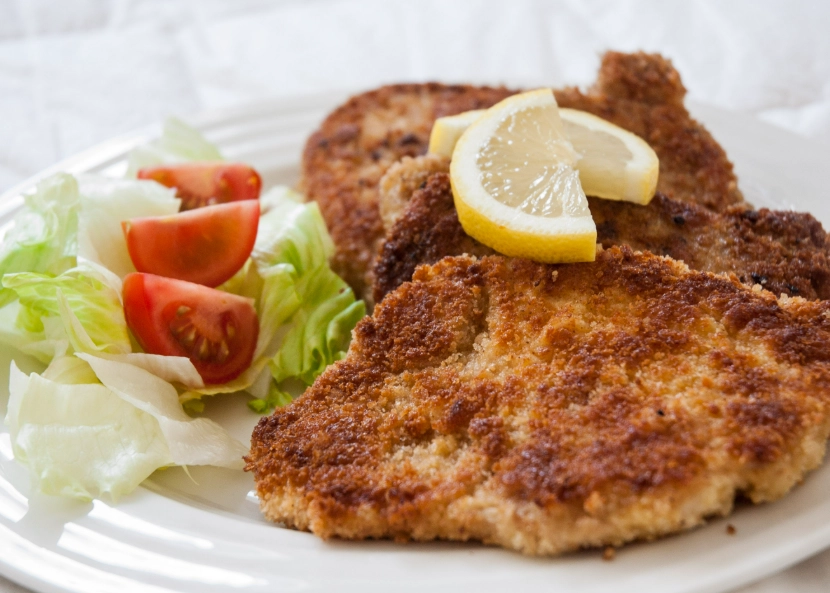
This isn't just another list of instructions. It's the culmination of all those trials (and errors). We're going deep on the why behind every step. Why that specific cut of meat? Why the double dredge? Why is the oil temperature non-negotiable? By the end, you won't just be following a recipe; you'll understand the craft. You'll be able to look at a piece of meat and know exactly how to turn it into a golden, shatteringly crisp masterpiece.
Trust me, once you taste a homemade schnitzel done right, there's no going back.
What Exactly Is a Schnitzel? (It's Not Just a Fried Cutlet)
Before we get our hands dirty, let's clear something up. Calling a schnitzel just a "fried cutlet" is like calling a Ferrari "just a car." Technically true, but it misses the essence. The magic is in the specific technique and the textural trinity: thin, tender meat, a seamless egg wash seal, and an incredibly airy, crisp crust that stands apart from the meat.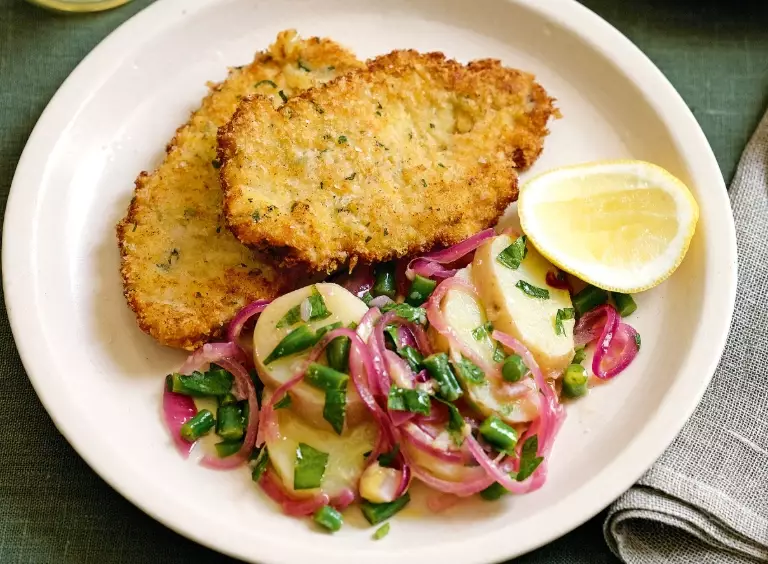
The most famous version, Wiener Schnitzel, is actually protected by law in Austria and Germany. By culinary tradition (and in some cases, actual food laws), it must be made with veal. Using pork or chicken makes it a "Schnitzel Wiener Art" (Viennese-style schnitzel). But let's not get bogged down in semantics. The core principles apply across the board.
I think the biggest misconception is that it's heavy or greasy. A perfectly executed schnitzel recipe should feel light. The crust should be delicate and crisp, not a dense, oily batter. The frying method is more about a quick, hot bath that sets the crust instantly, rather than a long, soaking fry.
You'll find variations across Europe—tonkatsu in Japan is a cousin with its own brilliant style—but the Austrian/German classic is what we're homing in on today.
Gathering Your Arsenal: Ingredients & Equipment
Great results start with the right tools and ingredients. You don't need a professional kitchen, but a few key items make a world of difference.
The Non-Negotiables for Your Schnitzel Recipe
The Meat: This is your canvas. For a classic experience, veal escalopes are the gold standard. They're pricy, but their mild flavor and tenderness are unmatched. For a fantastic and more accessible everyday version, I'm a huge fan of pork loin chops, trimmed of fat and sinew. Chicken breast works wonderfully too, especially for a lighter feel. The universal rule? Start with a quality cut. No amount of pounding can fix inherently tough meat.
The Breading Trio: This is the engine of the texture.
1. Flour: All-purpose works perfectly. Its job is to dry the meat surface so the egg wash sticks.
2. Egg Wash: Just eggs, maybe a tiny splash of water or milk to loosen it. This is the "glue."
3. Breadcrumbs: Here's a secret. The store-bought fine, sandy breadcrumbs? They often give a denser coat. For an ethereally crisp crust, use fresh breadcrumbs pulsed from stale white bread (like a baguette or sandwich loaf) or seek out Japanese-style panko. Panko's larger, flakier shards create more surface area and crunch. It's a game-changer.
The Fat for Frying: You need a neutral oil with a high smoke point. Canola, vegetable, peanut, or a light olive oil are all champions. Clarified butter (ghee) adds incredible flavor but burns more easily. I often use a blend: 90% neutral oil, 10% ghee for that hint of richness.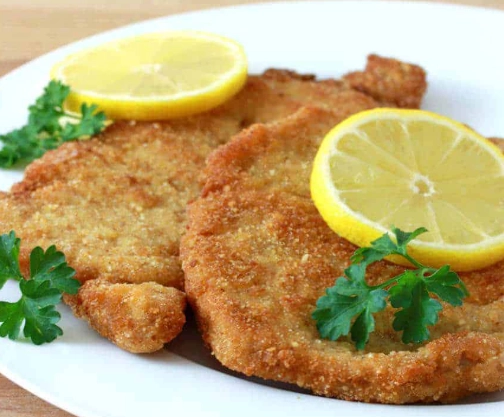
Now, for the tools. A good rolling pin or meat mallet is crucial. The flat side is for pounding; the textured side is for tenderizing—use it gently if your cut needs it. You'll need three wide, shallow dishes for your breading station. A heavy-bottomed pot or deep skillet (cast iron is ideal) holds heat steadily. A deep-fry thermometer is NOT optional if you're serious about this. Guessing the oil temperature is the number one cause of failure. Finally, have a wire rack set over a baking sheet ready. This is critical for draining. Never let your finished schnitzel sit on paper towels—the steam gets trapped and turns your perfect crust soggy from underneath. A simple rack keeps it crisp all over.
The Step-by-Step Masterclass: From Slab to Schnitzel
Alright, let's cook. This is where we turn theory into that beautiful, golden reality. Follow these steps in order—they're designed to build the perfect structure.
Step 1: Prepping the Meat (The Foundation)
If your meat isn't pre-cut into escalopes, you'll need to butterfly and pound it. For a pork loin chop or chicken breast, slice it horizontally almost all the way through, then open it like a book. Place it between two sheets of plastic wrap or in a large zip-top bag.
Now, pound. Start from the center and work outwards. Your goal is an even thickness of about 1/4 inch (about 6mm). Not paper-thin, but uniformly thin. This ensures even cooking. Season both sides generously with salt and pepper just before breading. Don't season earlier, or the salt will draw out moisture and make the surface wet, jeopardizing your breading adhesion.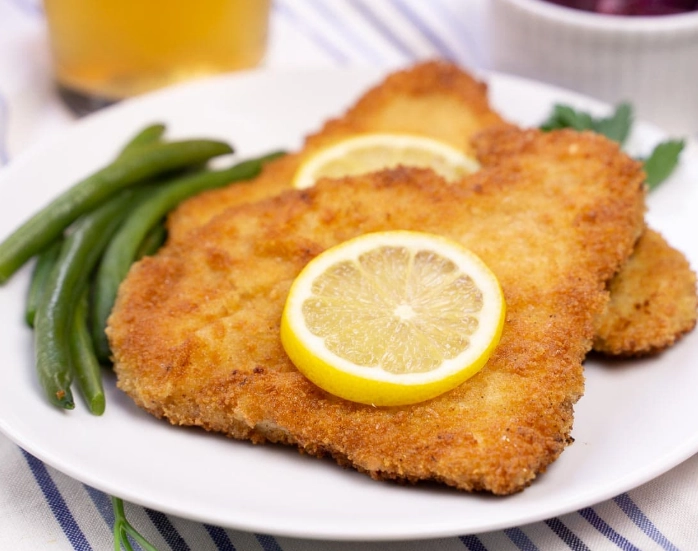
Step 2: Setting Up the Breading Station (Mise en Place)
Organization is everything. Set up your three dishes in a line: Flour, Egg Wash, Breadcrumbs. Keep one hand as your "dry hand" (for flour and breadcrumbs) and the other as your "wet hand" (for the egg wash). This prevents you from ending up with clumpy, finger-shaped breading monstrosities.
Season the flour lightly with salt and pepper. Beat the eggs in the second dish until uniform. Place the breadcrumbs in the third. Have your plated meat and the empty wire rack nearby.
Step 3: The Breading Process (The Double Dredge)
This is the make-or-break moment for your schnitzel recipe's crunch factor.
- Dredge in Flour: Take a cutlet with your dry hand. Dredge it thoroughly in the flour, shaking off the excess. You want a very light, even coat. This dehydrates the surface.
- Dip in Egg: Using your wet hand, transfer the cutlet to the egg wash. Soak it completely, let the excess drip off.
- Coat in Breadcrumbs: Back to the dry hand. Place the cutlet into the breadcrumbs. Now, press down gently but firmly. You're not just sprinkling; you're adhering the crumbs. Lift, place it back in, and press again on the other side. Get a nice, even, generous coating. Pressing is key for a solid, non-flaky crust.
Place the breaded cutlet on the clean wire rack. Repeat for all pieces. Let them rest for 5-10 minutes. This lets the breading set and helps it stay on during frying.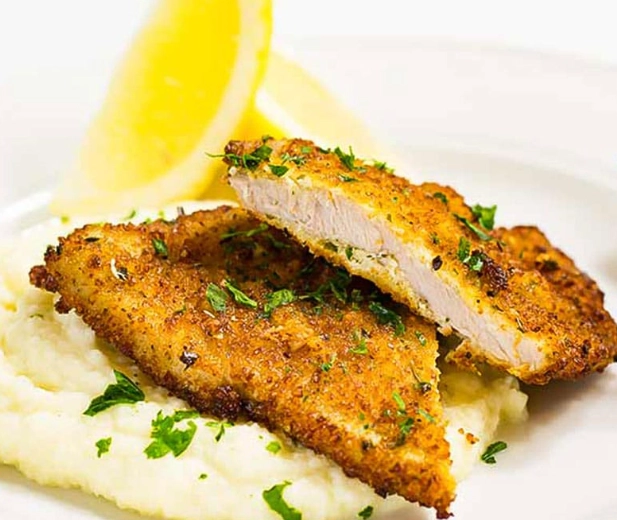
Step 4: Frying to Golden Perfection
Heat at least 1/2 inch of oil in your heavy pot over medium-high heat. Attach your thermometer. Wait for it to reach 340-350°F (170-175°C). This is the sweet spot. Too cool, and the schnitzel will soak up oil and become greasy. Too hot, and the outside burns before the inside cooks.
Gently slide a cutlet into the oil, laying it away from you to avoid splashes. Don't crowd the pan—fry one or two at a time. The schnitzel should bubble vigorously immediately. Fry for about 2-3 minutes per side, until it's a deep, glorious golden brown.
Use tongs or a slotted spatula to flip it once. Don't fuss with it constantly.
Step 5: Draining and Serving Immediately
Once golden and crisp, lift the schnitzel out, let excess oil drip off for a second, and immediately transfer it to your wire rack set over a sheet pan. Sprinkle with a tiny pinch of fine salt while it's piping hot.
Serve. Right away.
Schnitzel waits for no one. The contrast between the hot, juicy interior and the crisp exterior is the whole point. Which brings us to the best part...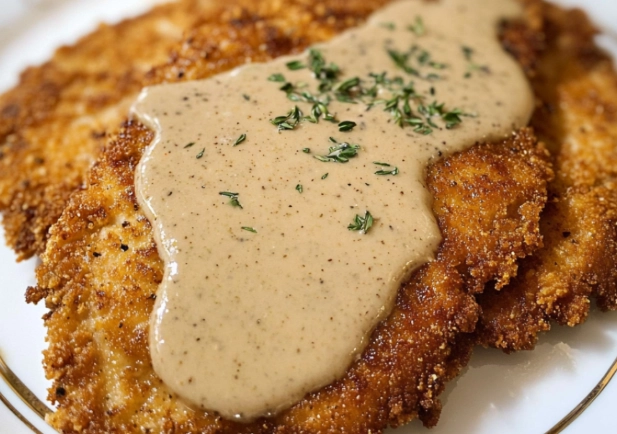
What to Serve With Your Schnitzel: The Perfect Plate
A schnitzel is the star, but the supporting cast makes the meal. Here’s a classic lineup:
- Lemon Wedges: A non-negotiable. A bright squeeze of fresh lemon juice cuts through the richness perfectly.
- Potato Salad: The Austrian classic is a tangy, vinegar-based one with broth, not a mayo-heavy version. It's refreshing and light. (The Austrian Tourist Board's recipe site has authentic versions).
- Lingonberry Jam or Cranberry Sauce: The sweet-tart fruitiness is a magical contrast to the savory, fried meat. Don't knock it till you've tried it.
- A Simple Green Salad: With a light vinaigrette. Something fresh to balance the plate.
Some folks love a creamy mushroom sauce or a simple gravy. I'm a purist—I think sauces risk soggifying the precious crust. But if you must, serve it on the side, never poured on top.
Choosing Your Meat: A Quick Comparison Guide
Not sure whether to go for veal, pork, or chicken? This breakdown should help you decide based on what you have or what you're in the mood for.
| Meat Type | Flavor Profile | Texture When Cooked | Best For |
|---|---|---|---|
| Veal (Classic Wiener) | Very mild, delicate, slightly sweet | Exceptionally tender, almost buttery | Special occasions, authentic experience |
| Pork Loin | Rich, savory, hearty | Juicy and substantial, holds up beautifully | My personal favorite for a satisfying meal |
| Chicken Breast | Mild, clean | Lean and tender (if not overcooked) | Lighter meals, family-friendly option |
| Turkey Breast | Similar to chicken, slightly more savory | Lean; can dry out if pounded too thin | A leaner alternative, great for leftovers |
Your Schnitzel Recipe Troubleshooting Guide & FAQs
Even with the best guide, questions pop up. Here are the answers to the ones I get asked most often.
Final Thoughts: Embrace the Process
Look, the best schnitzel recipe isn't about fancy ingredients. It's about patience and technique. It's about respecting the process—the pounding, the orderly breading, watching that thermometer, and serving it the second it's ready.
It might feel like a bit of work the first time, but it becomes second nature. And the payoff? Unbeatable. That sound as you cut into it, that perfect crunch giving way to juicy meat, the bright hit of lemon... it's a humble dish made spectacular through care.
Got a schnitzel tip of your own or a question I didn't cover? The beauty of cooking is we never stop learning. The core of this method will set you up for success, whether you're sticking to the classic or experimenting with your own twists on the basic schnitzel recipe. Happy cooking!