Quick Navigation
Let's be honest for a second. Figuring out how can I get a Germany visa feels like trying to solve a puzzle where half the pieces are missing and the instructions are in a language you don't quite understand. You search online, you get a dozen different answers, and you're left more confused than when you started. Should you book flights first? What documents are actually needed, not just what some generic list says? How do you not get your application rejected for some tiny, overlooked detail?
I've been there. A few years back, I was staring at the German embassy's website, feeling utterly overwhelmed. The information was all there, but it was scattered, formal, and didn't answer the practical questions buzzing in my head. Since then, I've helped several friends navigate the process, and we've learned what works and, more importantly, what doesn't. This guide is that conversation. We're going to break down the entire process of how to get a Germany visa, step-by-step, with the kind of straightforward talk you'd want from someone who's been through it.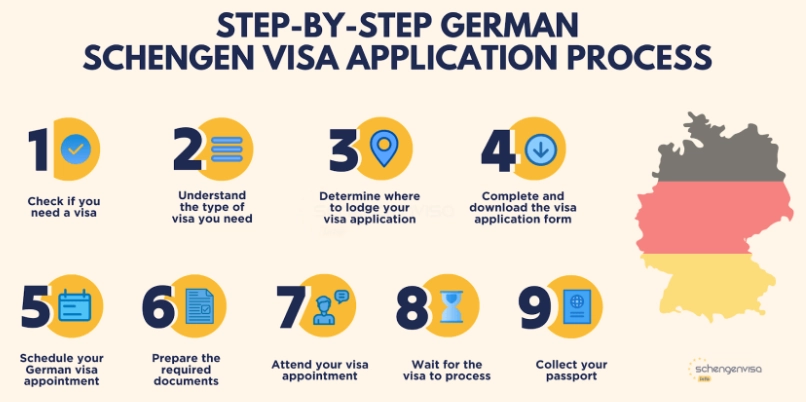
We'll skip the fluff and get right to what you need to know to submit an application that has the best chance of success.
First Things First: What Kind of German Visa Do You Even Need?
This is where most people trip up right at the starting line. Germany has a bunch of different visas, and applying for the wrong one is a guaranteed way to get a rejection letter. It's like showing up for a job interview for an engineer position when you applied to be a chef – it just won't work.
The main split is between the Schengen Visa (short-stay) and the National Visa (long-stay). Getting this wrong is the most common mistake I see.
The Schengen Visa (For Stays Up to 90 Days)
This is your go-to for tourism, visiting family or friends, business meetings, or short courses. It's valid for up to 90 days within a 180-day period and lets you travel within the entire Schengen Area (that's 27 European countries, including France, Italy, Spain, etc.).
But here's a nuance most guides miss: there are different entries under this category.
- Single-entry: You enter the Schengen Area once. If you leave (say, to go to the UK or back home), you can't come back on the same visa.
- Double-entry: Allows you two entries. Useful if your trip involves hopping out to a non-Schengen country and returning.
- Multiple-entry: The gold standard. You can come and go as you please within the visa's validity period, as long as you don't overstay the 90/180-day rule. First-time applicants often get single-entry, but it's possible to request multiple-entry if you can justify it with future travel plans.
The National Visa (For Stays Longer Than 90 Days)
This is for people who want to live in Germany for a primary purpose. It's essentially a pre-approval for a residence permit. You apply for this from your home country, enter Germany with it, and then convert it into a residence permit at the local Foreigners' Office (Ausländerbehörde) once you're there.
The type of national visa you apply for is tied directly to your reason for moving:
| Visa Type | Who It's For | Key Thing to Prove |
|---|---|---|
| Work Visa | Skilled professionals with a concrete job offer from a German company. | The job contract. The Federal Employment Agency must usually approve the position. |
| Job Seeker Visa | Highly qualified non-EU graduates looking for work in Germany. | A recognized university degree and proof you can support yourself financially for 6 months. |
| Student Visa | Accepted to a full-time study program at a recognized German university. | University admission letter and Finanzierungsnachweis (proof of financial resources). |
| Freelancer / Self-Employment Visa | Artists, writers, consultants, etc., planning to work freelance. | A compelling business plan, evidence of demand for your work, and sufficient funds. This one is notoriously subjective and tough. |
| Family Reunion Visa | Spouses, minors, or parents of someone legally residing in Germany. | Proof of family relationship (marriage/birth certificates) and the sponsor's ability to support you. |
See how specific it gets? The question "how can I get a Germany visa" immediately branches into "which Germany visa do I need for my specific life situation?"
The Real Heart of the Matter: The Step-by-Step Application Process
Okay, you've figured out your visa type. Now, how can I get a Germany visa in practical terms? Let's walk through the actual steps. This isn't a linear sprint; it's more of a careful dance where you need to prepare things in a certain order.
Step 1: Gather Your Documents (The "Proof" Phase)
This is 80% of the battle. The German authorities are big on documentation. They want proof for everything. The exact list varies by visa type and your local consulate, but the core principle is universal: provide clear, organized, and verifiable evidence.
Here’s a foundational checklist. Think of this as your master list, from which you'll add or subtract based on your specific visa:
- Application Form: Filled out completely, truthfully, and signed. Download it from the website of the German mission (embassy/consulate) responsible for your area. This is non-negotiable.
- Passport: Must be valid for at least three months beyond your intended stay, issued within the last 10 years, and have at least two blank pages. Make color copies of the data page.
- Passport Photos: Two recent, biometric photos. Don't use an old one or try a DIY job. Go to a professional photo shop and tell them you need photos for a German visa. The specifications are strict (35x45mm, light background, neutral expression).
- Travel Health Insurance: For Schengen visas, this is mandatory. Coverage must be at least €30,000 and valid for the entire Schengen Area. For national visas, you'll need proof of German statutory or equivalent private health insurance. The embassy website usually has a list of accepted providers.
- Proof of Financial Means: This is huge. You must prove you can pay for your entire stay without working (unless you have a work visa). For tourists, this usually means 3-6 months of bank statements showing regular income and savings. Sometimes they ask for a sponsorship letter if someone else is paying. For students, it's the blocked account (Sperrkonto) showing around €11,208 per year.
- Proof of Accommodation: Hotel bookings, a rental contract, or a formal invitation letter (Verpflichtungserklärung) from a host in Germany who has registered it at their local town hall. A random email from a friend saying "you can stay with me" often isn't enough.
- Travel Itinerary: A detailed day-by-day plan of your trip, including flight reservations (not necessarily paid tickets yet) and internal travel plans.
- Purpose-Specific Documents: This is where it gets customized. Job contract, university admission letter, marriage certificate, business plan, conference invitation—whatever directly proves the purpose you stated on your application.
Step 2: Book an Appointment (The Waiting Game)
You can't just walk in. You must book an appointment online through the system of the specific German embassy or consulate that has jurisdiction over your place of residence. This is often the most frustrating part.
Appointment slots are released in batches and can get snapped up in minutes. You need to be persistent. Check the website early in the morning (local German time) and be ready to act fast. Some consulates use external service providers like VFS Global or TLScontact to handle appointments and document submission.
My personal view? This system is a pain. It feels arbitrary and stressful. But it's the gate you have to pass through, so factor in potential waiting times—it could be weeks or even months before you get a slot, especially during peak travel seasons.
Step 3: Attend the Visa Interview & Submit Biometrics
The appointment day. Dress neatly (you don't need a suit, but look presentable), arrive early, and bring your complete document folder and the appointment confirmation.
This isn't usually a high-pressure interrogation. It's a verification interview. The officer will:
- Check all your documents.
- Ask you basic questions about your trip: "Why are you going to Germany?" "What cities will you visit?" "Who are you visiting?" "What do you do for work?"
- Collect your biometric data: a digital photograph and all ten fingerprints.
The key is to be concise, honest, and confident. Your answers should match the story told by your documents. If you're visiting a friend, know their name and address. If you're a tourist, know your itinerary.
 They're not just checking your papers. They're checking your story.
Step 4: Pay the Fee and Wait for Processing
You'll pay the non-refundable visa fee at your appointment. As of my last check, it's €80 for adults for a Schengen visa and €75 for most national visas (lower for children). Always confirm the current fee on the official website. You can usually pay in local currency.
Then, the waiting begins. Standard processing is about 10-15 calendar days for Schengen visas, but it can legally take up to 45 days. National visas often take longer, from 1 to 3 months, as they require coordination with authorities in Germany.
You can usually track your application status online using a reference number.
Answers to the Questions You're Actually Asking (The FAQ)
This is a major worry. The consulate needs to see stability, not necessarily massive wealth. If your balance is low, you need stronger supporting evidence. A sponsorship letter from a parent or spouse (with their bank statements and proof of relationship) is a common solution. For tourists, showing a steady income from employment is often more important than a huge lump sum. For students, the blocked account is the definitive answer—it shows the exact required amount is secured and accessible in Germany.
If you're staying with friends or family, they need to provide you with a formal Verpflichtungserklärung (obligation declaration). They get this from their local Einwohnermeldeamt (registration office) in Germany. It's a legally binding document where they vouch for your expenses. A simple invitation letter is not a sufficient substitute. If you're traveling around, you still need to show bookings for the first few nights and a plausible plan for the rest.
This is one of the trickier paths. For a Schengen visa, you'll need to provide company registration documents, tax returns for the past 1-2 years, business bank statements, and a clear letter explaining your business and the purpose of your trip. For a National Freelancer Visa, the bar is much higher: a detailed business plan, portfolio, letters of intent from potential German clients, and proof of your relevant experience. The authorities need to be convinced your freelance work is viable and will benefit the German economy.
As mentioned, plan for a minimum of two weeks for Schengen, but start the process at least 2-3 months before your trip to account for appointment delays. For national visas, start 4-6 months in advance. Never, ever book non-refundable flights before you have the visa in your passport.
Understanding this is key to avoiding it.
- Insufficient financial means: The number one reason.
- Unclear purpose of travel: Your story and documents don't align.
- Invalid travel insurance: Doesn't meet coverage or area requirements.
- Lack of travel history: If you've never traveled abroad before, applying for a multiple-entry Schengen visa might be a stretch. They might grant a single-entry first.
- Dubious accommodation proof: Shaky or unverifiable bookings.
Where to Find the Official, Unwavering Truth
While guides like this are helpful for context and tips, your single source of truth must always be the official German authorities. Rules can change, and requirements can vary slightly between consulates.
Here are the only links you should truly trust for the final word:
- The Make It in Germany Portal: This is the German government's official portal for skilled workers. Its visa section is incredibly clear, well-structured, and authoritative for work-related visas.
- The Federal Foreign Office (Auswärtiges Amt): This is the mothership. The visa service page provides the overarching legal framework, types of visas, and links to find your responsible mission abroad.
- Your Local German Embassy/Consulate Website: This is the most important one. Search for "German Embassy in [Your Country/City]." Their website will have the specific checklist, appointment booking system, and any local instructions that override general guides. If their checklist says you need something, you need it.
Use these sites to double-check every piece of information. They are the final authority.
Final Thoughts Before You Hit "Book Appointment"
Figuring out how can I get a Germany visa is a process that rewards patience, attention to detail, and honesty. View the visa officer not as an adversary, but as someone whose job is to verify that your plans are genuine, feasible, and within the rules of their country.
Present a clear, consistent, and well-documented case. Start early. Use the official resources. And don't panic if it feels complicated—it is, for everyone. By breaking it down into these steps and focusing on the "why" behind each requirement, you move from feeling overwhelmed to feeling prepared.
Good luck with your application. Germany is worth the paperwork.