Your Quick Guide
- The Heart of the Matter: Classic Staples on Any German Menu
- Beyond the Classics: The Regional Map on Your Plate
- How a German Menu is Actually Structured
- Modern Twists and What Else is on the Menu
- Navigating the Menu: Practical Tips & Etiquette
- Answering Your Burning Questions
- Final Thoughts Before You Order
So you're staring at a German menu for the first time. Maybe you're planning a trip, maybe you've just walked into a local German restaurant, and suddenly you're faced with words like "Sauerbraten," "Spätzle," and "Rouladen." It can feel a bit overwhelming, right? I remember my first time in a Munich beer hall, completely baffled. Is it just sausages and sauerkraut? Far from it. Let's break it down, without the fluff.
Understanding what is the German food menu really about is your ticket to a much better meal. It's not just a list of dishes; it's a map of regions, history, and hearty comfort food. Forget the clichés. We're going to look at the classics everyone should try, the surprising regional gems, how the menu is actually structured, and how to navigate it without any awkward pointing.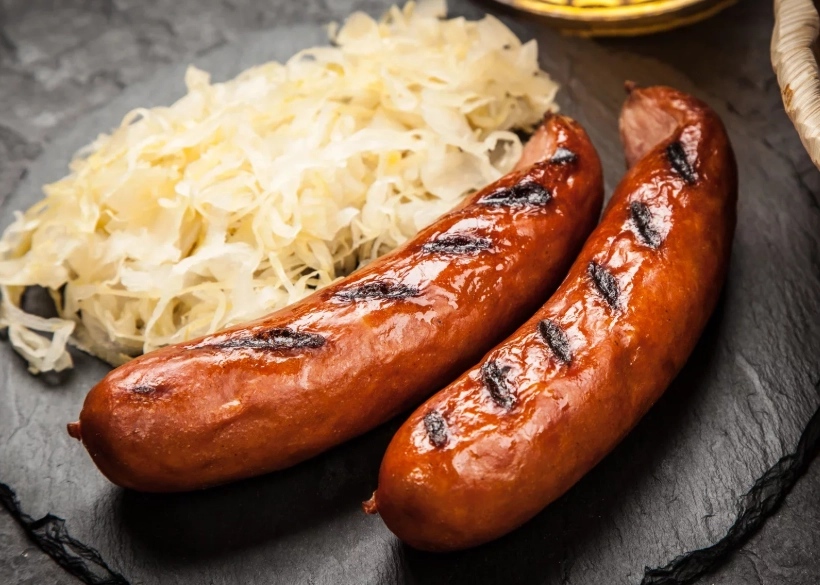
The Heart of the Matter: Classic Staples on Any German Menu
Let's start with the core. When you ask "what is the German food menu," these are the pillars you'll find almost everywhere, from a cozy countryside Gasthaus to a city-center restaurant. They form the backbone.
Meat, Glorious Meat (and Fish)
Germany loves its meat, often pork, and prepares it in countless ways. It's the centerpiece.
- Schnitzel: The superstar. A thin, breaded, and fried cutlet, most famously made from veal (Wiener Schnitzel) but often pork (Schweineschnitzel). Crispy on the outside, tender inside. Served with lemon wedges, potato salad, or fries. A must-try.
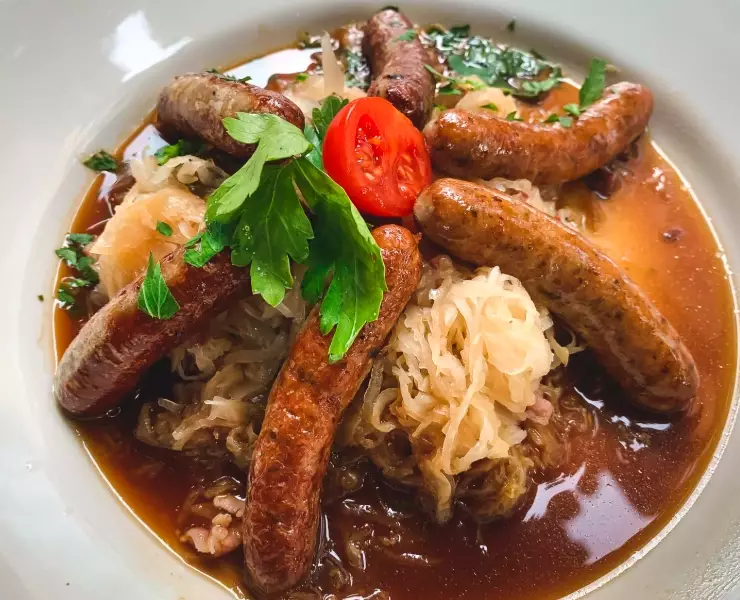
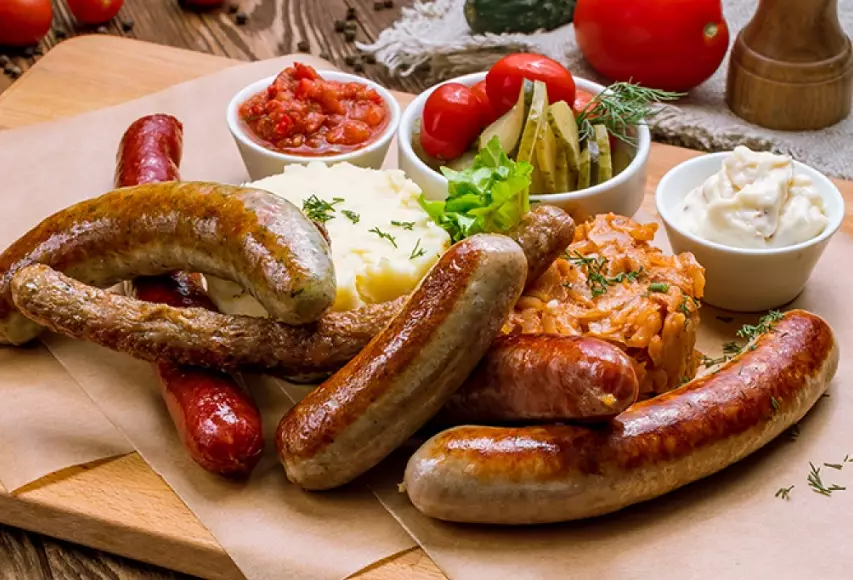
- Bratwurst: Yes, the sausage. But there are over 40 types! Thuringian, Nürnberger (small, spicy, usually served as 6 or 12), and Currywurst (sliced sausage with curry ketchup) are icons. They're not just street food; they're on proper menus too.
- Sauerbraten: A national treasure. Pot roast, traditionally of beef or horse, marinated for days in vinegar, wine, and spices until incredibly tender, then slow-cooked. The gravy is rich, slightly sweet and sour, often with raisins. Served with Knödel (dumplings) and red cabbage. It's a Sunday family meal.
- Rouladen: Thin slices of beef rolled around bacon, onions, pickles, and mustard, then braised. Each bite is a burst of savory, salty, and tangy flavors. Pure comfort food.
- Kassler: Smoked and cured pork chops, usually served with sauerkraut and mashed peas. Simple, smoky, and satisfying.
- Fish: Don't overlook it! In the north, especially near the coasts, you'll find excellent Matjes (young salted herring), Forelle (trout), and Scholle(plaice) on the menu.
The All-Important Sides: Potatoes, Bread, and Cabbage
The side dishes are not an afterthought. They are essential companions that complete the dish. Understanding these is key to decoding what is the German food menu.
- Potatoes (Kartoffeln): Prepared in a dozen ways. Bratkartoffeln (pan-fried potatoes with onions and bacon), Kartoffelpüree (mashed), Salzkartoffeln (simple boiled potatoes), Kartoffelsalat (potato salad—can be mayo-based or broth/vinegar-based).
- Spätzle: These are not pasta, but soft egg noodles from the south (Swabia). They're the ultimate comfort side, often cheesy (Käsespätzle), which is a glorious, gooey main dish in itself.
- Knödel/Dumplings: Bread dumplings (Semmelknödel) or potato dumplings (Kartoffelknödel). They soak up gravy like a dream.
- Cabbage: Sauerkraut (fermented white cabbage) is the famous one, but Rotkohl or Blaukraut (sweet and sour red cabbage stewed with apples and spices) is often the better, sweeter pairing for roasts.
Beyond the Classics: The Regional Map on Your Plate
This is where it gets fascinating. Germany's federal structure means culinary borders are strong. The menu in Bavaria is wildly different from one in Berlin or Hamburg. A true exploration of what is the German food menu requires a geographic lens.
Bavaria & The South
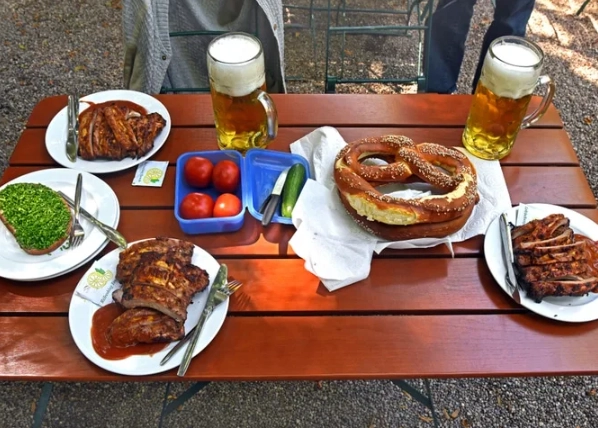
Think hearty, rustic, and designed for mountain air. Schweinshaxe (crispy roasted pork knuckle) is a massive, shareable spectacle. Obatzda is a creamy cheese spread for pretzels. White sausages (Weißwurst) are a breakfast/brunch tradition, eaten before noon. And of course, everything comes with a giant pretzel (Brezn) and a liter of beer.
Swabia
The home of Spätzle and Maultaschen. Maultaschen are large pasta pockets filled with meat, spinach, or herbs, often served in broth or pan-fried. They're sometimes called "God-cheaters" because the meat is hidden during Lent. Delicious any time of year.
The Rhineland & West
Here, things get a bit lighter and influenced by French neighbors. Himmel und Erde ("Heaven and Earth") is a classic: black pudding, mashed potatoes, and fried apples. Reibekuchen (potato pancakes) are a popular street food, especially at Christmas markets.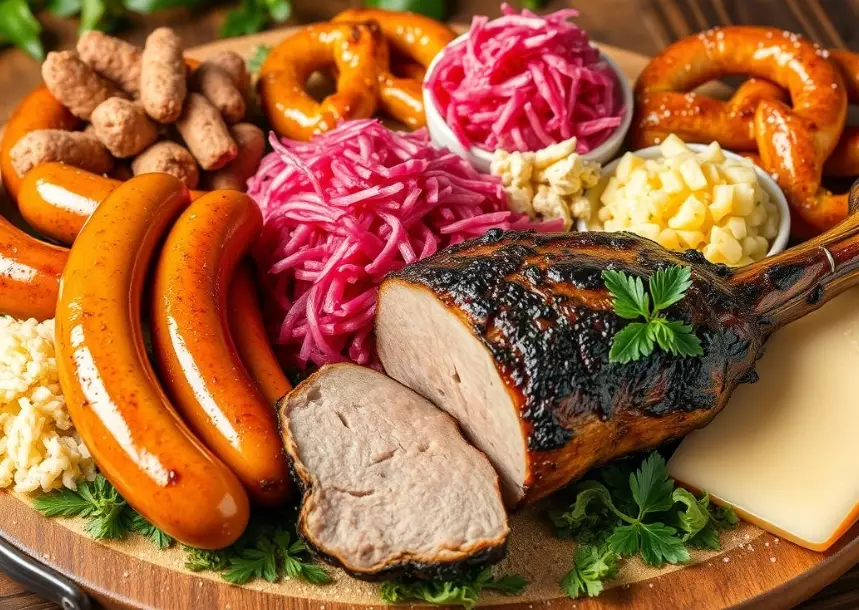
Northern Germany
Coastal and influenced by the sea. Labskaus is a unique sailor's dish: a mash of corned beef, potatoes, beetroot, and pickles, topped with a fried egg and rollmops (pickled herring). It looks... interesting, but tastes much better than it sounds. Grünkohl mit Pinkel (kale with a smoked sausage) is a winter staple.
Berlin & The East
Currywurst reigns supreme as street food. Eisbein (pickled and boiled pork knuckle) is a Berlin classic, very different from the Bavarian roasted version. Soljanka is a hearty, sour soup with Eastern European roots.
See? It's a whole country on a plate. The German Tourism Board's culinary guide is a fantastic resource to dive deeper into these regional journeys.
How a German Menu is Actually Structured (Speisekarte)
Okay, you know the dishes. Now, how are they presented? The layout of a German menu follows a logical, multi-course flow, though you can, of course, order just a main.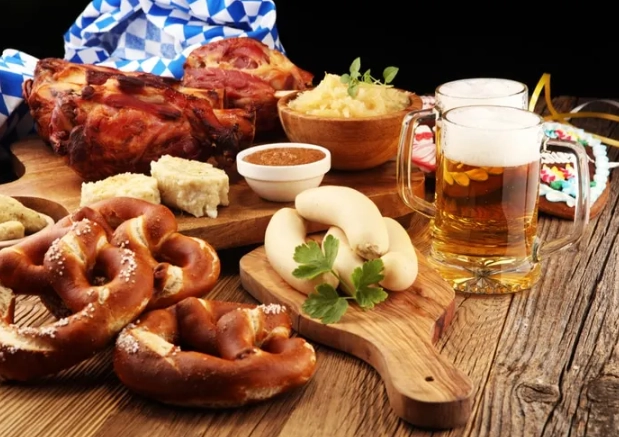
| Menu Section (German) | English Translation | What You'll Find There | Personal Tip |
|---|---|---|---|
| Vorspeisen | Starters / Appetizers | Often soups (like Gulaschsuppe or Kürbissuppe), salads, or smaller meat/cheese plates. Obatzda with pretzel might be here. | German portions are large. I often skip a starter unless sharing, or opt for a light soup. |
| Hauptgerichte | Main Courses | The heart of the German food menu. Divided into meat, fish, and possibly vegetarian. This is where you find Schnitzel, Sauerbraten, etc. The description usually lists the main protein AND the sides (Beilagen). | Read the side dishes! They're part of the deal. Don't assume you get fries with everything. |
| Beilagen | Side Dishes (Extra) | A separate list if you want to add more potatoes, salad, etc., to your main. | Rarely needed. The main course is almost always a complete plate. |
| Nachspeisen | Desserts | Heaven. Apfelstrudel (apple strudel), Rote Grütze (red berry compote with cream), Schwarzwälder Kirschtorte (Black Forest gateau), Kaiserschmarrn (shredded pancake with raisins). | Save room. The Kaiserschmarrn is often huge and perfect for sharing. |
| Tageskarte / Tagesempfehlung | Daily Specials | Often the best choice! Chef's special, seasonal ingredients, or a good deal (Mittagstisch - lunch special). | Always check this first. It's usually fresher and represents what's good that day. |
That "Tageskarte" tip is gold.
It's how you eat seasonally and often get a better, more thoughtful meal. In spring, look for asparagus (Spargel) menus everywhere—white asparagus is a national obsession served with ham and hollandaise.
Modern Twists and What Else is on the Menu
Let's be clear. The traditional German food menu is alive and well, but modern Germany is diverse and health-conscious. You'll see plenty of updates.
The Vegetarian & Vegan Shift
It's not all meat anymore. Even traditional restaurants now have solid vegetarian sections. Look for:
- Käsespätzle (the classic)
- Gemüseschnitzel or Käseschnitzel (vegetable or cheese schnitzel)
- Pilzrahmsauce (creamy mushroom sauce) over Spätzle or potatoes
- Seasonal vegetable platters (Gemüsepfanne)
Many modern spots offer fully vegan takes on classics, like vegan Currywurst.
International Influences
Germany has large Turkish, Italian, and Asian communities. It's common to see a Döner Kebab spot next to a traditional pub. On some menus, you might find fusion elements, but often, the traditional places keep it pure.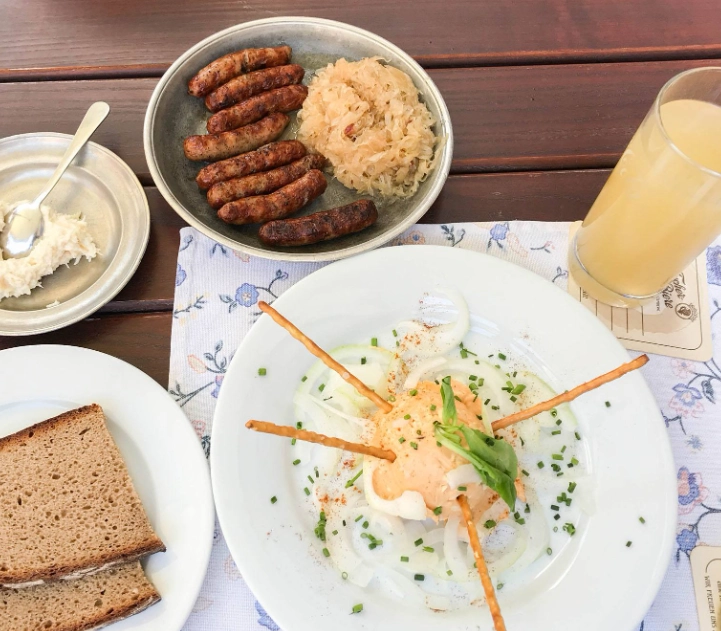
Navigating the Menu: Practical Tips & Etiquette
Knowing what to order is half the battle. Here’s how to do it smoothly.
- Water isn't free. If you ask for water (Wasser), you'll get mineral water (Mineralwasser)—sparkling (mit Kohlensäure) or still (ohne Kohlensäure). Tap water (Leitungswasser) is not commonly ordered or offered for free in restaurants.
- Bread might cost extra. That basket of bread (Brotkörbchen) on your table? It's usually not complimentary and will appear on your bill (a few Euros). It's fine to refuse it if you don't want it.
- "Prost!" When clinking glasses, look people in the eye. It's an old superstition about avoiding bad luck.
- Paying: You usually ask for the bill ("Die Rechnung, bitte."). It's common to pay together, not split per item. Service is included, but rounding up or leaving 5-10% is standard for good service.
- No doggy bags. It's not a widespread practice. Portions are manageable, so try to finish what you order.
Answering Your Burning Questions (FAQ)
Still hungry for info?
Sometimes, the best way to understand what is the German food menu is to look at the source. For official classifications of traditional foods, the German Federal Ministry of Food and Agriculture (BMEL) maintains registers of protected regional specialties, which is pretty cool for food geeks.
Final Thoughts Before You Order
So, what is the German food menu? It's a journey. It's a plate of crispy Schnitzel with a squeeze of lemon. It's the slow, comforting richness of a Sauerbraten on a winter day. It's the surprising discovery of a northern fish dish or the cheesy bliss of Käsespätzle.
Don't be intimidated by the long words. Ask your server for recommendations—they're usually proud of their food and happy to explain. Start with a classic, explore a region, and always, always save room for dessert. The Apfelstrudel with vanilla sauce (Vanillesoße) is a life decision you will not regret.
Go on, grab that menu with confidence. You know what you're looking at now. Guten Appetit!