Quick Navigation
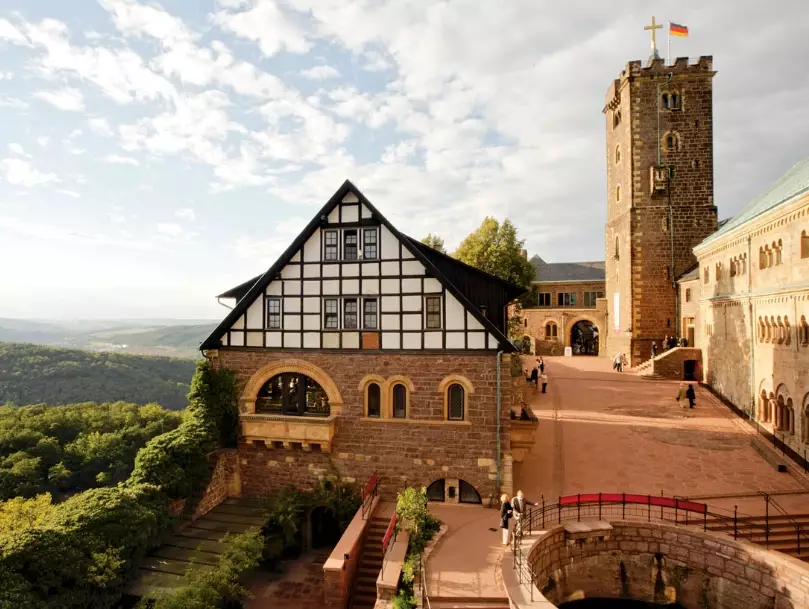
Let's be honest, Germany has no shortage of castles. You've got the fairy-tale Neuschwanstein, the imposing Heidelberg, and a hundred others vying for your attention on Instagram. So why, you might ask, should you bother with Wartburg Castle? It doesn't have the same cartoonish silhouette as some of its rivals. It's not perched on the most dramatic cliff. But here's the thing – what it lacks in obvious postcard perfection, it more than makes up for in sheer, palpable history. Walking through Wartburg Castle feels less like visiting a museum and more like stepping into the pages of a history book that decided to come to life. This isn't just a castle; it's a cornerstone of German identity, a UNESCO World Heritage site with a story that shaped a continent.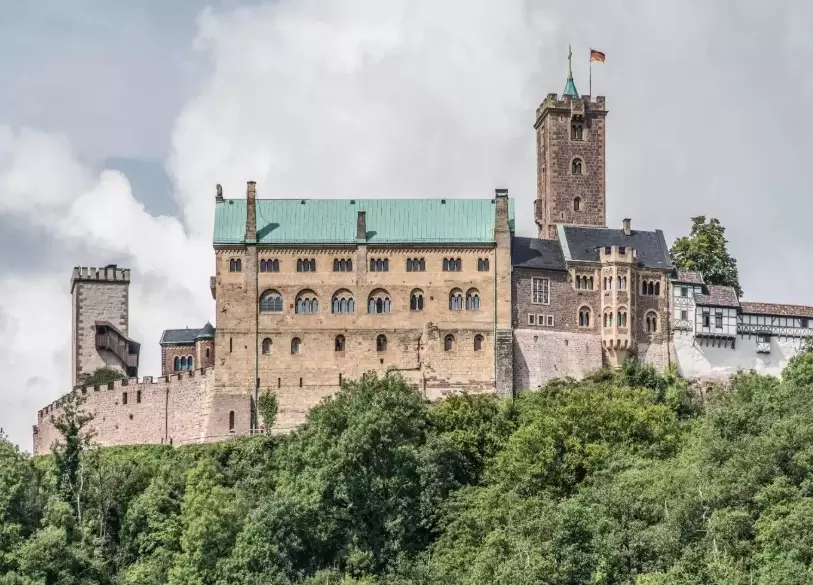
I remember my first visit. The train from Eisenach chugged up through the forest, and there it was – not gleaming, but sitting with a kind of weathered dignity. I wasn't blown away at first glance. But by the time I left, hours later, my perspective had completely shifted. This place gets under your skin.
Planning Your Visit: The Nitty-Gritty Details
Alright, let's get practical. You're convinced it's worth a look, but how do you actually do it? This is where many travel guides get vague. Let's fix that.
Getting There: Your Options, Ranked
Wartburg Castle sits above the town of Eisenach. Getting there is half the fun (or challenge, depending on your fitness).
- By Car: Easiest if you have one. There's a large paid parking lot at the base of the castle hill. From there, it's a steep 10-15 minute walk up a paved path, or you can wait for the shuttle bus (more on that below). The address for your GPS is Auf der Wartburg 1, 99817 Eisenach. Simple.
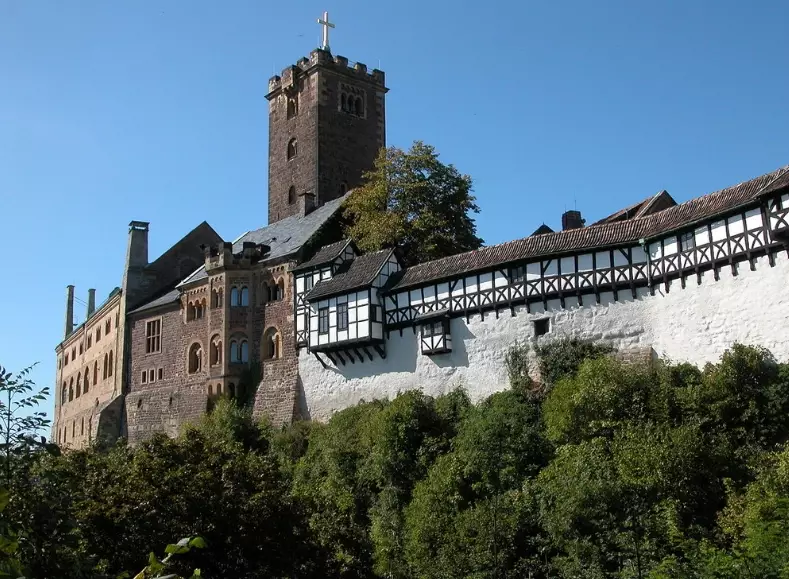
- By Train: Eisenach has a main station (Eisenach Hauptbahnhof) with good connections. From there, you have a choice. You can take bus number 10 (marked "Wartburg Express") which goes most of the way up, saving your legs. Or, you can walk from the town center. It's a proper hike – about 40-50 minutes uphill through lovely forest paths. It's tiring but atmospheric. I did it once in the rain. Wouldn't necessarily recommend that, but the forest smells amazing.
- Shuttle Bus: From the main parking lot, a small shuttle bus (costs a few euros) runs up to the castle courtyard. It's a lifesaver for those with mobility issues or just plain tired legs. It doesn't run constantly, so check the schedule on the official Wartburg Castle website.
Tickets, Tours, and Opening Hours (No Guesswork)
This is the part that can be confusing. The castle has different areas with separate tickets. Let's break it down.
You can wander the outer courtyard and the grounds for free. That's a nice option if you're on a tight budget or just want the view. But to see the good stuff – the palace rooms, the Luther Room, the museum – you need a ticket.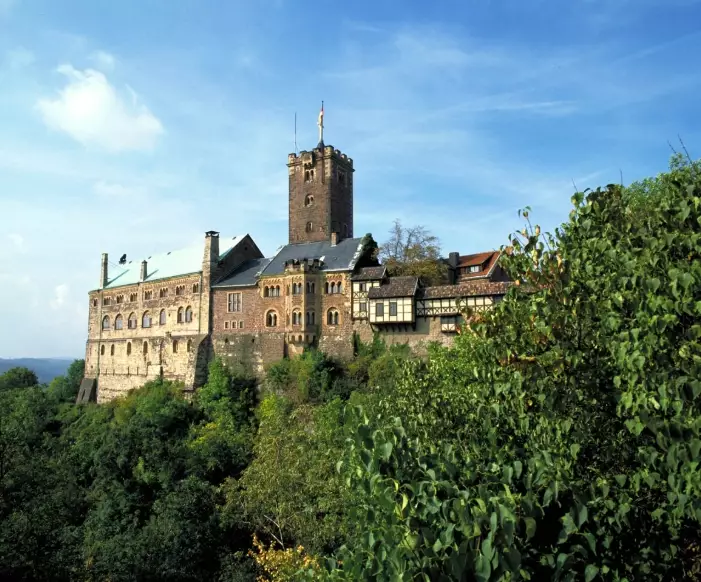
| Ticket Type | What It Includes | Approx. Price (Adult) | Best For... |
|---|---|---|---|
| Palace Tour (Mandatory for interiors) | Guided tour of the main palas (great hall, banquet hall, chapel, etc.). This is the only way to see these historic rooms. | €12 | First-time visitors who want the core experience. |
| Museum Ticket | Entry to the museum housing the art and treasure collection (Luther artifacts, Renaissance art). | €5 | Art and history buffs; can be combined with a tour. |
| Luther's Study (Einzelkarte Lutherstube) | Entry just to the small room where Luther worked. Usually only offered if palace tours are fully booked. | €4 | A quick visit if short on time, but not ideal. |
| Combination Ticket | Palace Tour + Museum. This is the one I always get. | €15 | Most visitors. Gives the full picture. |
A crucial point: The palace interior is only accessible via a guided tour.
You can't just wander in. Tours are offered in German and English (and sometimes other languages). The English tours run less frequently. Check the schedule online and maybe plan your arrival around an English tour time, or be prepared to wait. The tours last about 50 minutes and are genuinely informative – the guides know their stuff.
Opening Hours: They vary by season. Generally, the castle is open from 9:00 or 9:30 AM to 5:00 or 6:00 PM. It's closed on December 24th and 31st. Winter hours (Nov-Feb) are more limited. Always, always check the latest hours on the official opening hours page before you make the journey. Nothing worse than a locked gate.
What You're Actually Going to See: A Room-by-Room Lowdown
Okay, you've got your ticket, you're on the tour. What awaits inside Wartburg Castle?
The Palas (The Main Palace Building)
This is the heart of the castle tour. The building itself is a patchwork of periods, but the grand halls on the upper floors are stunning 19th-century reconstructions of the Romanesque originals. Purists might scoff, but the work was done with incredible scholarship and craftsmanship.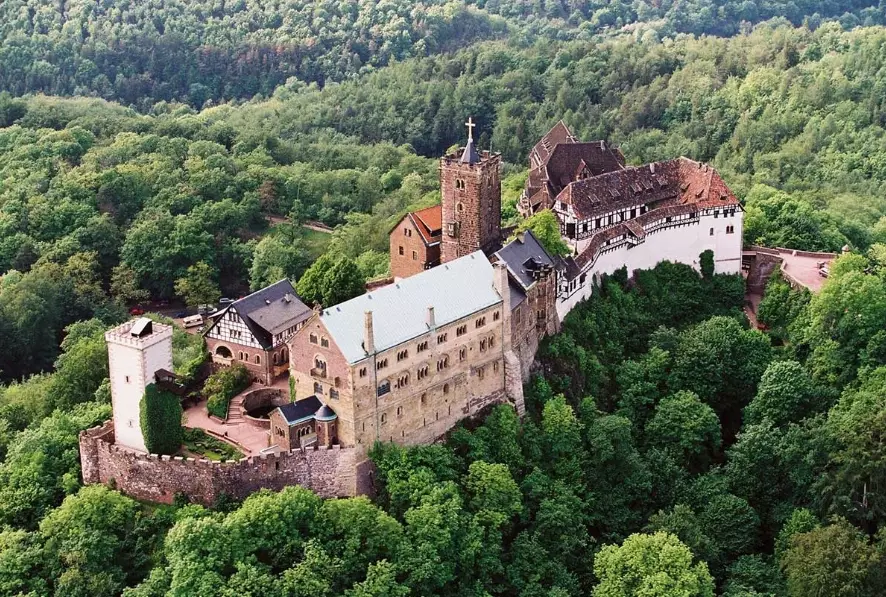
- The Knights' Hall (Rittersaal): Massive, vaulted, and empty. It's designed to impress with sheer space. You can almost hear the echoes of feasts.
- The Singers' Hall (Sängersaal): This is the famous one. It's linked to the medieval Sängerkrieg (song contest) legend that Wagner later used in his opera Tannhäuser. The frescoes on the walls depict the story. The acoustics in here are something else.
- The Festsaal (Festival Hall): The grandest of all, used for major events. The balcony offers that iconic view over the Thuringian Forest. It's used for concerts even today.
The Luther Room (Lutherstube)
This is the big one for many people. After defying the Emperor at the Diet of Worms, Luther was "kidnapped" by his protector, Frederick the Wise, and hidden here for his own safety from May 1521 to March 1522. The room they show you is small, simple, and... honestly, a bit underwhelming at first glance. Just a desk, a chair, a stove, and a famous ink stain on the wall.
The ink stain legend says the devil appeared, and Luther threw his inkpot at him. It's almost certainly a later addition (the stain has been touched up for centuries), but the story sticks because it captures the struggle he felt. He wasn't on a peaceful retreat; he was depressed, afflicted by constipation and doubt, calling the castle his "Patmos." And in that state, he did the impossible: he translated the New Testament from Greek into powerful, accessible German in just eleven weeks. This act didn't just spread Protestant ideas; it helped standardize the German language itself. Standing in that plain room, that's what hits you – the monumental work born from a period of personal crisis. The Luther Memorials Foundation provides deeper context on this period.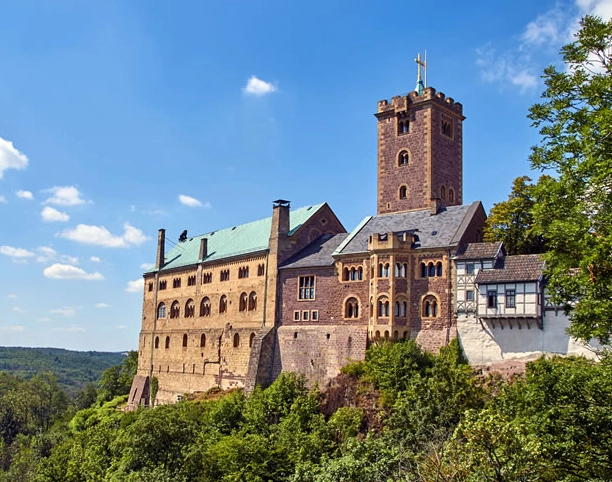
The Museum and Treasure Chamber
This is separate from the tour and often overlooked. Don't skip it. It houses a surprisingly rich collection.
- Art: Paintings by Lucas Cranach the Elder (a friend of Luther's), beautiful medieval sculptures.
- Luther Relics: First editions of his "September Testament," letters, personal effects. Seeing his actual handwriting brings the man closer.
- The Wartburg Treasure: Goldsmith work, reliquaries, and objects connected to St. Elizabeth. The craftsmanship is exquisite.
The Layers of History: Why This Castle Matters
Wartburg Castle isn't famous for one thing, but for being a stage where several pivotal acts of European history played out.
St. Elizabeth: The Princess and the Pauper
Long before Luther, in the early 1200s, the castle was home to Elizabeth of Hungary (also Thuringia). She was a princess who married the landgrave Ludwig. After his early death on crusade, she was forced out, but her legacy is one of radical charity. She devoted her life to the poor and sick, founding a hospital. The castle's earliest significant fame comes from her. The Elizabeth Bower (a later chapel) commemorates her. Her story adds a layer of medieval piety and social conscience to the site.
Martin Luther: The Accidental Revolutionary
We covered the room, but the impact bears repeating. His translation was a publishing blockbuster, made possible by the new printing press. It gave people the Bible in their own tongue, bypassing the clergy. The Wartburg, as his hiding place, became forever linked to the birth of Protestantism. It's a physical anchor point for a world-changing idea.
19th Century: Castle of German Dreams
This is the fascinating bit. By the 1800s, the castle was a ruin. Then, as Germans started dreaming of a unified nation (they were a patchwork of small states), they looked for symbols of a common past. Writers like Goethe visited and raved about it. In 1817, the first Wartburg Festival saw student fraternities gather here to demand a free, united Germany. The castle became a nationalist icon.
This led Grand Duke Carl Alexander of Saxe-Weimar-Eisenach to launch a massive restoration from 1838-1890. This wasn't just repair; it was a romantic re-imagining of the German Middle Ages. Much of what you see today – the stunning mosaics, the frescoes, the grandeur – dates from this period. It's a 19th-century vision of what a heroic German past should look like. The UNESCO listing explicitly recognizes it as "an outstanding monument of the feudal period in central Europe" and for its association with these "values of democracy, patriotism, and freedom."
Making the Most of Your Day: Tips Beyond the Guidebook
- Best Time to Visit: Weekdays, shoulder seasons (April-May, Sept-Oct). Summer weekends are packed. Autumn is magical with the forest colors.
- Food: There's a restaurant in the castle serving decent, if tourist-priced, German fare (schnitzel, sausages). The Thüringer Rostbratwurst is a must-try regional specialty. For a cheaper option, pack a sandwich and eat on the benches with a view.
- Photography: No photos inside the palace rooms on the tour (annoying, but standard). You can snap away in the courtyards and from the viewing terraces. The best exterior shot is from the path leading up from the parking lot.
- Combine with Eisenach: Don't just do the castle and run. Eisenach is also the birthplace of Johann Sebastian Bach. The Bachhaus Museum is excellent. The town center is quaint for a stroll.

Your Wartburg Castle Questions, Answered
So, there you have it. Wartburg Castle won't necessarily dazzle you with instant glamour. It asks for a bit more from you—a hike, a guided tour, some historical imagination. But in return, it gives you a genuine connection to moments that defined Germany. It's a place where you can trace the threads of faith, language, and nation from the Middle Ages to the modern world. That's a pretty good deal for a day trip.
Just remember the good shoes.