In This Article
Okay, let's get straight to it. You typed "What is Germany's most popular beer?" into Google, and you probably want a simple answer. I get it. The quick, numbers-don't-lie answer is Krombacher Pils. Based on pure volume sold within Germany year after year, Krombacher consistently tops the charts. It's the one you'll find in seemingly every other kiosk, supermarket, and many restaurants across the country.
But here's the thing. If you're a beer lover, that answer might feel... unsatisfying. It's like asking for the best pizza in Italy and being told it's the frozen brand with the highest supermarket sales. It's technically correct, but it misses the soul of the question. When people wonder about Germany's most popular beer, they're often digging for something more. They want to know about cultural impact, about the beer that defines Germany abroad, or maybe just a reliable recommendation for their own fridge. So, while Krombacher wins the domestic sales war, the story of German beer popularity has a few more fascinating chapters.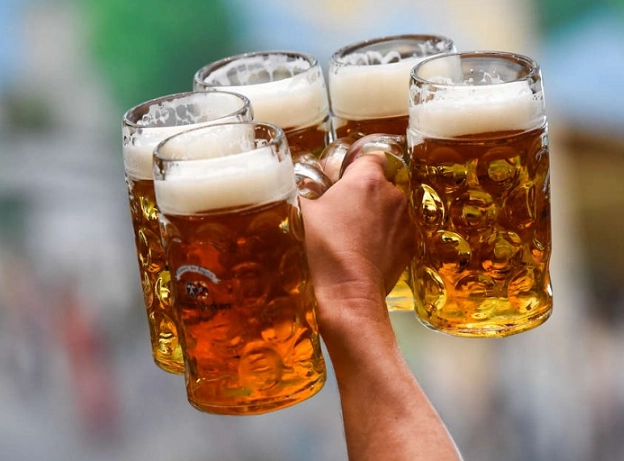
Why does this matter? Well, for one, it shows that popularity isn't always about craft hype or international fame. Krombacher's success is a masterclass in consistent quality, smart distribution, and understanding the local drinker's everyday taste. It's not trying to be the most exotic beer on the shelf; it's trying to be the most reliably refreshing one. And for millions of Germans, it hits that mark perfectly.
Why Krombacher? The Factors Behind the Throne
So, how did Krombacher get to be the answer to "What is Germany's most popular beer?" It wasn't by accident. A few key things worked in its favor.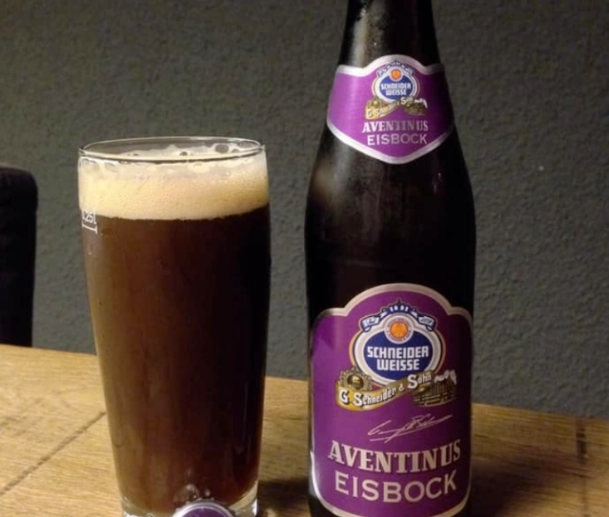
First, location. Its brewery sits right by the Krombach spring, which provides the soft water that's absolutely crucial for brewing a good Pilsner. Pilsners are delicate; hard water can make them taste harsh. Krombacher had a natural advantage right out of the gate.
Then there's timing. After World War II, the Pilsner style began its massive rise to dominance in West Germany. Krombacher, already brewing a Pils, rode that wave perfectly. They invested heavily in modern brewing technology and, just as importantly, in a nationwide logistics network. While many breweries were still regional players, Krombacher made sure its beer could get anywhere.
Marketing played a huge role, too. Their long-running slogan, "Der Geschmack, der verbindet" ("The taste that connects"), positioned the beer as a staple for gatherings, for friendship, for everyday moments. It wasn't sold as a luxury, but as a part of life. That resonated deeply.
And taste? It's a solid, textbook German Pilsner. Clear golden color, a pronounced but not aggressive hop bitterness, a clean malt backbone, and a dry finish. It's incredibly sessionable. You can have a couple without feeling overwhelmed. In a country where beer is often consumed in larger quantities during social sessions, that's a massive plus. It's the definition of a crowd-pleaser, which is basically the blueprint for mass popularity.
The Other Contenders: A Look at the German Beer Landscape
If we're talking popularity, we can't just look at one metric. Sales in Germany tell one story, but global recognition tells another. And regional loyalty creates a whole different map of popularity. Let's break it down.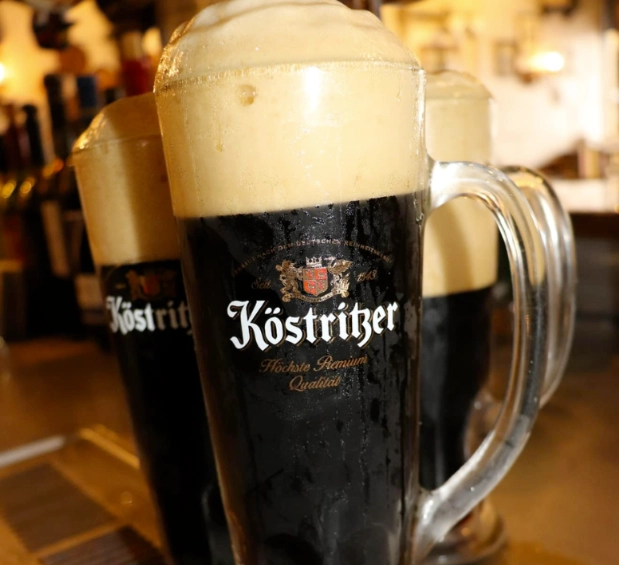
National Rivals in the Sales Race
Krombacher isn't alone at the top. It's part of a tight group often called the "Big Five" or "National Brauereien" (national breweries). These are the brands with the capacity and distribution to be truly nationwide. The order shuffles a bit year-to-year, but the players are familiar.
| Brand | Core Style | Home Region | Note on Popularity |
|---|---|---|---|
| Krombacher | Pilsner | North Rhine-Westphalia | The domestic volume leader, the answer to "What is Germany's most popular beer?" by sales. |
| Bitburger | Pilsner | Rhineland-Palatinate | Famous for the slogan "Bitte ein Bit!" Hugely popular, especially in the west. |
| Warsteiner | Pilsner | North Rhine-Westphalia | Another giant, often cited as Germany's best-selling beer abroad. |
| Becks | Pilsner | Bremen | The undisputed export king. Probably the most recognized German beer brand worldwide. |
| Veltins | Pilsner | North Rhine-Westphalia | Known for a slightly lighter, very crisp Pils. Huge in the football scene (sponsors Schalke 04). |
See a pattern? They all predominantly brew Pilsner. That's no coincidence. The Pilsner style accounts for roughly two-thirds of all beer consumed in Germany. So, when we talk about popular German beer, we're largely talking about popular German *Pilsners*.
The Export Champion: Becks
Now, if you ask someone in the United States, the UK, or Australia about German beer, there's a good chance they'll say "Becks" first. Becks is a global powerhouse. Owned by the massive Anheuser-Busch InBev group, its distribution network is insane. This makes Becks arguably the most internationally popular German beer.
Its taste profile is tailored for a broader international palate—a bit less bitter than some traditional German Pilsners, very clean and consistent. For many people outside Germany, Becks *is* German beer. It's fascinating, really. The answer to "What is Germany's most popular beer?" completely changes if you're sitting in a bar in Hamburg versus one in New York.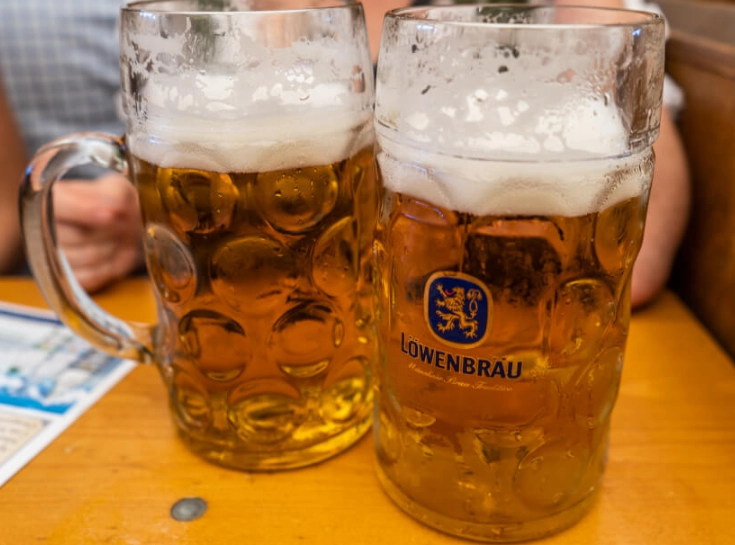
Regional Powerhouses and Cult Favorites
This is where it gets fun. Germany has over 1,300 breweries. Most of them are small, regional, and fiercely loved locally. National sales figures mean nothing here.
In Bavaria, you're in a different world. Here, Helles (a pale, malty lager) and Weißbier (wheat beer) are kings. Brands like Augustiner Bräu from Munich (especially their Helles) enjoy a cult-like status. It's not sold far outside Bavaria, but within it, the reverence is real. People will argue passionately that Augustiner is the best beer in Germany, popularity be damned. Similarly, Franziskaner or Weihenstephaner (the world's oldest continuously operating brewery) rule the Weissbier realm.
In Cologne, you drink Kölsch—a light, top-fermented ale served in skinny 0.2L glasses. Brands like Früh, Gaffel, or Peters are the popular choice, and asking for a Pilsner might get you a funny look. In Düsseldorf, it's all about Altbier, a darker, maltier ale. Füchschen or Uerige are institutions.
These regional beers are the heart and soul of German brewing. They might not have the numbers to challenge Krombacher in a boardroom, but in their hometowns, they are unbeatable. This regional diversity is what makes exploring German beer so rewarding. You have to move around to taste the true local favorites.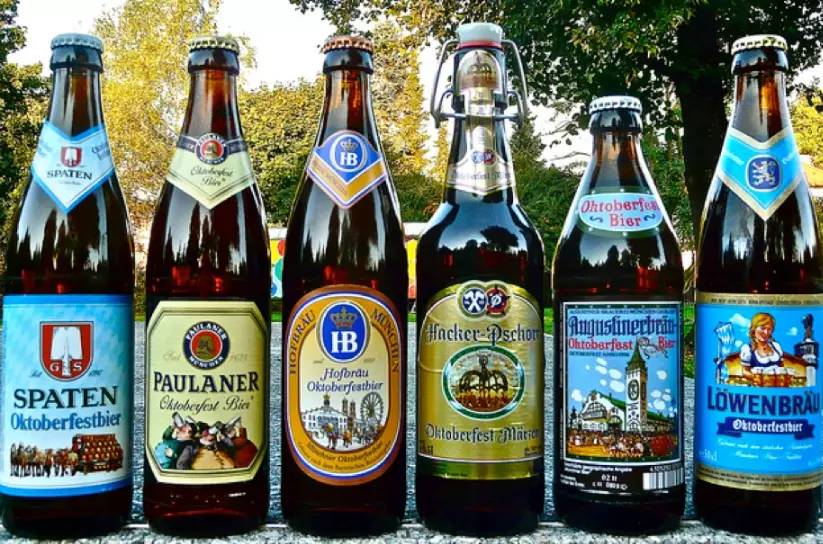
What Makes a Beer "Popular" in Germany Anyway?
We've been throwing the word "popular" around. But it's worth pausing to think about what that really means in the German context. It's not just marketing hype.
Reinheitsgebot (The Beer Purity Law): This 500-year-old regulation (now updated as the "Provisional Beer Law") still shapes perceptions. It stipulates that beer can only be made from water, barley, hops, and yeast (wheat for specific styles). For many Germans, this isn't just history; it's a mark of quality and purity. A popular beer is almost always a *Reinheitsgebot*-compliant beer. It's a baseline of trust. You can read about its historical significance on the official Deutsches Museum website, which details its cultural impact.
Sessionability is Key: German beer culture is often about Gemütlichkeit—coziness, conviviality. Beer is a social lubricant for long conversations at the pub, family gatherings, or festivals. Therefore, the most popular beers tend to be balanced, not too heavy, not too high in alcohol. You can enjoy several over an evening. That 5.0% ABV, crisp Pilsner is engineered for exactly this purpose.
Local Pride: As mentioned, popularity is hyper-local. Supporting the hometown brewery is a point of pride. This fragmented loyalty is why Germany can sustain so many breweries despite the dominance of a few big names.
Food Friendliness: Beer is often consumed with food. A popular beer needs to play well with schnitzel, sausage, pretzels, and cheese. Sharp, cleansing bitterness (from a Pils) or refreshing yeastiness (from a Hefeweizen) cuts through rich food perfectly.
When you look at Krombacher through this lens, its success makes even more sense. It's a Reinheitsgebot Pilsner, sessionable at 4.8%, widely available for any social occasion, and neutral enough to pair with most German dishes. It checks the cultural boxes.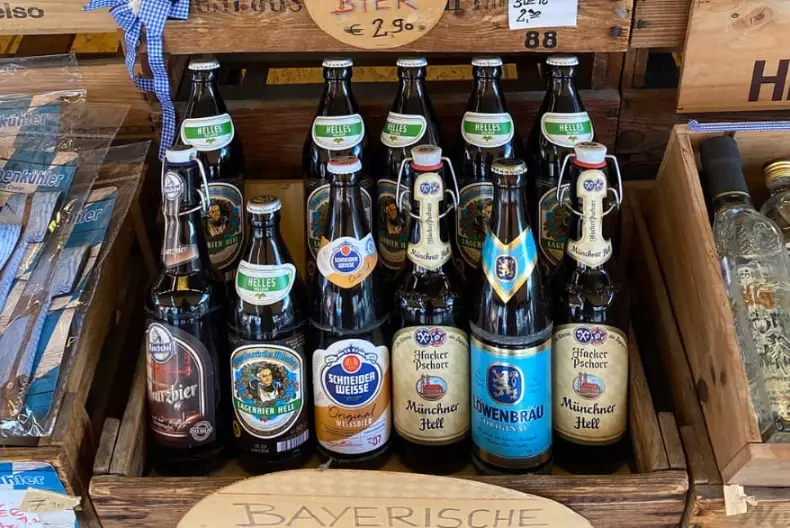
Beyond the Mainstream: Exploring German Beer Styles
If you only stick to the big-name Pilsners, you're missing out on incredible diversity. Here's a quick guide to other styles that are hugely popular within their own categories. Think of this as your tasting roadmap after you've answered the initial "What is Germany's most popular beer?" question.
- Hefeweizen (Unfiltered Wheat Beer): Cloudy, spicy, banana-and-clove flavors from a special yeast. Incredibly refreshing. Top names: Weihenstephaner, Paulaner, Erdinger.
- Dunkel (Dark Lager): Not heavy or stout-like. Think toasted bread, chocolate, and caramel, but with a lager's clean finish. Top names: Weltenburger Kloster, Ayinger.
- Bock (Strong Lager): A stronger, maltier lager, often seasonal. Doppelbock is even richer. Top names: Ayinger Celebrator, Paulaner Salvator.
- Kölsch & Altbier: As discussed, the regional heroes of Cologne and Düsseldorf. Must-tries if you visit those cities.
- Berliner Weisse: A tart, sour, low-alcohol wheat beer from Berlin, often served with a shot of sweet syrup (woodruff or raspberry). It's an acquired taste but a historic one.
- Märzen / Festbier: The amber Märzen is the original Oktoberfest beer, but today's Festbier is a lighter, golden, strong liger served at the festival. Top names: Spaten, Augustiner (for Festbier).
See what I mean? The world opens up. The German Brewers Association (Deutscher Brauer-Bund) provides great resources on all these traditional styles, which helps verify their characteristics and history.
Common Questions About German Beer
How to Choose Your Own German Beer
Forget popularity contests for a second. Here’s a practical guide to finding a German beer *you* will love.
- Identify Your Preference: Do you like crisp and bitter? Go for a Pilsner (Krombacher, Jever, Rothaus). Do you prefer malty and smooth? Choose a Helles or Dunkel. Want something fruity and refreshing? Grab a Hefeweizen.
- Check the Region: If you see a beer from Bavaria, expect mastery in Helles, Dunkel, and Weissbier. From the north, expect excellent Pilsners. It's a decent general rule.
- Look for "Gebraut nach dem Reinheitsgebot": This phrase on the label means "brewed according to the purity law." It's your assurance of a traditional ingredient base.
- Don't Fear the Small Brand: In a German supermarket or Getränkemarkt (beverage store), pick up a bottle from a brewery you've never heard of. The odds are good it will be well-made and give you a taste of local character.
- Consider the Occasion: A light Helles or Pils for a summer barbecue. A rich Doppelbock for a cold winter night. A tart Berliner Weisse as a palate-cleansing aperitif.
So, what is Germany's most popular beer? By the hard metric of domestic sales, it's Krombacher Pils. It's the undisputed volume champion, a testament to consistent quality and mass appeal. But German beer is a tapestry, not a single thread. The export popularity crown belongs to Becks. The crown of regional devotion is shared by hundreds of local breweries, from Cologne's Kölsch houses to Munich's historic beer halls.
Your best move is to use that initial question—What is Germany's most popular beer?—as a starting point. Acknowledge Krombacher's market position, then immediately start exploring the incredible depth behind it. Try the big names, but make a point to seek out the regional specialties and the new wave of craft offerings. Read up on the styles from authoritative sources like the German Beer Institute, a fantastic English-language resource. In the end, the most popular German beer for *you* is the one you enjoy the most. And finding that might just require a delicious, extended tasting session of your own. Prosit!