Explore This Guide
Let's be honest. When you first hear "coal mine," you probably don't think of beauty. You think of dark, dirty, and dangerous places. I thought the same thing before I went. But then you see photos of this place—Zeche Zollverein—and it throws you for a loop. It looks like a giant, rust-colored spaceship landed in the middle of Essen. It's all clean lines, symmetry, and this weird industrial grace. It doesn't look like it should have been a mine at all. It looks like a temple built for machines.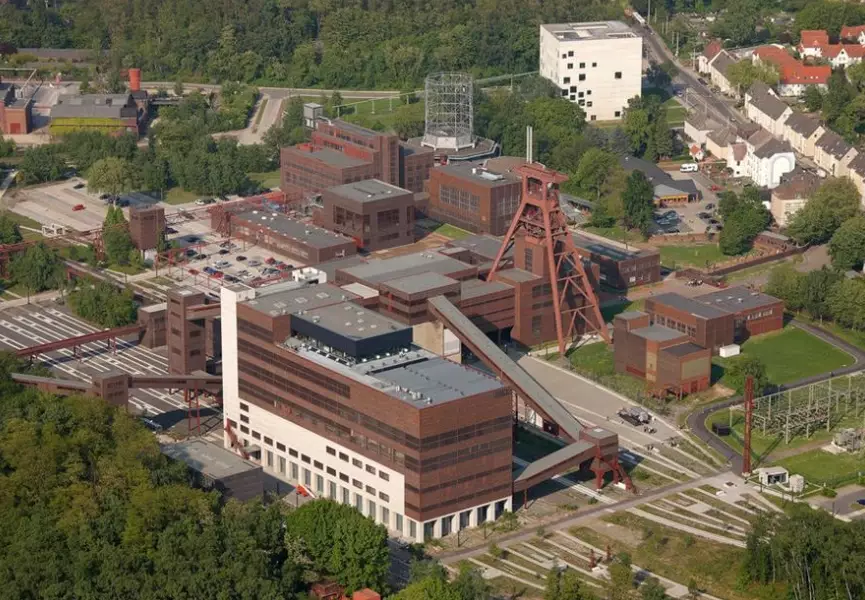
That's the first hook. The second is the story. This isn't just a preserved relic. It's a place that literally died and came back to life as something completely different. The last coal came up in 1986, and the place was headed for the wrecking ball. Instead, it got a new lease on life as a UNESCO World Heritage Site, a museum complex, a design school, and the cultural heart of Germany's Ruhr region. That transformation is what makes Zeche Zollverein Essen so fascinating. It's a masterclass in how to deal with industrial heritage—not by hiding it, but by celebrating its raw power and finding new uses for its colossal structures.
I spent a whole day there recently, and my feet were killing me by the end. The site is massive. But I left feeling energized, not just tired. There's a creative buzz in the air now, where once there was just coal dust. This guide is my attempt to unpack everything I learned and wish I'd known before I went. We'll dig into its history (pun intended), get lost in its architecture, and figure out the practical stuff—like how to actually visit the place without missing the good bits.
From Black Gold to Cultural Gold: The Story of Zeche Zollverein
To get why this place is special, you have to start with why it was built. The Ruhr area was Germany's industrial engine room. Coal was king, and by the late 1920s, they needed a new, super-efficient pit to keep up. So they built Shaft XII of Zeche Zollverein, and they decided to make a statement.
They hired the architects Fritz Schupp and Martin Kremmer. These guys were fans of the Bauhaus and Modernist movements. Their idea was radical: a mine as a Gesamtkunstwerk, a total work of art. Every part, from the winding tower down to the door handles, was designed with this modernist, functionalist aesthetic. The result was the most modern and beautiful coal mine in the world. They called it the "Eiffel Tower of the Ruhr." It wasn't just about digging coal faster; it was about presenting a new, confident face of industry. The central winding tower (Doppelbock) became an instant icon—two towering, red-painted steel frameworks holding the wheels that hauled men and coal up and down.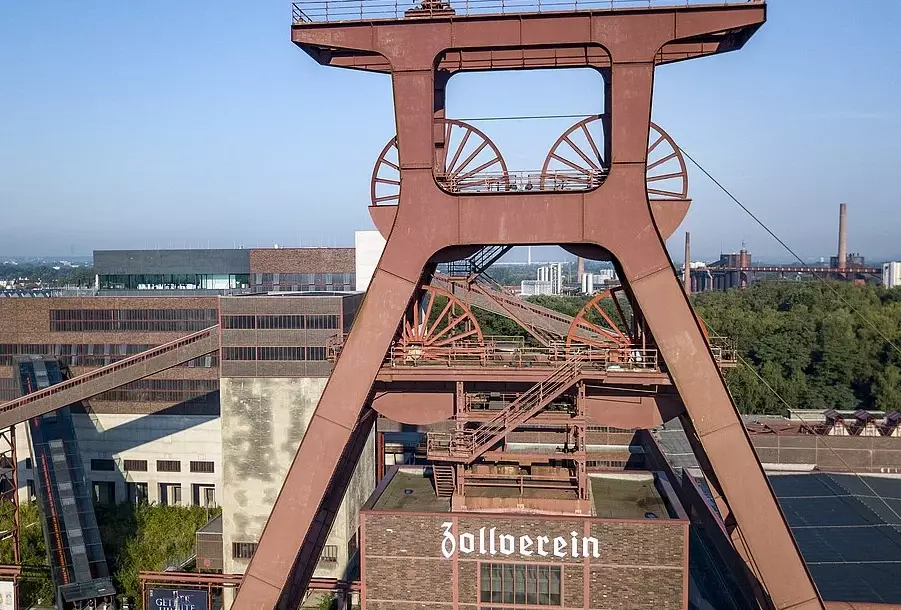
Funny side note: For all its beauty, it was still a brutally efficient machine. At its peak, it could process 12,000 tonnes of coal every single day. That's mind-boggling. They designed beauty, but the bottom line was always tonnage.
The mine ran for decades, but the writing was on the wall for German coal. It became cheaper to import it from elsewhere. Finally, on December 23, 1986, the last shift came up, the wheels stopped turning, and silence fell over the giant complex. That could have been the end. Many places like it were simply demolished.
But a group of people—former miners, historians, architects—fought to save it. They saw the value in the architecture, in the story it told. In 2001, their effort paid off in a huge way: UNESCO added the Zeche Zollverein to the World Heritage List. They didn't just list a building; they listed the entire industrial complex—the mine (Zeche) and the adjacent coking plant (Kokerei)—as a monument to the age of heavy industry. You can read the official justification on the UNESCO World Heritage Centre website, where they detail its outstanding universal value.
That designation was the key. It turned off the demolition talks for good and turned on the funding taps for preservation. But what do you do with a massive, empty industrial plant? You can't just lock the gates and call it a day.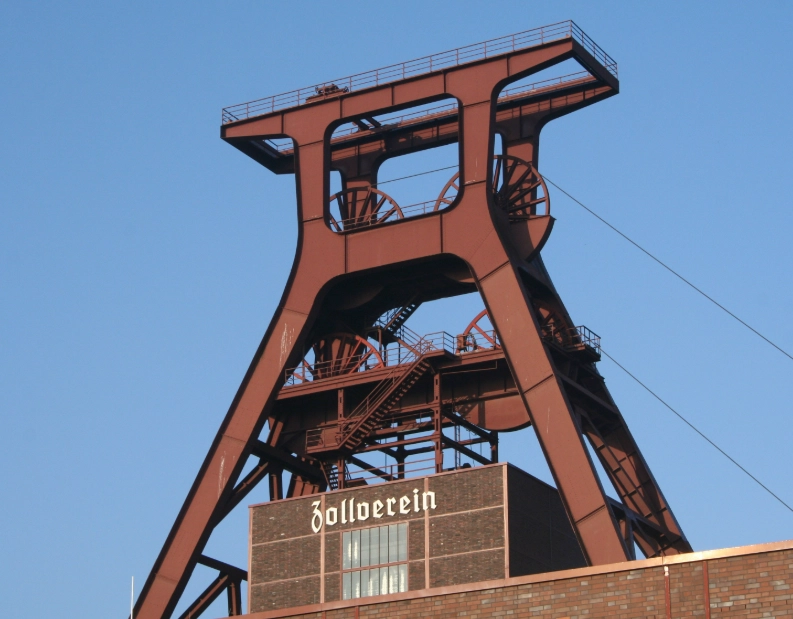
The Reinvention: What Actually Is Zeche Zollverein Today?
This is the cool part. The site didn't become a static museum under glass. It became a living, breathing cultural district. The old buildings were given new, imaginative purposes. Walking around now is a constant game of "what was this before?"
The absolute core of any visit is the Ruhr Museum. It's housed in the former coal washing plant—a building that looks like a multi-level fortress of concrete and steel. The museum itself is a masterpiece of curation. It doesn't just tell the story of the mine; it tells the natural and cultural history of the entire Ruhr region, from prehistoric swamp to industrial powerhouse to its modern post-industrial identity. Taking the long escalator up through the dark, cavernous shaft to the main exhibition feels like a journey into the belly of the beast. It's unforgettable. Check their latest exhibits and opening times on the official Ruhr Museum website.
Right next door, in the former boiler house, is the Red Dot Design Museum. This is a perfect fit. Modernist design birthed the mine's architecture, and now the building showcases the best in contemporary product design from around the world. It's a brilliant contrast—raw industrial shell holding sleek, clever objects.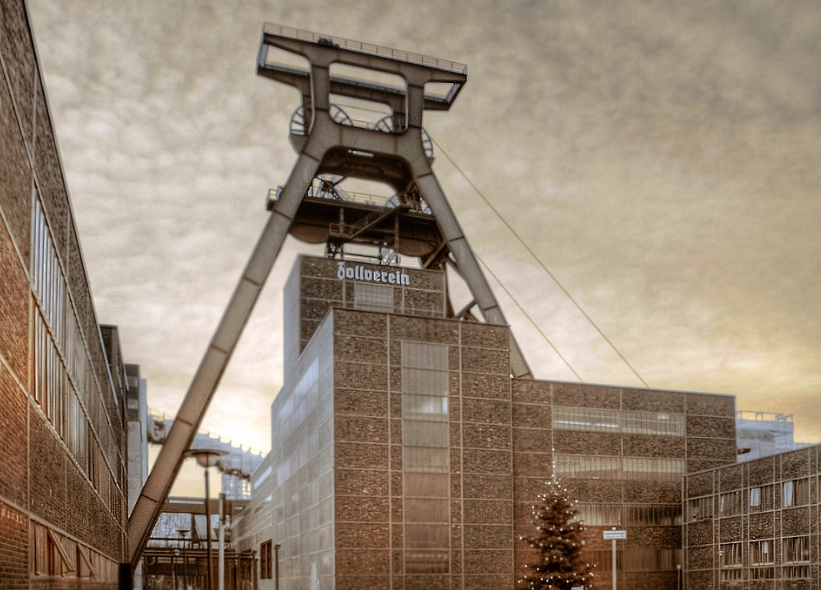
My personal take: The Design Museum is lighter and more playful than the dense, atmospheric Ruhr Museum. If you're short on time or with kids who might get bored with historical timelines, this is a great option. Some of the designs will make you laugh, others will make you want to buy them immediately.
Then there's the Zollverein Park. The land around the structures has been reclaimed by nature and art. It's now a sprawling park with walking and biking trails, ponds, and open-air sculptures. It's hard to imagine this was once a grimy, noisy industrial yard. On a sunny day, it's the perfect place to have a picnic with the epic backdrop of the winding towers.
Perhaps the most significant reinvention is educational. Part of the site houses the University of Duisburg-Essen's Faculty of Design. Students learn about design and architecture literally surrounded by one of its most iconic examples. Talk about inspiration! You can often see student projects and exhibitions around the site. The official portal for the campus is on the University of Duisburg-Essen website.
Planning Your Visit: The Nitty-Gritty Details
Okay, let's get practical. The Zeche Zollverein complex is huge. You can't just wing it. A little planning makes the difference between a great day and a confusing, exhausting one.
Getting There and Getting Around
Essen is well-connected, and the site is accessible by public transport, which is honestly the best way to go. Take the Essen Stadtbahn (light rail/tram) U107 from Essen Hauptbahnhof (main station). It's labeled "Gelsenkirchen Buerer Str." Get off at the stop called "Zollverein." The ride takes about 15-20 minutes, and the stop plops you right at the edge of the park. You'll see the iconic winding tower from there—just walk towards it.
If you drive, there's plenty of parking (P1 is the main one), but it can fill up on weekends or during big events. The address is Gelsenkirchener Str. 181, 45309 Essen.
Once you're on site, wear comfortable shoes. I mean it. You will walk a lot. The paths are good, but the distances between key points (like the Mine complex and the separate Coking Plant) can be a 15-20 minute walk. There's a shuttle bus (the "Ringline") that connects the main points for a small fee, which is a lifesaver if you're short on time or energy.
Tickets, Tours, and Must-Sees
Here's where it can get tricky. There isn't one "entry ticket to Zollverein." It's a collection of separate institutions. You buy tickets for the specific museums or tours you want to do.
| Attraction | What It Is | Ticket Note |
|---|---|---|
| Ruhr Museum | The main historical museum in the Coal Washing Plant. Essential for understanding the context. | Separate entry ticket. Combo tickets with the Panorama Tour are available. |
| Red Dot Design Museum | Contemporary product design exhibits in the Boiler House. | Separate entry ticket. |
| Zollverein Guided Tours | The BEST way to access restricted areas like the rooftop of the Coal Washing Plant (Panorama) or go inside the Winding Tower. | Book in advance, especially for English tours. The "Panorama Tour" is highly recommended. |
| Zollverein Park & Exterior | The grounds, outdoor art, and views of the architecture. | Completely FREE. You can spend hours just exploring outside. |
| Coking Plant (Kokerei Zollverein) | The separate, equally massive plant where coal was turned into coke. More brutalist, apocalyptic vibes. | Free to walk around part of it. Special exhibitions and the viewpoint tower have separate fees. |
My biggest piece of advice? Book a guided tour. The standard "Panorama Tour" takes you to the roof of the Coal Washing Plant, which offers the single best view of the entire Zeche Zollverein Essen complex. You see the perfect symmetry of the layout, which you just can't appreciate from the ground. The guides, often incredibly knowledgeable, bring the machinery and the process to life. They'll explain what all those pipes and towers actually did. It turns a beautiful shell into a functioning system.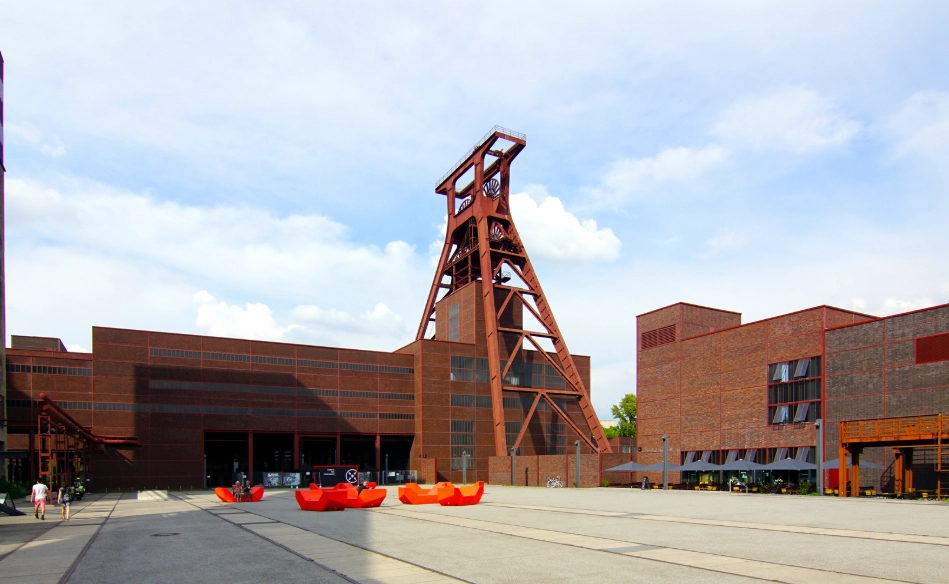
Pro Tip for Photography: The light is best in the afternoon, when the sun hits the front of the main winding tower complex. For moody shots, the Coking Plant at dusk is unreal—it looks like a set from a sci-fi movie.
How Much Time Do You Need?
This is the most common question. Here's the breakdown:
- The "I'm just passing through" visit: 2-3 hours. Walk from the tram stop to the main shaft area. Marvel at the architecture, walk around the base of the towers, peek into the free parts of the Visitor Centre, maybe grab a coffee at the café in the former power station. You'll get the iconic photos and the scale.
- The "standard" visit: 4-5 hours. Do one major museum (Ruhr Museum OR Red Dot), take the Panorama Tour, and have a relaxed walk through part of the park. This is what most people do and it feels satisfying.
- The deep dive: A full day or even two. Do both major museums, take two different tours (maybe the Winding Tower tour as well), explore the park thoroughly, walk over to the Coking Plant, and have a meal on-site. This is for true industrial heritage buffs.
I did the deep dive, and while my inner nerd was thrilled, my legs were not. The scale is just relentless.
Answering Your Burning Questions (FAQ)
- Casino Zollverein: The fancier restaurant in the former casino building for miners. Good for a sit-down lunch.
- Kohlenwäsche Café: In the Ruhr Museum building, perfect for a coffee and cake break.
- Several snack kiosks and ice cream stands around the park in warmer months.
The Final Verdict: Why Bother Going?
Look, it's not a fairy-tale castle. It's not a pristine art gallery. Visiting Zeche Zollverein is an experience that engages your brain as much as your eyes. You come for the stunning architecture, but you stay for the story of transformation.
You learn about the back-breaking work that built modern Germany. You see the audacity of architects who believed industry could be beautiful. And most importantly, you witness a powerful example of how a community can look its past in the eye—the good, the bad, and the grimy—and decide to repurpose it with creativity and respect, instead of erasing it.
It can feel a bit overwhelming and, in some of the more sparse areas, a tad austere. The sheer scale is both its greatest asset and its biggest challenge for visitors. But that's also what makes it real. This place wasn't built for tourists; it was built for work. That authenticity is palpable.
So, should you go? If you have even a passing interest in history, architecture, design, or just seeing something truly unique, then yes, absolutely. Allocate more time than you think you need, book a tour in advance, wear your most comfortable shoes, and prepare to have your idea of a "coal mine" completely rewritten. The legacy of Zeche Zollverein Essen is no longer the coal it pulled from the ground, but the inspiration it now offers for thinking about our industrial past and our creative future.