Quick Guide
- The Heart of the Matter: German Meat & Sausage Dishes
- The Supporting Cast: Bread, Sides & Salads
- Pasta, Pancakes & Dumplings: The Carb Comfort Zone
- The Sweet Finale: Cakes, Pastries & Desserts
- Regional Gems You Can't Miss
- Drinks: More Than Just Beer
- The Complete List: 100 German Foods at a Glance
- Putting It Into Practice: How to Experience These 100 German Foods
- Common Questions About German Food
- Final Thoughts
So you want to know about German food? You've probably heard of bratwurst and maybe pretzels, but let me tell you, there's a whole world beyond that. German cuisine is this incredible mosaic of regional specialties, hearty comfort food, and surprising delicacies that most travel blogs just skim over. I remember my first trip to Berlin, thinking I knew what to expect, only to be completely baffled by a menu full of words like "Spätzle," "Sauerbraten," and "Rouladen." Where do you even start?
This guide is my attempt to map it all out for you. We're going deep, beyond the clichés. We're talking about 100 German foods – a proper, comprehensive list that covers everything from the must-try classics you'll find on every street corner to the hidden gems your German friend's grandma might make. It's not just a list; it's the context, the stories, and the practical stuff you need to actually enjoy this food, whether you're planning a trip, cooking at home, or just satisfying some serious curiosity.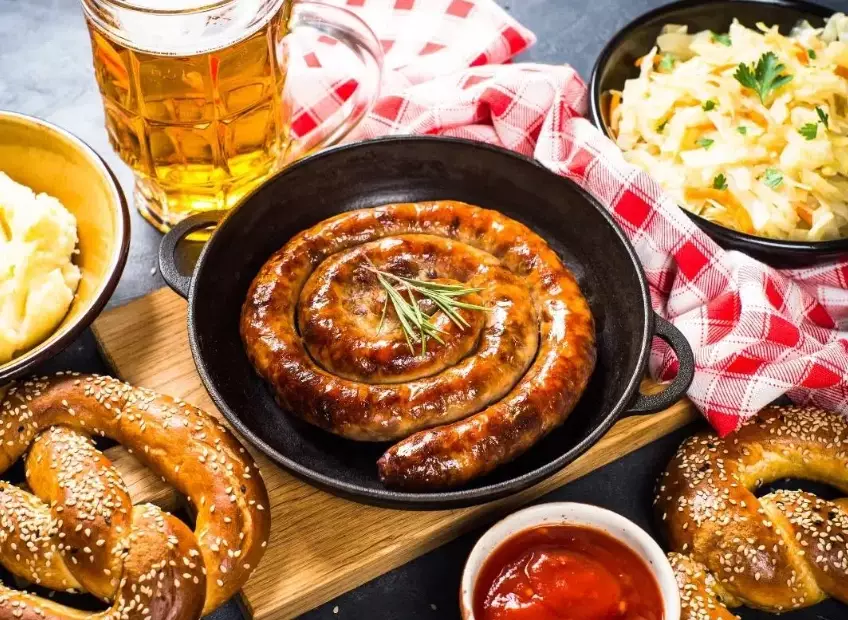
Why 100? Because a "top 10" list feels insulting to a cuisine this rich. Germany has 16 federal states, each with its own history and culinary traditions shaped by geography, neighboring countries, and local ingredients. Bavaria's food is different from Saxony's, which is different from what you eat up north in Schleswig-Holstein. To get a real taste, you need to look at the full spectrum.
The Heart of the Matter: German Meat & Sausage Dishes
Let's be real, for many people, German food is synonymous with meat. And they're not entirely wrong. The variety is staggering. It's not just pork; it's beef, veal, poultry, and game, often prepared in ways that maximize flavor and comfort.
Beyond the Bratwurst: A Sausage Primer
Yes, there are over 1,500 types of German sausage. No, we won't list them all. But understanding the main families helps you navigate any menu or butcher shop.
Bratwurst: The grilled one. Usually made from finely minced pork and veal, seasoned with marjoram, caraway, and garlic. The Thuringian Rostbratwurst has a protected geographical status, meaning the real deal has to come from that region. It's often served in a crusty roll with mustard – simple perfection.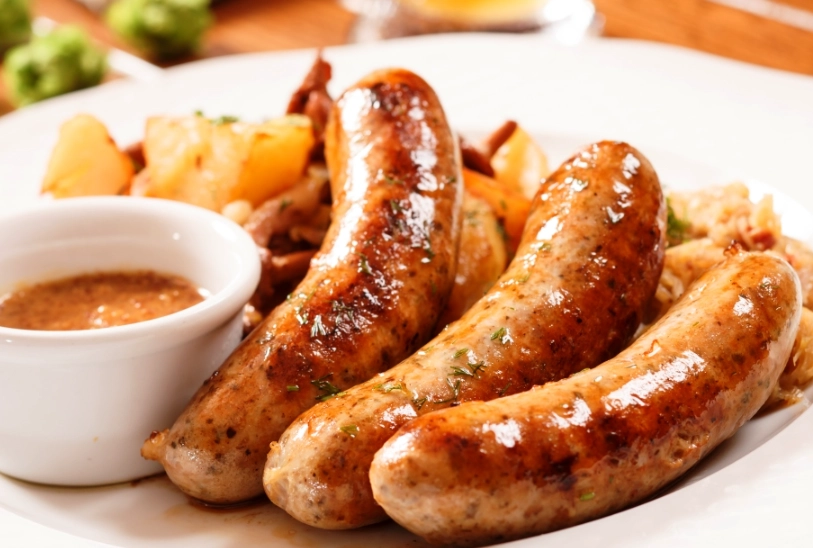
Currywurst: Berlin's iconic street food. A boiled then fried pork sausage, sliced up and smothered in a spiced ketchup-curry sauce, then dusted with curry powder. It's a post-WWII invention and absolutely everywhere in the capital. Some love it, some find it overhyped. I'm in the first camp, especially with a side of crispy fries.
Weißwurst: The "white sausage" from Munich. A delicate veal and parsley sausage, traditionally eaten before noon. The ritual is key: you get it in a bowl of hot water, peel off the skin, and eat it with sweet mustard, a pretzel, and a wheat beer. It's a whole experience.
Blutwurst (Blood Sausage) & Leberwurst (Liver Sausage): These are spreadable or sliceable cold cuts. Blutwurst is richer, often containing barley or oats. Leberwurst is smoother. Both are staples on a German breakfast or Abendbrot (evening bread) table, spread thickly on dark rye. Don't knock it till you've tried it on a fresh Brötchen.
My personal confession? I struggled with Leberwurst at first. The texture and idea of liver as a spread threw me off. But paired with sharp pickles and raw onions on a dense rye bread, it clicked. It's an acquired taste, but one worth acquiring.
Iconic Meat Main Courses
Sausages are often fast food. The real centerpieces of a German meal are dishes like these.
Sauerbraten: Considered a national dish by many. It's a pot roast, traditionally of beef or horse, marinated for days in a mixture of vinegar, wine, water, and spices (cloves, bay leaves, juniper) until tender and tangy. It's then slow-cooked and served with a rich gravy, red cabbage, and potato dumplings (Klöße). The marinade tenderizes tougher cuts of meat, making it a genius peasant dish turned gourmet.
Rouladen: Thin slices of beef rolled around a filling of bacon, onions, mustard, and pickles, then braised. Each slice is a little flavor bomb. The gravy it creates is incredible for soaking up Spätzle or mashed potatoes. It's a classic Sunday family meal.
Schweinshaxe: The legendary roasted pork knuckle. The skin is crackling-crisp, the meat underneath is fall-apart tender and juicy. It's a Bavarian beer hall specialty, massive and meant to be shared (or tackled by the very hungry). It's heavy, it's glorious, and you'll probably need a nap afterward.
Kasseler: Not from Kassel, surprisingly. It's a cured and lightly smoked cut of pork (usually rib or loin), which is then boiled or baked. It has a unique, mild smoky flavor and is often served with sauerkraut and mashed potatoes. A simple, satisfying weekday dish.
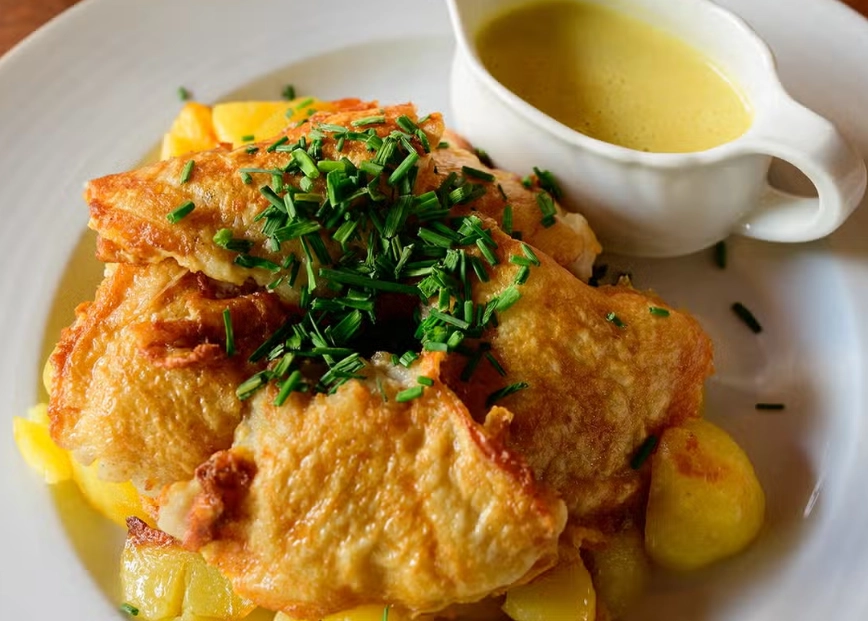
Schnitzel: While Austria claims the Wiener Schnitzel (veal), Germany has embraced it wholeheartedly. You'll find Schnitzel made from pork (Schweineschnitzel, the most common), chicken, or turkey. The key is the thin, crispy breadcrumb coating. The Jägerschnitzel version comes with a mushroom cream sauce. It's the ultimate comfort food.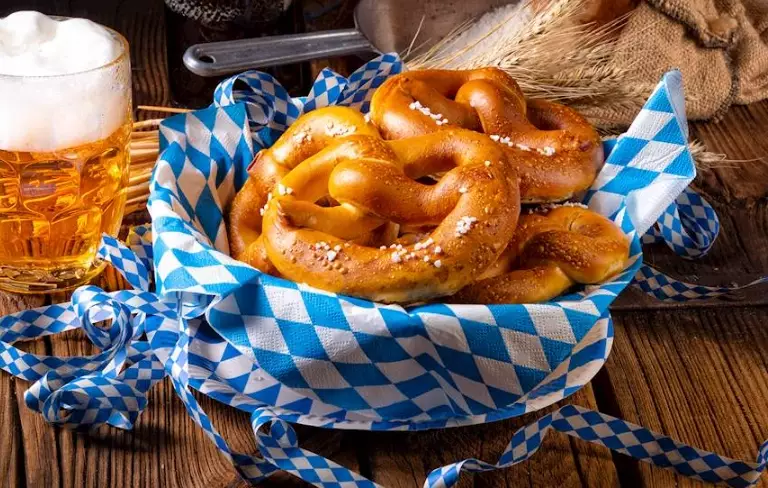
And that's just scratching the surface. There's also Hackbraten (meatloaf), Frikadellen (German meatballs, pan-fried and often eaten in a roll), Gulasch (a hearty stew influenced by Hungary), and Wildschweinbraten (roast wild boar, a seasonal autumn treat).
The Supporting Cast: Bread, Sides & Salads
German food isn't a solo act. The mains are supported by an incredible array of carbohydrates and fermented vegetables that are stars in their own right.
Bread: Germany's True Love
Germany takes bread seriously. There are over 3,000 registered types of bread. The cornerstone is rye. Dark, dense, sourdough rye breads (Roggenbrot or Schwarzbrot) are nutritional powerhouses with a complex, slightly sour taste. Then you have mixed rye-wheat breads (Mischbrot), pure wheat breads (Weißbrot), and a universe of rolls (Brötchen or Semmeln), which are a daily ritual for breakfast.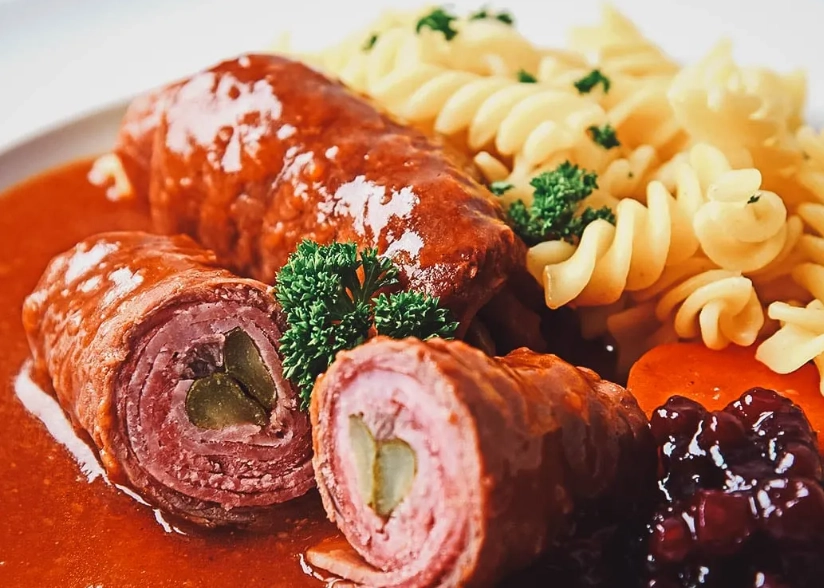
A quick tip: If you see "Vollkorn" on the label, it means whole grain. "Sonnenblumenkernbrot" is bread packed with sunflower seeds. Don't just grab the white roll – try a slice of dense, seedy rye with some butter and cheese. It's a revelation.
Potato & Dumpling Dominion
Potatoes are king. You'll find them mashed (Kartoffelpüree), fried as home fries (Bratkartoffeln – often with bacon and onions), boiled in their skins (Pellkartoffeln) with quark, or in salads. Kartoffelsalat (potato salad) is a cultural touchstone; the Bavarian version is served warm with a broth and vinegar dressing, while up north it's often mayo-based.
Then come the dumplings. Klöße or Knödel are soft, pillowy spheres made from potatoes or bread. They are the ultimate gravy absorbers. Semmelknödel (bread dumplings) are made from stale rolls and are particularly common in Bavaria, often served with roast pork and its juices.
The Sauerkraut Question
It's the most famous German side, but it's often misunderstood. Good sauerkraut isn't just sour; it's finely shredded cabbage fermented with salt, sometimes with juniper berries or caraway. It can be served raw (roh) or cooked (gekocht), often with apples, onions, or bacon for sweetness and depth. It's a fantastic, probiotic accompaniment to fatty meats.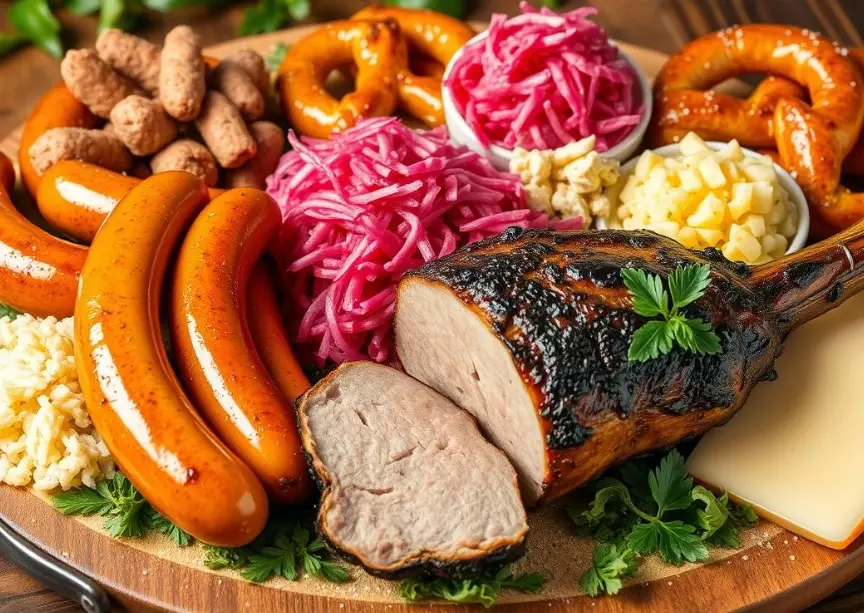
But don't stop there. Rotkohl or Blaukraut (red cabbage) is slow-cooked with apples, vinegar, and spices until sweet, tangy, and a beautiful deep purple. Grünkohl is a winter kale stew, often cooked with smoked sausage, a hearty north German tradition. Spargel (white asparagus) is a springtime obsession, with its own season (Spargelzeit) and special menus, usually served with hollandaise sauce and ham.
Pasta, Pancakes & Dumplings: The Carb Comfort Zone
Germany has its own unique world of starchy dishes that blur the line between side and main.
Spätzle: These are not pasta, even if they look like it. They're soft egg noodles from Swabia (southwest Germany). The dough is scraped or pressed into boiling water, resulting in irregular, tender little dumplings. They're often served as a side to roasts with gravy, but the best version is Käsespätzle: Spätzle layered with grated Emmentaler or similar cheese and fried onions, baked until gooey. It's Germany's answer to mac and cheese, and it's phenomenal.
Maultaschen: Another Swabian treasure. Think of them as large, square ravioli. The filling is a spiced mixture of minced meat, spinach, breadcrumbs, and herbs. Legend says monks invented them to hide meat during Lent (the "pasta" was the disguise). They can be served in broth, sliced and fried with eggs, or baked with cheese. Incredibly versatile and delicious.
Pfannkuchen / Eierkuchen: German pancakes. They're thinner than American pancakes but thicker than French crêpes. Often eaten as a savory meal (with apple sauce, cheese, or ham) or as a sweet dessert. In Berlin, watch out: a "Berliner Pfannkuchen" is actually a jelly doughnut! The flat pancake is called an "Eierkuchen" there.
Reibekuchen / Kartoffelpuffer: Crispy potato pancakes. Grated potatoes mixed with egg and onion, then fried until golden. Served with apple sauce or savory with sour cream and smoked salmon. A common street food at Christmas markets.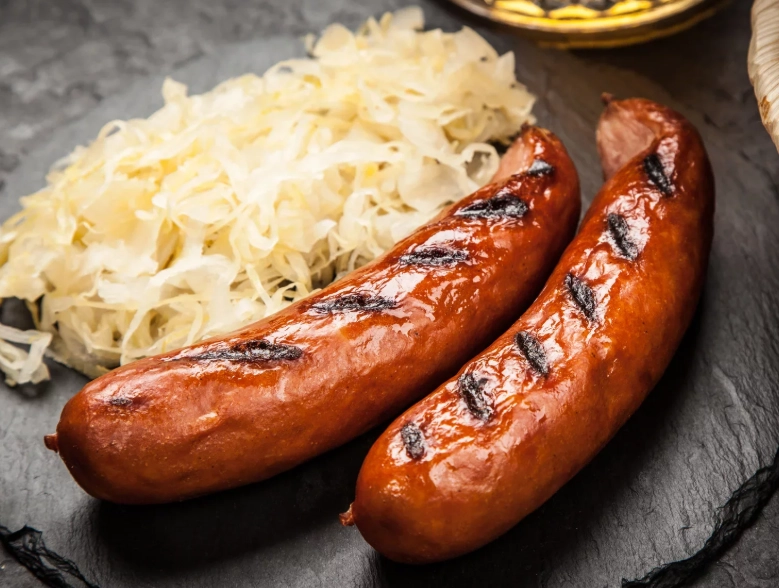
The Sweet Finale: Cakes, Pastries & Desserts
Germans have a legendary Kaffee und Kuchen (coffee and cake) culture, usually observed mid-afternoon. The variety of cakes is mind-boggling.
Schwarzwälder Kirschtorte (Black Forest Gateau): The global superstar. Layers of chocolate sponge cake, whipped cream, and sour cherries, soaked with Kirschwasser (cherry brandy), and decorated with chocolate shavings and cherries. A good one balances sweetness, bitterness, and the kick of alcohol. A bad one is just sweet cream and soggy cake.
Apfelstrudel: Flaky, paper-thin pastry wrapped around a filling of tart apples, raisins, cinnamon, and breadcrumbs. Served warm, often with vanilla sauce (Vanillesoße) or a scoop of vanilla ice cream. The skill is in stretching the dough so thin you can read a newspaper through it.
Bienenstich (Bee Sting Cake): A yeast-leavened cake with a creamy vanilla custard filling and a top crust covered in caramelized almonds and honey. The name comes from the legend of a baker using bees to chase away rivals – the almonds look like bee stings. It's less creamy than other cakes and has a wonderful chewy-crunchy top.
Rote Grütze: A north German and Danish summer dessert. A red berry compote (using red and black currants, raspberries, strawberries) thickened with starch, served cold with vanilla sauce or cream. It's refreshing, tart, and not overly sweet.
Krapfen / Berliner: The jelly-filled doughnut, eaten especially on New Year's Eve and Carnival. A soft, yeasted dough fried and filled with jam (usually raspberry) and dusted with powdered sugar. Be careful – some are filled with mustard as a prank!
Then there are the countless Obstkuchen (fruit tarts) with a base of buttery dough (Mürbeteig) topped with seasonal fruits like plums (Pflaumenkuchen), cherries, or rhubarb. Käsekuchen (German cheesecake) is usually made with quark, giving it a lighter, less dense texture than its American cousin, often with a hint of lemon.
Regional Gems You Can't Miss
This is where exploring German food gets really exciting. Each area has its pride and joy.
Labskaus (North Coast): A sailor's dish from Hamburg and Kiel. It looks... challenging. It's a mash of corned beef, potatoes, beetroot, and pickled herring, often topped with a fried egg and gherkins. It's salty, hearty, and an acquired taste, but a true piece of maritime history.
Grünkohl mit Pinkel (Northwest): The ultimate winter comfort food. A stew of kale cooked for hours with a special smoked sausage called "Pinkel." Served with roasted potatoes and mustard. It's often eaten on group walks called "Kohlfahrten."
Saumagen (Palatinate): Literally "sow's stomach," made famous by Chancellor Helmut Kohl. It's a pork stomach stuffed with a mixture of pork, potatoes, carrots, and spices, then boiled and sliced. It tastes much better than it sounds – like a very savory, hearty meatloaf.
Handkäs mit Musik (Hesse, Frankfurt): A small, sour milk cheese marinated in a vinegar, oil, and onion dressing (the "music" refers to its, ahem, digestive effects). It's served with bread and butter and is a classic pub snack (Apfelwein taverns) in Frankfurt.
Leipziger Allerlei (Saxony): A spring vegetable stew from Leipzig, originally made with morels, asparagus, carrots, and cauliflower in a creamy sauce. A lighter, elegant dish showing the French influence on Saxon cuisine.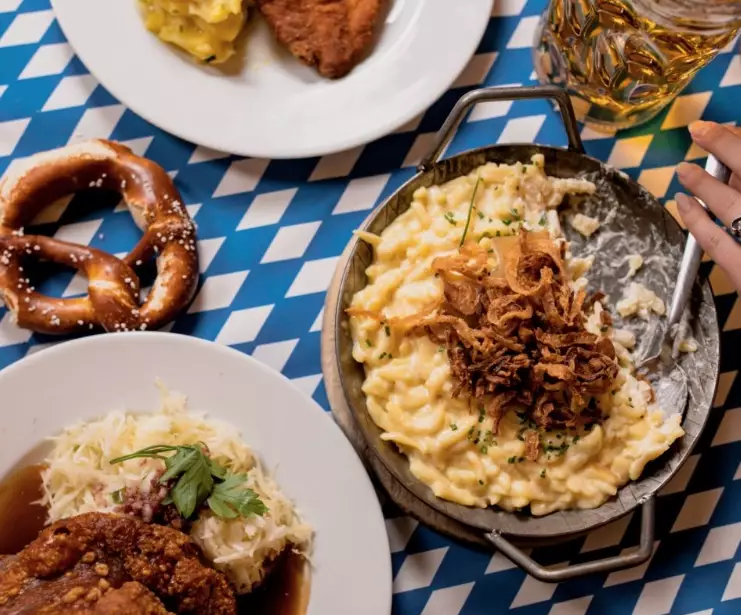
Drinks: More Than Just Beer
Of course, beer is central. From crisp Pilsners and malty Helles to smoky Rauchbier and yeasty Hefeweizen, the variety is a subject for another guide. But there's more.
Apfelwein / Ebbelwoi (Frankfurt): Tart, cloudy apple cider. It's the drink of Hesse, served in a ribbed glass called a "Geripptes." It's sour and refreshing, often cut with sparkling water (Sauer Gespritzter).
Glühwein: Mulled wine, the essential Christmas market drink. Red wine heated with cinnamon, cloves, citrus, and sugar. It warms you from the inside out.
Schnaps: Fruit brandies, served as a digestif. Common varieties include Kirschwasser (cherry), Zwetschgenwasser (plum), and Williams Birne (pear). They are strong, clear, and packed with the fruit's essence.
Federweißer: A young, partially fermented grape must, available in late summer/autumn. It's sweet, cloudy, slightly fizzy, and low in alcohol (but it continues to ferment). Paired with Zwiebelkuchen (onion tart), it's a seasonal ritual.
The Complete List: 100 German Foods at a Glance
Here it is, the full roster. This table organizes our 100 German foods into categories to help you explore. Consider this your ultimate checklist.
| Category | Food Name (English / German) | Key Notes / Region |
|---|---|---|
| MEAT & SAUSAGE DISHES (25) | ||
| Grilled Sausage | Bratwurst Nationwide | Grilled pork/veal sausage, often in a roll. |
| Grilled Sausage | Currywurst Berlin | Sliced sausage with curry-ketchup sauce. |
| Boiled Sausage | Weißwurst Bavaria | White veal sausage, eaten before noon. |
| Boiled Sausage | Frankfurter Würstchen Frankfurt | Smoked, thin pork sausage in a jar. |
| Spreadable Sausage | Leberwurst | Smooth liver sausage spread. |
| Spreadable Sausage | Blutwurst | Blood sausage, often with barley. |
| Spreadable Sausage | Teewurst | Smoked, spreadable sausage for bread. |
| Stew | Gulasch Nationwide | Hearty beef and paprika stew. |
| Roast | Sauerbraten Nationwide | Pot roast marinated in vinegar/wine. |
| Rolled Meat | Rouladen | Beef rolls with bacon, pickle, mustard. |
| Pork Knuckle | Schweinshaxe Bavaria | Roasted crispy pork knuckle. |
| Cured/Smoked Meat | Kasseler Rippenspeer | Smoked pork cutlet. |
| Breaded Cutlet | Schnitzel (Wiener Art) Nationwide | Breaded, fried veal/pork cutlet. |
| Breaded Cutlet | Jägerschnitzel | Schnitzel with mushroom cream sauce. |
| Meatballs | Frikadellen / Buletten | Pan-fried German meatballs. |
| Meatloaf | Hackbraten / Falscher Hase | Baked meatloaf, often with boiled eggs inside. |
| Offal Dish | Saumagen Palatinate | Stuffed pork stomach. |
| Offal Dish | Leber Berliner Art | Calves' liver with apples & onions. |
| Game | Wildschweinbraten | Roast wild boar, autumn specialty. |
| Game | Rehrücken | Saddle of venison, often with red cabbage. |
| Poultry | Gänsebraten | Roast goose, classic for Christmas Eve. |
| Poultry | Hähnchen / Grillhähnchen | Grilled chicken, common takeaway. |
| Cold Cut | Lachsschinken | Cured, smoked pork loin, sliced thin. |
| Cold Cut | Metttwurst | Spreadable raw minced pork, on bread. |
| Stew | Pichelsteiner Eintopf | Three-meat (beef, pork, lamb) & vegetable stew. |
| BREADS & ROLLS (15) | ||
| Dark Rye Bread | Roggenbrot / Schwarzbrot | Dense, sourdough rye bread. |
| Mixed Bread | Mischbrot | Bread made from rye and wheat flour. |
| Wheat Bread | Weißbrot | Light wheat bread. |
| Roll | Brötchen / Semmel / Schrippe | The standard breakfast roll (names vary by region). |
| Seeded Roll | Körnerbrötchen | Roll with sunflower, pumpkin seeds etc. |
| Pretzel | Brezel / Laugenbrezel | Lyebaked, salted pretzel. |
| Sweet Bread | Hefezopf | Braided sweet yeast bread, often for Easter. |
| Sweet Bread | Stollen Dresden | Christmas fruit bread with marzipan. |
| Flatbread | Flammkuchen / Tarte Flambée Baden | Thin crust with crème fraîche, onions, bacon. |
| Sweet Pastry | Franzbrötchen Hamburg | Cinnamon pastry, like a croissant. |
| Bun | Berliner Ballen / Pfannkuchen | Jelly doughnut (name varies). |
| Bun | Schnecken | Cinnamon rolls. |
| Bread Speciality | Pumpernickel Westphalia | Very dark, dense, steamed rye bread. |
| Bread Speciality | Vollkornbrot | Whole grain bread. |
| Bread Speciality | Sonnenblumenkernbrot | Bread with sunflower seeds. |
| SIDES, VEGETABLES & SALADS (20) | ||
| Fermented Cabbage | Sauerkraut | Finely shredded fermented cabbage. |
| Braised Cabbage | Rotkohl / Blaukraut | Sweet & sour braised red cabbage. |
| Kale Stew | Grünkohl North | Stewed kale, often with sausage. |
| Asparagus | Spargel (weiß) | White asparagus, spring delicacy. |
| Potato Dumplings | Kartoffelklöße / Knödel | Boiled potato dumplings. |
| Bread Dumplings | Semmelknödel Bavaria | Dumplings made from stale rolls. |
| Potato Pancakes | Reibekuchen / Kartoffelpuffer | Grated, fried potato pancakes. |
| Fried Potatoes | Bratkartoffeln | Pan-fried potatoes with onions & bacon. |
| Potato Salad | Kartoffelsalat | Warm (south) or mayo-based (north). |
| Mashed Potatoes | Kartoffelpüree | Creamy mashed potatoes. |
| Boiled Potatoes | Pellkartoffeln | Potatoes boiled in their skins. |
| Noodles | Spätzle Swabia | Soft egg noodles. |
| Cheese Noodles | Käsespätzle | Spätzle baked with cheese & onions. |
| Pasta Pockets | Maultaschen Swabia | Large Swabian ravioli. |
| Vegetable Stew | Leipziger Allerlei Saxony | Spring vegetable stew in sauce. |
| Lentil Stew | Linseneintopf mit Würstchen | Lentil stew with sausage. |
| Onion Tart | Zwiebelkuchen | Savory tart with onions & bacon. |
| Cucumber Salad | Gurkensalat | Cucumber in sour cream or vinegar dressing. |
| Bean Salad | Bohnensalat | Green bean salad, often with bacon. |
| Herring Salad | Heringssalat | Pickled herring, apple, beetroot salad. |
| CAKES, PASTRIES & DESSERTS (20) | ||
| Chocolate Cake | Schwarzwälder Kirschtorte Black Forest | Black Forest gateau with cherries & cream. |
| Apple Strudel | Apfelstrudel | Thin pastry with apple filling. |
| Almond Cake | Bienenstich | Yeast cake with custard & caramelized almonds. |
| Berry Compote | Rote Grütze North | Red berry compote with vanilla sauce. |
| Cheesecake | Käsekuchen | Cheesecake made with quark. |
| Marble Cake | Marmorkuchen | Marble pound cake (chocolate & vanilla). |
| Yeast Plum Cake | Pflaumenkuchen | Yeast dough topped with plums. |
| Fruit Tart | Obstkuchen / Obsttorte | Buttery base with fresh seasonal fruit. |
| Donut | Krapfen / Berliner | Jelly-filled doughnut. |
| Pancake | Pfannkuchen / Eierkuchen | Large, thin German pancakes. |
| Sweet Dumplings | Dampfnudeln | Steamed sweet yeast dumplings. |
| Rice Pudding | Milchreis | Creamy rice pudding, often with cinnamon sugar. |
| Semolina Pudding | Grießbrei / Grießpudding | Warm semolina pudding. |
| Vanilla Pudding | Vanillepudding | Classic vanilla custard/pudding. |
| Chocolate Pudding | Schokoladenpudding | Chocolate custard/pudding. |
| Ice Cream | Spaghettieis | Vanilla ice cream pressed to look like spaghetti with strawberry sauce. |
| Christmas Cookie | Lebkuchen Nuremberg | Spiced gingerbread cookies. |
| Christmas Cookie | Spekulatius | Spiced shortcrust biscuits. |
| Christmas Cookie | Zimtsterne | Chewy cinnamon-star cookies. |
| Christmas Bread | Christstollen / Dresdner Stollen | Festive fruit bread with marzipan. |
| CHEESE & DAIRY (5) | ||
| Sour Milk Cheese | Handkäs mit Musik Hesse | Marinated sour milk cheese with onions. |
| Fresh Cheese | Quark | Fresh curd cheese, versatile for sweet/savory. |
| Cream Cheese | Frischkäse / Doppelrahmfrischkäse | German-style cream cheese. |
| Cheese Spread | Obatzda / Obazda Bavaria | Spiced camembert/butter cheese spread. |
| Yogurt | Joghurt | Often enjoyed plain or with muesli for breakfast. |
| FISH & SEAFOOD (5) | ||
| Fish Fillet | Fischbrötchen North | Fish (herring, salmon) in a roll. |
| Pickled Herring | Bismarckhering / Rollmops | Pickled herring fillets or rolls. |
| Fish Stew | Labskaus North Coast | Mash of corned beef, beetroot, herring. |
| Trout | Forelle Blau | "Blue" trout poached in vinegar water. |
| Pike-Perch | Zanderfilet | Filet of pike-perch, a prized freshwater fish. |
| DRINKS (10) | ||
| Beer | Pils / Helles / Weizen etc. | Huge variety of beer styles. |
| Apple Wine | Apfelwein / Ebbelwoi Hesse | Tart, cloudy apple cider. |
| Mulled Wine | Glühwein | Hot spiced red wine. |
| Fruit Brandy | Schnaps (Kirsch, Zwetschgen) | Clear fruit brandy (digestif). |
| Young Wine | Federweißer | Partially fermented grape must. |
| Mineral Water | Mineralwasser (mit/ohne Kohlensäure) | Sparkling or still mineral water. |
| Juice Spritzer | Apfelschorle | Apple juice mixed with sparkling water. |
| Herbal Liqueur | Jägermeister | Famous herbal digestif. |
| Coffee | Filterkaffee | Filter coffee, staple of Kaffeezeit. |
| Fruit Tea | Früchtetee | Herbal/fruit tea, very popular. |
Phew. That's the list. One hundred distinct items that barely scratch the surface but give you a phenomenal overview. From this list of 100 German foods, you could eat something different for months.
Putting It Into Practice: How to Experience These 100 German Foods
Knowing the names is one thing. Actually eating them is another. Here’s how to navigate.
Where to Eat in Germany
Gasthaus / Gaststätte: A traditional inn or pub. This is where you find authentic, regional home-style cooking. Look for a daily menu (Tageskarte) or chalkboard specials.
Brauhaus: A brewery restaurant, especially common in Bavaria and Cologne. They serve their own beer and hearty food like Schweinshaxe, pretzels, and Obatzda.
Imbiss: A snack kiosk or fast-food stand. The home of Currywurst, Bratwurst, and Pommes (fries). Perfect for a quick, cheap, and authentic bite.
Bäckerei / Konditorei: Bakeries and cake shops. For breakfast pastries, sandwiches, and of course, Kaffee und Kuchen in the afternoon. A Konditorei is more specialized in cakes and tortes.
Markt / Weihnachtsmarkt: Farmers' markets and Christmas markets. Fantastic for trying seasonal specialties, street food versions of dishes, and local products.
Navigating a German Menu
Don't be shy about asking. Servers in traditional places are often proud of their food and happy to explain. Key phrases: "Was ist das?" (What is that?), "Was können Sie empfehlen?" (What can you recommend?). Look for regional designations like "Schwäbisch" (Swabian), "Bayrisch" (Bavarian), or "Hausgemacht" (homemade).
A word on prices: A main course in a mid-range Gasthaus might be €12-€20. An Imbiss snack is €3-€5. Cake and coffee is €5-€8. Tipping is customary; round up to the nearest euro or add 5-10% for good service.
Cooking German Food at Home
Many of these 100 German foods are achievable at home. Start simple.
- Bratkartoffeln: Use leftover boiled potatoes. Fry diced onions and bacon, add sliced potatoes, fry until crispy. Season with salt, pepper, and a little parsley.
- Frikadellen: Mix minced pork/beef with soaked bread roll, egg, finely chopped onion, parsley, salt, pepper. Form patties and pan-fry until cooked through.
- Rote Grütze: Simmer frozen mixed berries with a little sugar and water. Thicken with cornstarch slurry. Cool and serve with cold vanilla pudding.
For authentic recipes, I often turn to trusted sources. The German National Tourist Board's culinary page provides excellent context on regional specialties. For reliable, tested recipes, websites like Chefkoch (Germany's largest recipe platform, use browser translation) are invaluable as they reflect how people actually cook at home.
Common Questions About German Food
Final Thoughts
Exploring these 100 German foods is more than a culinary checklist. It's a journey through Germany's history, its landscapes, and its people. It's about the comfort of a warm Käsespätzle on a cold day, the joy of biting into a crispy Brötchen on a Sunday morning, and the shared ritual of a afternoon slice of cake.
My advice? Don't just stick to what you know. Be adventurous. Order the thing you can't pronounce. Ask for the local specialty. Visit a bakery early in the morning. Have a picnic with bread, cheese, and cold cuts from the market. Sit in a beer garden and people-watch. The real magic of German food isn't in any single dish from this list of 100 German foods; it's in the experience surrounding it – the Gemütlichkeit, the coziness, and the sheer pleasure of good, honest eating.
So, grab a fork (or just your hands), and start tasting your way through Germany. You've got 100 delicious places to start.