Your Road Trip Quick Guide
Let's be honest, planning a Germany road trip for 2 weeks can feel overwhelming. You stare at a map dotted with castles, cities, and forests—Frankfurt, Munich, the Romantic Road, the Black Forest—and wonder how on earth you're supposed to fit it all in without spending your entire vacation in the car. I've been there. My first attempt was a mess, trying to see everything and ending up seeing nothing properly. Too much driving, not enough soaking it in.
So, I'm going to save you the headache. This isn't just another list of places. This is a realistic, tested blueprint for an unforgettable 14-day German adventure by car. We'll talk routes, budgets, the dreaded Umweltzone stickers, where to find the best roadside snacks, and yes, what it's really like to drive on the Autobahn. Forget the generic advice. Let's build your perfect Germany road trip itinerary.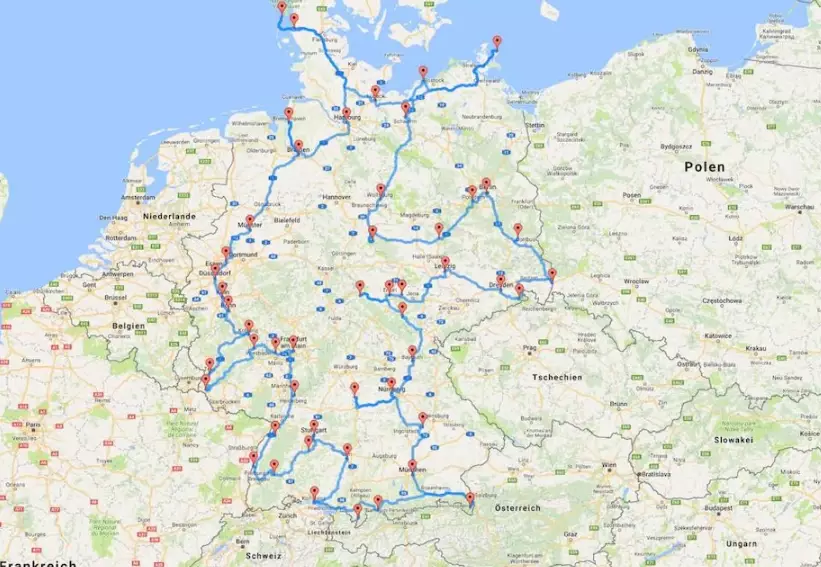
Before You Go: Planning Your 2-Week German Driving Adventure
Jumping straight into the itinerary is tempting, but a little prep makes everything smoother. Trust me, figuring out the rental car insurance at the counter in German while jet-lagged is not fun.
When is the Best Time for a Germany Road Trip?
This is the first big question, and the answer depends entirely on what you want.
Spring (April-June) is my personal favorite. The crowds are thinner than in summer, the countryside is explosively green, and the famous German gardens are in bloom. The weather can be unpredictable (pack a layer), but it's ideal for city exploring and scenic drives. You might even catch the tail end of the Christmas markets if you go in early April? Just kidding, those are long gone. But the Frühlingsfest (Spring Festival) in Munich is a great, less-crazy alternative to Oktoberfest.
Summer (July-August) is peak season. The weather is reliably warm, perfect for the Alpine regions, lake swimming, and beer gardens. It's also when everyone is on holiday, especially Europeans. Prices are highest, popular routes like the Romantic Road are busiest, and you absolutely need to book accommodation and rental cars months in advance. The Autobahns can get congested, too.
Fall (September-October) is a close second to spring. The summer crowds have dissipated, the weather is often still lovely, and you get the stunning fall foliage, especially in the Black Forest and Bavaria. Oktoberfest happens in late September, so if that's on your list, plan your entire trip around Munich hotel availability and sky-high prices.
Winter (November-March) is for a specific kind of trip. Think Christmas markets (pure magic), cozy mountain lodges, and winter sports. Driving requires more caution due to potential snow and ice, especially on mountain passes which may require snow chains (winter tires are legally required in winter conditions). Some smaller tourist attractions or castles might have limited hours.
So, for a classic, all-around Germany road trip 2 weeks itinerary, I'd lean towards late May/early June or September.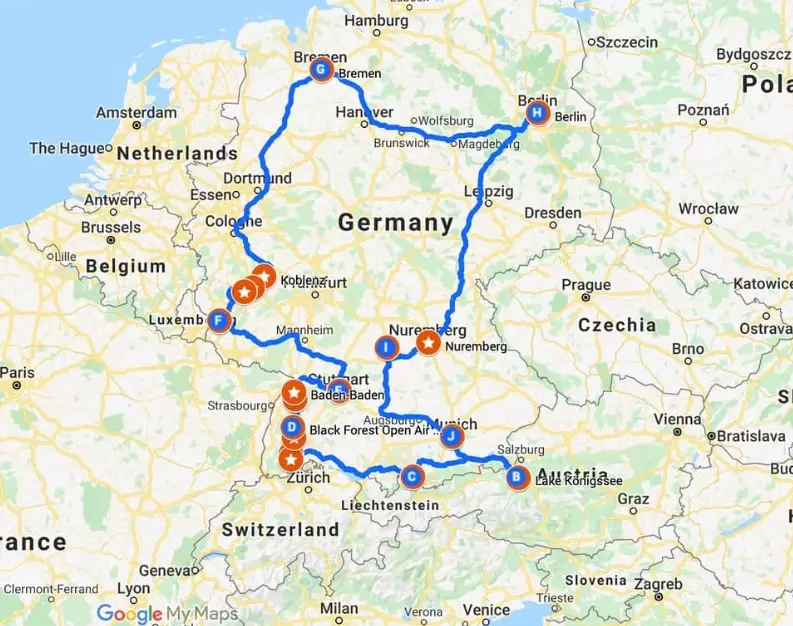
Budgeting: What Will This 2-Week Trip Actually Cost?
Let's talk numbers, because nobody likes surprise expenses. Germany isn't the cheapest European destination, but it offers solid value. Here’s a realistic breakdown for two people sharing a car and mid-range hotels.
| Expense Category | Budget-Friendly | Comfortable Mid-Range | Notes & Tips |
|---|---|---|---|
| Rental Car | €350 - €500 | €500 - €800 | Book months in advance for summer. Manual is cheaper; automatic costs more. Include full insurance (CDW/LDW). |
| Fuel | €250 - €350 | €300 - €450 | For ~2000km trip. Diesel is more efficient for long drives. Prices vary; check apps like ADAC. |
| Tolls & Parking | €50 | €80 - €120 | No Autobahn toll for cars, but city parking adds up. Use Park & Ride (P+R). |
| Accommodation | €700 - €1000 (Hostels/Guesthouses) | €1400 - €2200 (Hotels/Apartments) | This is per 14 nights. Big cities (Munich, Frankfurt) cost significantly more. |
| Food & Drink | €560 (€20/person/day) | €1120 (€40/person/day) | Mix of supermarket picnics, bakeries, Gasthof meals, and a few nice dinners. |
| Attractions & Entries | €200 | €400 | Castles, museums, boat tours. City tourism cards can offer savings. |
| Miscellaneous | €150 | €300 | Sim card, souvenirs, unexpected snacks (you will buy all the Haribo). |
| TOTAL (for 2 people) | €2,260 - €2,610 | €4,100 - €5,790 | Per couple. Solo travelers will pay more for single rooms. |
The Car & Driving Essentials
Renting a car is straightforward. Use major comparison sites, but always book directly with the company afterward for better customer service. Get a car that's comfortable for your luggage—a compact hatchback (like a VW Golf) is perfect for two. For four people with bags, you'll need a wagon or SUV.
Must-Have Documents: Your home driver's license is fine for most visitors (check if you need an International Driving Permit for your country). The rental agreement, passport, and a credit card in the main driver's name.
The Umweltzone Sticker (Crucial!): Many German city centers are Low Emission Zones. You must have a valid green emissions sticker (Umweltplakette) displayed on your windshield to enter, or face a fine. Most rental cars come with one, but you must confirm this when you pick up the car. If not, you can buy one online in advance. The official information is on the German Environment Agency (Umweltbundesamt) website.
The Core Itinerary: Three Fantastic 2-Week Routes
Here are three distinct flavors of a Germany road trip 2 weeks plan. You can follow one exactly, or mix and match days to create your own.
Route 1: The Classic Grand Tour (Cities & Castles)
This is the "greatest hits" route, perfect for first-timers. It hits the major cultural hubs and the iconic scenic drives.
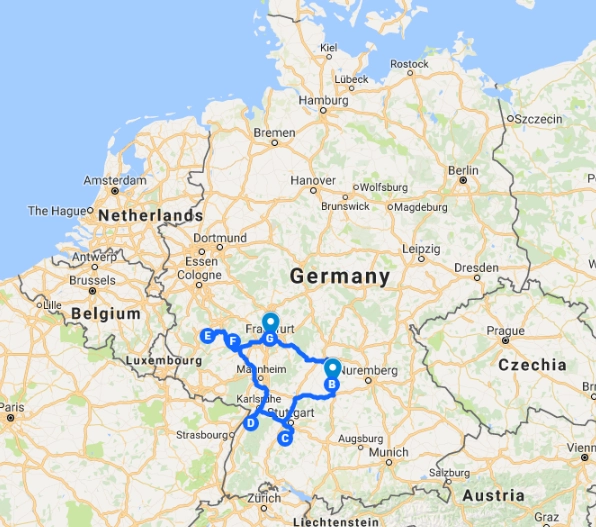
Day 1-3: Frankfurt & the Rhine Valley. Fly into Frankfurt (FRA), pick up your car. Don't spend much time in Frankfurt—it's a financial hub. Instead, drive an hour to the Rhine River. Base yourself in Rüdesheim or Bacharach. Spend two days cruising the river (leave the car!), visiting castles like Burg Rheinstein, and tasting Riesling. The Rhine Gorge is a UNESCO site for a reason.
Day 4-5: Heidelberg & the Neckar Valley. A short drive to Heidelberg. Explore the magnificent ruined castle (take the funicular!), stroll the Philosopher's Walk, and get lost in the Altstadt. It's touristy, but it earns its fame.
Day 6-8: The Romantic Road to Rothenburg & Dinkelsbühl. Now the real driving begins. Join the Romantische Straße south. Stop in Würzburg for the Residenz Palace. Then, the highlight: Rothenburg ob der Tauber. Yes, it's crowded. Yes, it's worth it. Stay overnight to experience the town after the day-trippers leave. Walk the medieval walls. Next day, continue to the equally charming but quieter Dinkelsbühl.
Day 9-11: Munich & Day Trips. Drive to Munich, return your car at the central station (Hauptbahnhof). You don't want a car in Munich. Use public transport. Spend a day exploring Marienplatz, the Viktualienmarkt, and the English Garden. Use another day for a train trip to Neuschwanstein Castle (book tickets online!) or a tour to Dachau Concentration Camp Memorial Site for a sobering, important history lesson.
Day 12-14: The Bavarian Alps & Departure. Pick up a new rental car in Munich. Drive south into the Alps towards Garmisch-Partenkirchen. Visit the Partnach Gorge, take the cable car to Zugspitze (Germany's highest peak), or just hike and breathe the mountain air. On your final day, drive back to Munich Airport (MUC) to fly out.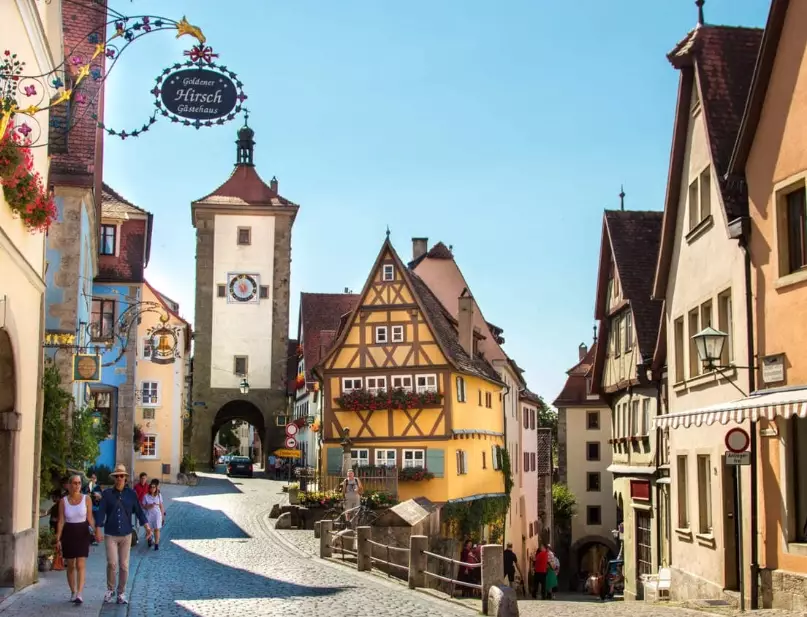
Route 2: The Nature & Culture Deep Dive (Less Crowds)
This route skips some big cities for deeper immersion in Germany's forests, lakes, and underrated gems.
Start in Cologne (Köln). See the incredible cathedral. Then drive south along the Moselle River—it's like the Rhine's quieter, prettier cousin. Stay in Cochem or Beilstein.
Head into the Hunsrück region for some surprisingly wild landscapes, then cross into the Black Forest (Schwarzwald). Base yourself in Triberg for the famous waterfalls and cuckoo clocks, or Freiburg for a vibrant university town vibe. Drive the Schwarzwaldhochstraße (Black Forest High Road).
Cross into Switzerland briefly at Lake Constance (Bodensee), then enter Bavaria via the Allgäu region, with its rolling green hills and famous Neuschwanstein.
Finish in Munich or Nuremberg for your flight out. This route is more about the journey than specific destinations, perfect for those who love to stop for a hike or a photo whenever the mood strikes.
Route 3: The History & Eastern Germany Explorer
For those fascinated by recent history and less-traveled paths.
Start in Berlin. Spend 3-4 days here without a car. See the Wall, Brandenburg Gate, museums. Then pick up a car and head south to Dresden, the "Florence on the Elbe," stunningly rebuilt after WWII.
Drive to Saxon Switzerland National Park for jaw-dropping sandstone rock formations. Then head west to Weimar (Goethe, Schiller, Bauhaus) and Erfurt, with its stunning cathedral and Kramerbrücke bridge.
Continue to the underrated Harz Mountains, then to cities like Leipzig or Nuremberg (for Nazi Rally Grounds documentation center). End in Frankfurt or Munich. This route offers a completely different, thought-provoking perspective on Germany.
Whichever route you choose, the key for a successful Germany road trip 2 weeks plan is balance. Don't try to cram in both the far north (Hamburg) and the deep south (Alps) in 14 days. Pick a region or a logical loop.
Driving in Germany: What You REALLY Need to Know
Let's demystify the famous—and sometimes infamous—rules of the road.
The Autobahn: Yes, sections have no speed limit. No, it's not a lawless racetrack. It's a highly disciplined highway system. The right lane is for cruising. The left lane is only for passing. You move right immediately after passing. Undertaking (passing on the right) is illegal and dangerous. If you see a flash of headlights in your rearview mirror in the left lane, it's not aggression; it's a polite (if firm) request for you to get out of the way because a car going 200+ km/h is approaching. Just signal and move over. If you're not comfortable with high speeds, stay in the right lane and go a comfortable pace—that's perfectly fine.
Speed Limits: They exist everywhere except signposted sections of Autobahn. Look for the round white sign with diagonal black stripes—that's the end of all previous restrictions. But limits are frequent: near cities, in construction zones (fines are doubled here), and on curvy sections. Urban areas are 50 km/h, country roads 100 km/h unless signed otherwise.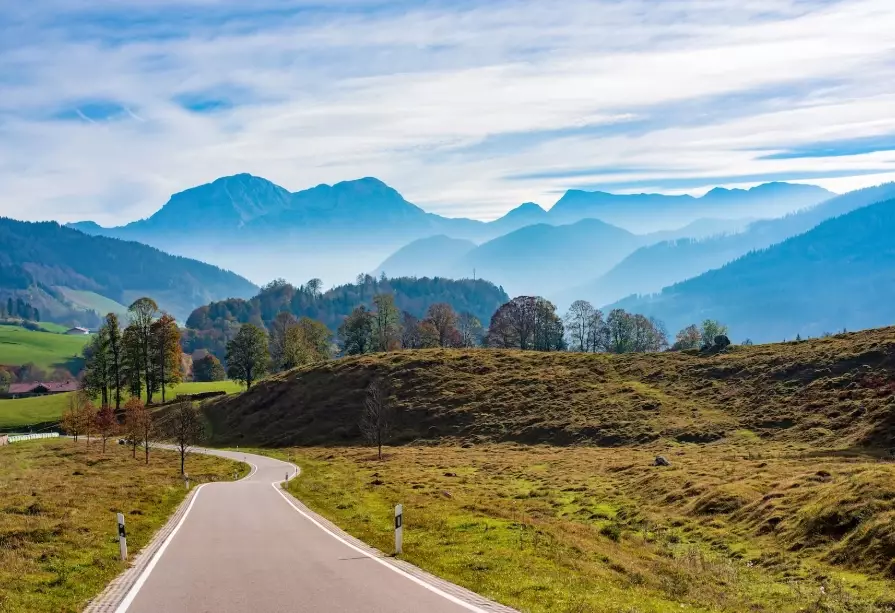
Parking: Colored curb zones: Blue = paid parking (you need a parking disc showing your arrival time), Yellow = loading/unloading only, White = free (rare). Use parking garages (Parkhaus) in cities. They're safe and straightforward, though not cheap.
Where to Stay & Eat on the Road
Accommodation: A mix is best. For a true German experience, stay in a Gasthof or Landhotel in the countryside. They're family-run, often have excellent restaurants, and are full of character. In cities, modern hotels or apartments (booked on platforms like Booking.com) offer convenience. For a unique splurge, consider a castle hotel (Burg Hotel) along the Rhine or Moselle.
Food: You could write a book on this. Beyond bratwurst and schnitzel:
- Breakfast: Find a bakery (Bäckerei) for fresh Brötchen (rolls), pretzels, and pastries.
- Lunch: Look for a Imbiss (snack stand) for Currywurst or a Döner Kebab (a Berlin invention!). Or do as the locals do: buy bread, cheese, and meat from a supermarket or market for a picnic.
- Dinner: The Gasthaus is your friend. They serve regional, home-style cooking. Look for the "Tagesmenü" (daily menu) for the best value.
- Must-Try Regional Dishes: In Bavaria, Weisswurst with sweet mustard (before noon!). In Swabia (Stuttgart area), Spätzle (egg noodles) and Maultaschen (filled pasta). In the Rhineland, Sauerbraten (pot roast). In the north, Labskaus (a sailor's stew, it's... an acquired taste).
And of course, drink the local beer or wine. In wine regions like the Moselle or Franconia, you can often buy directly from the winemaker (Winzer).
Frequently Asked Questions (Your Doubts, Answered)
If your license is from the EU/EEA, no. For US, Canadian, Australian, etc. drivers, a valid national license is sufficient for stays up to 6 months. However, some rental companies might require one, and it's a simple, cheap document from your national automobile association (like AAA in the US). I always get one to avoid any argument at the rental counter—it's a good backup.
Yes, Germany has some of the safest roads in the world. The standards of driving are high. The main risks are getting used to the high speeds on the Autobahn and the right-of-way rules in towns. Drive defensively, follow the rules, and you'll be fine.
You absolutely can, and Germany's trains are fantastic. But for a Germany road trip 2 weeks itinerary focusing on countryside, castles, and small villages, a car gives you unparalleled freedom. Trains connect cities brilliantly, but reaching remote castles, scenic viewpoints, or that perfect hiking trailhead is much harder without your own wheels.
Get a local prepaid SIM card. Providers like Aldi Talk, Lidl Connect, or Telekom offer cheap, fast LTE/5G packages with plenty of data for navigation and travel research. You can buy them at any supermarket (Aldi, Lidl) or phone shop. Ensure your phone is unlocked.
It can be, but you'll be more rushed. Logical additions are: from Munich, pop into Salzburg (Austria) or the Austrian Tyrol. From the Black Forest, go to Strasbourg (France) or Basel (Switzerland). From Dresden, visit Prague (Czech Republic). Adding one neighboring country for 2-3 days is very doable and enriches the trip. Just check rental car rules for cross-border travel (usually fine within EU, may need extra paperwork for Switzerland).
Final Checklist Before You Hit the Road
- ✅ Valid passport (check expiry date).
- ✅ Driver's license (and IDP if required/desired).
- ✅ Rental car confirmation with insurance details.
- ✅ Confirmation that the rental car has a valid green Umweltplakette (emission sticker).
- ✅ Credit card (with PIN for gas pumps) in driver's name.
- ✅ Accommodation bookings (especially in summer).
- ✅ Tickets for major attractions booked online (Neuschwanstein, Reichstag Dome, etc.).
- ✅ Offline maps downloaded on your phone.
- ✅ A basic German phrasebook app. "Bitte" (please) and "Danke" (thank you) go a long way.
- ✅ A sense of adventure and flexibility. The best part of any road trip is the unexpected find.
So there you have it. Your complete, no-nonsense guide to planning an epic Germany road trip for 2 weeks. It's a journey that stays with you—the taste of a perfect Riesling by the Rhine, the stillness of a Black Forest morning, the awe of a Bavarian castle against the mountains. Forget the stress of over-planning. Pick your route, book the essentials, and get ready for the drive of a lifetime. Germany from behind the wheel is an experience like no other.
Have an amazing trip. And remember to drive on the right!