Quick Navigation
- The Big Ones: Festivals and Holidays You Can't Miss
- Daily Life and Social Traditions: The Unwritten Rules
- A Tapestry of Regions: Not All Traditions Are National
- Seasonal and Lesser-Known Gems
- Modern Traditions and Evolving Customs
- Common Questions About Traditions in Germany
- Why Do These Traditions Matter?
So you're curious about what traditions are there in Germany? It's a bigger question than it seems. Germany isn't just lederhosen and beer steins, though those are part of the picture. The traditions here are like layers of a really good Schwarzwälder Kirschtorte—some parts are ancient, some are surprisingly recent, and they all mix together in ways that shape daily life. Having spent time living in different parts of the country, I've seen how these customs aren't just for show; they're the rhythm of the year and the rules of the sidewalk.
Let's be honest, the food is a huge part of the experience. But it goes way beyond that. It's in the quiet of a Sunday, the strict rules of recycling, the way a city square transforms for a market. Some traditions feel warm and inviting, like the glow of a Christmas market. Others, well, they can feel a bit rigid to an outsider. But that's what makes it interesting.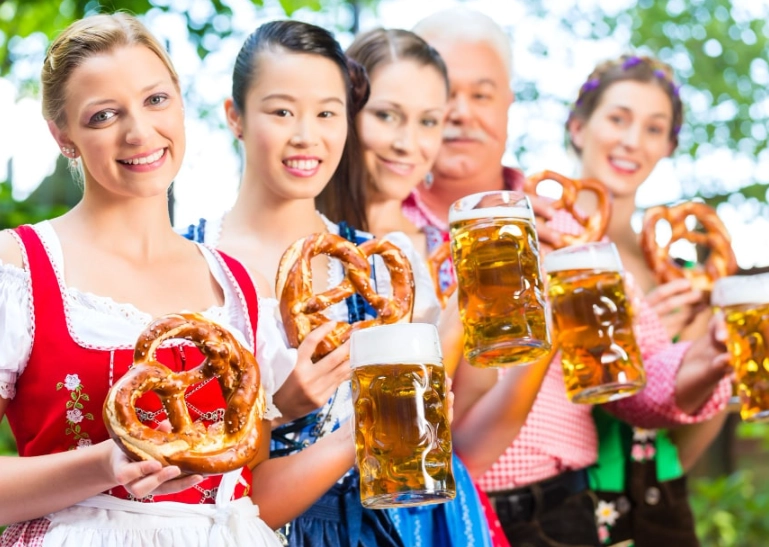
The Big Ones: Festivals and Holidays You Can't Miss
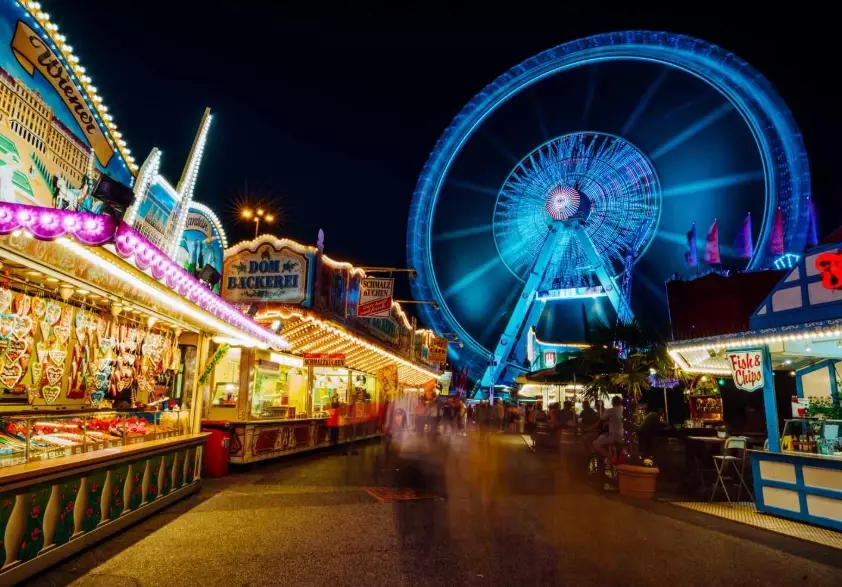
These are the traditions in Germany that put on a show. They're the postcard moments, but each has its own history and local flavor.
Oktoberfest: More Than Just Beer
We have to start here, right? Everyone knows it. But the Munich Oktoberfest is a specific beast. It's not just a beer festival; it's a Volksfest, a people's festival. It began as a royal wedding celebration in 1810 and morphed into this global phenomenon. The key thing most visitors miss? It's deeply rooted in Munich. The beer served must be brewed within the city limits, following the Reinheitsgebot (the German Beer Purity Law). The tents are run by longstanding Munich families and breweries. It's a point of local pride, not just a tourist trap. That said, the crowds are insane. If you hate shoulder-to-shoulder crowds, it might be your personal nightmare. For a more local vibe, almost every town and village has its own smaller "Volksfest" throughout the year.
Weihnachten (Christmas): The Quintessential German Export
If you think Christmas is a big deal where you're from, Germany takes it to another level. The tradition of the Christmas market (Weihnachtsmarkt) is arguably Germany's greatest cultural export. The first documented one was in Dresden in 1434. Today, every city, town, and sometimes even neighborhoods have their own. They're not just shopping venues; they're social hubs in the dark winter. You meet friends for a mug of Glühwein (mulled wine), eat roasted almonds, and soak in the lights.
The home traditions are just as important. The Advent wreath (Adventskranz) with its four candles, one lit each Sunday before Christmas. The Advent calendar. Then there's the big one: Christkind vs. Weihnachtsmann. In much of southern and Catholic Germany, the Christkind (Christ Child, often depicted as an angelic figure) brings gifts on Heiligabend (Christmas Eve). In the north, it's more often the Weihnachtsmann (Father Christmas). The evening of the 24th is the main event—a family meal, carols, and gift-giving. The 25th and 26th are public holidays for more family time and feasting. It's a marathon of Gemütlichkeit (coziness).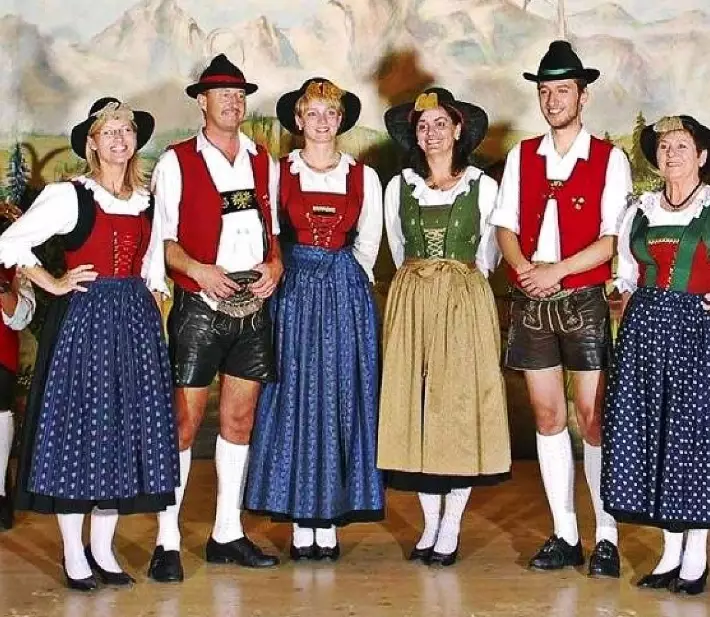
Karneval/Fasching: Germany's Fifth Season
This is where Germany lets its hair down, but in very specific regional ways. In the Rhineland (Cologne, Düsseldorf, Mainz), Karneval is a massive, organized, satirical spectacle. It's a season that starts on November 11th at 11:11 AM (yes, really) and peaks in the week before Ash Wednesday with street parades, costume balls, and political satire. In Cologne, the greeting is "Alaaf!"; in Düsseldorf, it's "Helau!" Get it wrong and you'll be politely corrected.
In the south, particularly in Swabia and Bavaria, it's called Fasching or Fastnacht. It's more pagan, more about scaring away winter spirits with grotesque wooden masks (like in the Swabian-Alemannic Fastnacht). In Munich, the high point is the dancing of the market women at the Viktualienmarkt. It's chaotic, creative, and a brilliant release valve before Lent. If you want to see Germans completely abandon their stereotype of reserve, this is the time.
Daily Life and Social Traditions: The Unwritten Rules
This is the stuff you don't see on a tour. These are the traditions in Germany that you bump into every day. They can be charming or frustrating, but they're always informative.
Food and Drink Rituals
Mealtimes are structured. Breakfast (Frühstück) is often a cold spread of bread, rolls, cheeses, cold cuts, and jam. The afternoon coffee and cake (Kaffee und Kuchen) around 3 or 4 PM is a sacred pause. It's a time to sit down, chat, and enjoy a slice of something delicious. Dinner (Abendbrot) is usually cold again—bread with toppings. A hot meal is often eaten at lunch.
And then there's bread. Germans have an almost spiritual relationship with their bread. There are over 3,000 registered types of bread in the country. The German Institute for Bread even maintains a bread register. It's a point of national identity. The Brotzeit (bread time)—a snack of bread, radish, cheese—is a tradition in itself.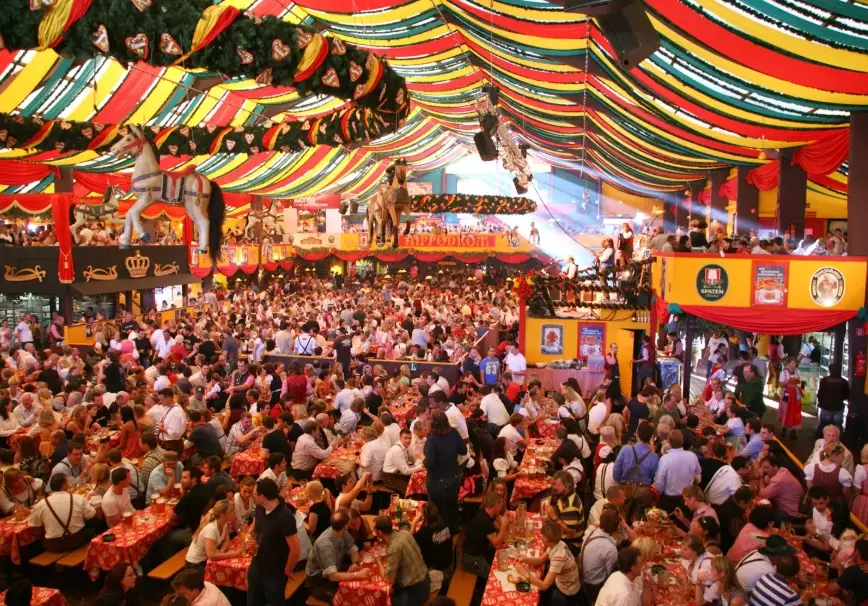
The Sacred Sunday (Ruhetag)
Sunday is a day of rest by law. Most shops are closed. It's quiet. The idea is to spend time with family, go for a walk (the famous Sunday stroll, Sonntagsspaziergang), or relax. No lawn mowing, no loud DIY. This tradition is protected under the *Lärmschutzgesetz* (Noise Protection Act). For visitors, it can be a shock not to be able to pop to the supermarket. For locals, it's a cherished break from commerce. I've come to love the enforced calm, though your first Sunday with an empty fridge is a rite of passage.
Greetings, Toasts, and Punctuality
Shake hands, make eye contact, say your name. This formality, even in semi-casual settings, is standard. The toast "Prost!" when drinking beer requires eye contact. Look it up—it's a thing. Missing eye contact is considered rude, almost like inviting bad luck.
And punctuality. Being on time is being late. You should be there five minutes early. This isn't a stereotype; it's a deeply held expectation. A meeting at 10:00 means starting at 10:00, not arriving at 10:00.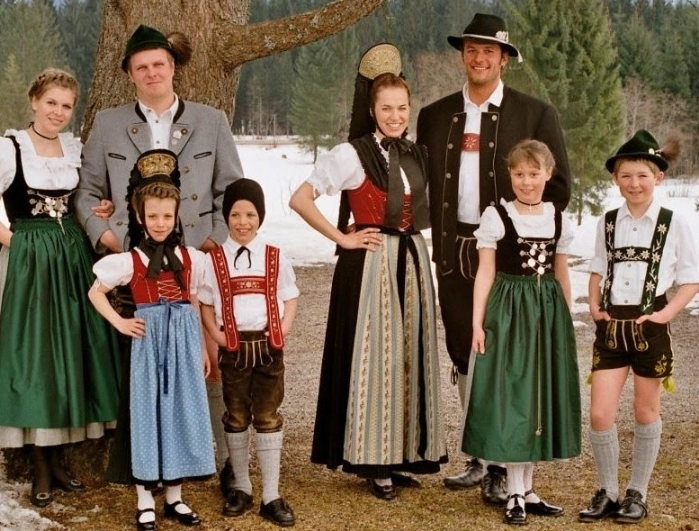
A Tapestry of Regions: Not All Traditions Are National
Germany is a federal republic, and local identity often trumps national identity. What's tradition in Bavaria might be unheard of in Hamburg. This is crucial to understanding what traditions are there in Germany—the answer changes with the postcode.
| Region | Key Tradition | What It's About | Best Experienced In/At |
|---|---|---|---|
| Bavaria (Bayern) | Maibaum (Maypole) Erection | Erecting a decorated tree on May 1st. Villages compete to steal each other's poles, requiring ransom (usually beer). Accompanied by folk dancing and music. | Any Bavarian village on April 30th/May 1st. |
| Berlin | New Year's Eve at Brandenburg Gate | A massive, public street party with live music and fireworks. Less about family, more about a huge urban celebration. | Berlin-Mitte, around the Gate. |
| Rhineland | St. Martin's Day Lantern Parade | Children make lanterns, sing songs, and parade on November 11th, commemorating St. Martin sharing his cloak. Followed by a sweet pastry (Weckmann). | Cologne, Bonn, and towns along the Rhine. |
| East Frisia (Northwest) | Tea Ceremony | Drinking strong black tea with Kluntje (rock candy) and cream in a specific order. It's a ritualized, social event, not just a drink. | A tea room in Leer or Norden. |
| Black Forest (Schwarzwald) | Bollenhut | The iconic hat with red pompoms (black for unmarried women in some villages). Worn with traditional costume (Tracht) on festive occasions. | Festivals in Gutach or on special church holidays. |
See what I mean? Asking about traditions in Germany is like asking about weather in Europe. You need to be more specific. The north-south divide is real. The Protestant north tends to be more reserved, the Catholic south more outwardly festive. The former East has its own layer of traditions from the GDR era that persist, like the *Pioniernachmittag* (a kind of after-school club) nostalgia.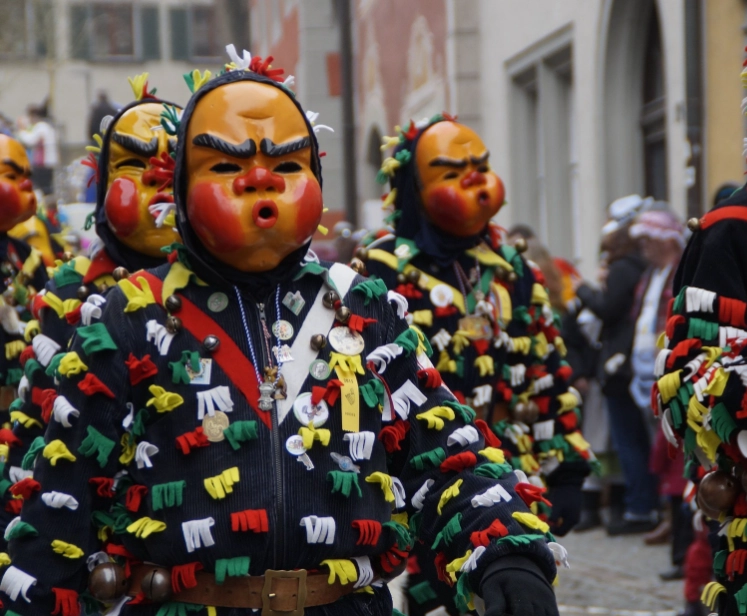
Seasonal and Lesser-Known Gems
Beyond the blockbuster festivals, the year is dotted with smaller, beautiful traditions.
St. Nicholas Day (Nikolaustag) - December 6th
The night of December 5th, children clean and put out a boot. If they've been good, St. Nicholas fills it with chocolates, oranges, nuts, and small gifts. If they've been naughty, Knecht Ruprecht, his scary companion, might leave a rod. It's a separate, smaller gift-giving event before Christmas.
Walpurgisnacht (Witches' Night) - April 30th
Especially in the Harz Mountains, this is the night witches are said to fly to the Brocken peak. People light bonfires to ward off evil spirits. It's a lively, pagan-feeling celebration welcoming spring. It's rowdy and fun, with a touch of the mystical.
Spargelfest (Asparagus Season)
This isn't a single festival, but a springtime obsession. From mid-April to late June, white asparagus is king. Restaurants have special Spargel menus, towns in growing regions like Baden or Lower Saxony hold Spargelfests. It's a celebration of a specific, seasonal ingredient, eaten with ham, potatoes, and hollandaise sauce. The season ends traditionally on June 24th (Johannistag).
Modern Traditions and Evolving Customs
Traditions aren't frozen. New ones emerge. The Love Parade in Berlin was a brief, modern electronic music tradition. The "Kiez" (neighborhood) culture in cities like Berlin and Hamburg, with its weekly flea markets and local festivals, is a modern urban tradition. The nationwide "Tag der Deutschen Einheit" (German Unity Day) on October 3rd, celebrating reunification, is a relatively new (1990) but deeply important national tradition.
Even the concept of *Vereine* (clubs) is a tradition. Germany is a nation of joiners. There's a club for everything—singing, sports, pigeon breeding, model trains. This associational life, theorized back in the 19th century, remains a key part of social fabric. It's where community happens.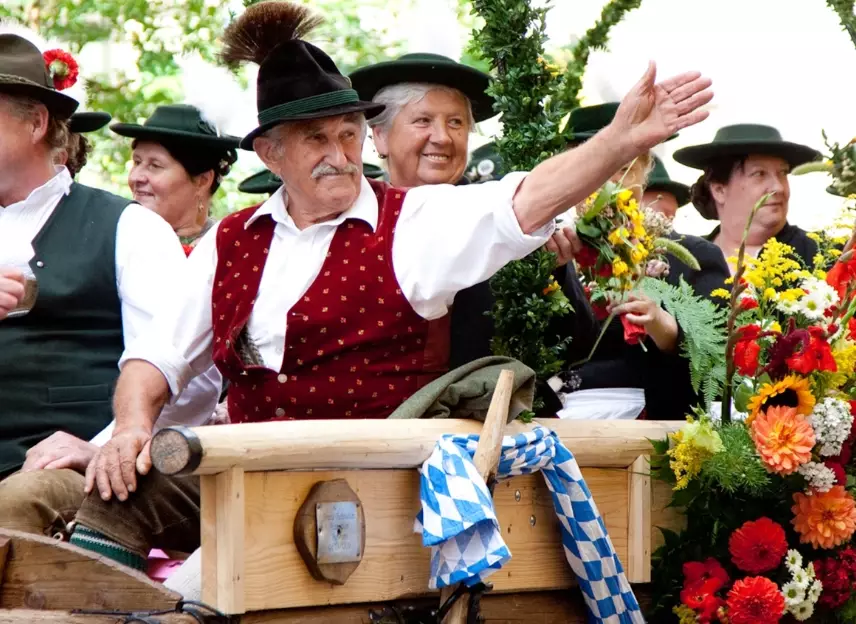
Common Questions About Traditions in Germany
Why Do These Traditions Matter?
Understanding what traditions are there in Germany gives you a key to the culture. They're not just entertainment; they're a framework for social life, a connection to history, and a way of marking time. They show the German values of order, community, seasonal appreciation, and regional pride.
Some might feel overly formal or rule-bound. The pressure to be punctual, the strict Sunday quiet, the specific way to drink a toast—it can be a lot. But within those structures is a deep sense of reliability and mutual respect. You know what to expect.
The warmth is there, but it's often found within the rules, not in spite of them.
From the roaring crowds of Karneval to the silent, candle-lit home on Christmas Eve, German traditions offer a spectacular range of human experience. They tell a story of a country that values its history, its regions, and its time—both in the sense of history and in the sense of being on time for your 10:00 meeting.
To dive deeper into the official cultural heritage listings, you can explore the UNESCO Intangible Cultural Heritage listings for Germany, which include everything from organ craftsmanship to the social practice of cooperative housing. The German National Tourist Board (germany.travel) is also an excellent resource for planning trips around specific festivals and events. They provide accurate, up-to-date dates and locations.
So, the next time you wonder what traditions are there in Germany, remember it's a living, breathing, and sometimes surprisingly rule-based system. And that's exactly what makes it fascinating to explore.